Want to be in the loop?
subscribe to
our notification
Business News
“GREENING” TEXTILE AND GARMENT FOR SUSTAINABLE DEVELOPMENT
To maintain the impressive export performance, textile and garment producers are actively and flexibly transforming into greener models to meet increasingly stringent requirements of import partners and sharpen their competitive edge.
Stricter textile and garment regulations
According to the General Statistics Office (GSO), in the first quarter of 2022, the total export value of textiles and garments was up 22.5% year to US$8.837 billion, underpinning the sector’s export target of US$43 billion in 2022.
Always being a key exporter, the textile and garment industry is also striving to change to catch up with new trends and consumer tastes, including the inclination to opt for green products. According to a report released by the World Bank (WB), consumers in Vietnam's major export markets such as the United States and the European Union are increasingly demanding cleaner production processes and more environmentally friendly goods. This report also points out that the textile and garment industry is one of the industries having the opportunity to improve carbon footprint and the environment soon.
According to the Vietnam Textile and Apparel Association (VITAS), most companies in the textile and garment supply chain that process for major brands in the world must comply with green production requirements such as emission reduction, and social and environmental responsibility. Vietnam's bilateral and multilateral FTA commitments also have regulations on environmental protection and low carbon emissions.
In Vietnam’s key import markets, especially the EU, a majority of Vietnamese producers in the textile and garment supply chain are receiving green requirements from big brands, such as social and environmental responsibility and carbon emission reduction.
To meet those requirements and regulations from partners, they have actively transformed themselves. VITAS Vice President Truong Van Cam said, the green textile and garment program has been carried out for 3-4 years, actively helped reform Vietnam's textile and garment industry, improve environmental governance and generate many social and economic benefits.
VITAS also set a “go green” goal for 2023: Reducing energy consumption by 15% and water consumption by 20%. By 2030, the textile and garment industry will be green and, at the same time, build 30 international brands.
Some producers such as Garment 10 have planned to use natural, more biodegradable materials. Phong Phu Corporation is applying environmental impact measurement software in its production facilities to propose material utilization plans with less environmental impact.
Recently, H&M, a global apparel manufacturer with 31 suppliers in Vietnam, committed to developing a carbon-neutral supply chain for its own manufacturing and processing facilities or signing offshore contracts with fabric and yarn manufacturers and tanning suppliers by 2030. Nike also announced similar plans, affecting over 100 Nike suppliers in Vietnam. The German Organization for Cooperation and Development (GIZ) and Decathlon Company recently pledged to work together for better environmental performance in the textile and garment supply chain in Vietnam.
Many barriers
Textile and garment producers are aiming to invest in modern cleaner, energy-effective manufacturing technology to increase product competitiveness in export markets. However, technical barriers are increasing as many regulations are imposed in a very short time, leaving domestic suppliers unable to keep up. Therefore, they have to spend a lot of money on technology to meet all requirements.
According to a VITA's representative, some Vietnamese enterprises are making efforts to transform production to promptly meet global commitments and European law requirements, including the German Business Appraisal Law to be effective in 2023, which requires producers to identify, prevent, mitigate and account for environmental and social risks throughout the supply chains.
In early April 2022, the European Commission (EC) proposed applying some new ecological regulations for textiles and garments consumed in the EU. Specifically, this regulation requires apparel in the EU to be durable, reusable and repairable. To achieve this standard, manufacturers must use recycled, non-toxic, environment-friendly fibers. When textiles are no longer usable, manufacturers are responsible for recovery and recycling, with the least incineration and landfill of those products. All of the above information must be provided to consumers by manufacturers through a digital passport for each product.
VITAS President Vu Duc Giang said, to maintain and expand their export market shares, businesses will have no other choice than meet technical requirements from importing countries. They need to closely monitor market developments and actively adopt green production, taking into account recycling and energy conservation. In addition, they can approach international financial and environmental institutions to build a roadmap for this purpose.
Source: VCCI
Related News

INFRASTRUCTURE / CONSTRUCTION / LOGISTIC / PORT
VIỆT NAM-CAMBODIA TRADE GATHERS PACE TOWARDS $20 BILLION TARGET
Trade between Việt Nam and Cambodia continues to grow, remaining a bright spot and a key pillar of bilateral cooperation as the two countries aim to raise two-way trade to US$20 billion in the coming years. After setting a record of more than $11.3 billion last year, bilateral trade reached about $8.7 billion in the first eight months of this year, up 8.3 per cent year on year.
TECHNOLOGY
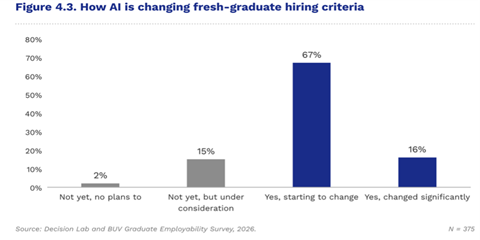
AI BEGINNING TO RESHAPE RECRUITMENT CRITERIA
Digital literacy is the only capability area in which fresh graduates meet employers’ expectations, according to a new report. Yet, it is also the standard rising fastest, as businesses increasingly expect new hires to use AI effectively in the workplace. Some 83 per cent of employers say AI has changed, or is beginning to change, their hiring criteria, while 94 per cent report higher expectations for digital and AI capabilities than they had two to three years ago.

INFRASTRUCTURE / CONSTRUCTION / LOGISTIC / PORT
ĐÀ NẴNG GREEN-LIGHTS US$105 MILLION THAI DEVELOPMENT DEAL
The central city has approved an investment proposal by Thailand’s WHA Group to develop infrastructure for the 400ha WHA Đà Nẵng Industrial Park project on two communes of Thăng Bình and Đồng Dương, with an investment of more than VNĐ2.7 trillion (US$105 million). The city said it approved WHA Industrial Development International's status as an investor in the project, which is expected to take place between 2027 and 2034.

VIETNAM ECONOMY INVESTMENT
MOBILE PHONE EXPORTS RISE 20% TO $51.8 BILLION IN FIRST NINE MONTHS
Exports of mobile phones and components rose 20 per cent year-on-year to nearly US$51.8 billion in the first nine months of 2026, with China, the US and Republic of Korea accounting for more than half of the total. Shipments to the three markets reached a combined $26.18 billion, or 50.6 per cent of total exports of the product group during the period, according to data from the Vietnam Department of Customs under the Ministry of Finance.

VIETNAM ECONOMY INVESTMENT
FRUIT AND VEGETABLE EXPORTS POISED TO HIT $10 BILLION IN 2026
Fruit and vegetable exports are on track to reach nearly US$10 billion in 2026, after rising 19.9 per cent year on year to nearly US$7.4 billion in the first nine months, driven by strong seasonal demand and abundant tropical fruit supplies. The Ministry of Agriculture and Environment said the growth reflected stronger international demand for fresh produce and processed agricultural products.
GARMENT / TEXTILE
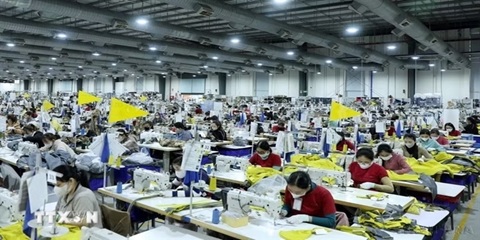
TEXTILE EXPORTS FACE DUAL CHALLENGES OF SUSTAINING ORDERS AND BOOSTING EFFICIENCY AMID GROWING COMPETITION
Data shows that the textile and garment sector maintained its growth momentum in the first nine months of this year. The industry's total export turnover reached an estimated US$35.721 billion in the first nine months of this year, up 3.3 per cent year-on-year. Despite posting encouraging export figures, Vietnamese textile and garment enterprises continue to navigate unpredictable market variables.
Events Sponsors






















