Want to be in the loop?
subscribe to
our notification
Business News
MINIMUM WAGE TO INCREASE 5.3%
An increase in the minimum wage moved a step closer yesterday after the National Wage Council agreed to increase basic salaries. The committee confirmed they will look at a rise of more than 5 per cent compared to last year.
The raise is equal to an increase of VNĐ160,000-200,000 (US$6.8-8.6) each month per labourer.
It is believed to be the lowest increase of the regional minimum wage so far.
The increase will be submitted to the Government for final approval.
The increase of the regional minimum wage was 7.3 per cent in 2017, equal to an increase of VNĐ180,000-250,000($7.7-10.7) and 6.5 per cent in 2018, equal to an increase of VNĐ180,000-230,000 ($7.7-9.9).
The decision was made after the third meeting of the council held in northern Hải Phòng City yesterday and chaired by Deputy Minister of Labour, Invalids and Social Affairs cum President of the National Wage Council Doãn Mậu Diệp.
Representatives from the Việt Nam Chamber of Commerce and Industry (VCCI), on behalf of employers and the Việt Nam General Confederation of Labour (VGCL), on behalf of employees, were also at the meeting.
They decided the monthly minimum wage for four different regions in Việt Nam to be Region I: VNĐ4.18 million (US$180); Region II: VNĐ3.71 million ($160); Region III: VNĐ3.25 million ($140) and Region IV:VNĐ 2.92 million ($126).
Region I covers urban Hà Nội and HCM City, II covers rural Hà Nội and HCM City along with urban Cần Thơ, Đà Nẵng and Hải Phòng cities, III applies to provincial cities and the districts of Bắc Ninh, Bắc Giang, Hải Dương and Vĩnh Phúc provinces and Regional IV takes care of the remaining localities.
Diệp said the increase was selected at 5.3 per cent after many discussions and was thought to be reasonable.
“It is the level that could cover a price slippage of 4 per cent each year and still ensure a small actual pay rise for labourers,” he said.
Additionally, the level was also affordable for employers to pay, he added.
Mai Đức Chính, vice president of VGCL, also said the increase was acceptable.
Chính said the 2018 regional minimum wage actually met about 92-94 per cent of the minimum living standards.
However, if fully calculated, it was necessary to increase the regional minimum wage by 7 per cent each year to both offset inflation and ensure a steady actual pay rise for the labourers, he said.
The increase for 2019 was only 5.3 per cent, it meant the pressure of adjusting the regional minimum wage for 2020 would not be small, he said.
Source: VNS
Related News
MEMBER CORNER / PROMOTIONS
A CULINARY MASTERPIECE
Don't need a special occasion to treat yourself to a perfect Chinese dining experience. This October, Ngan Dinh Restaurant introduces an exquisite three-dish menu, promising to satisfy diners who appreciate culinary innovation and refined flavors. Enjoy 20% OFF a glass of house red/white wine, or Imported German Veltins Draught Beer/Maisel's Weisse Dunkel when ordering any of the above dishes!

MEMBER CORNER / PROMOTIONS
ONE YEAR OF PRIME MOMENTS — LET’S CELEBRATE!
Olivia’s Prime Saigon is turning one, and we’d love to celebrate this special milestone with you! Order any featured steak size and enjoy all its designated complimentary pasta, side dishes and sauces — with a combined value of up to 80% of your steak price! Thank you for being part of our journey. Here’s to great steaks, wonderful company, and many more prime moments together!

MEMBER CORNER / PROMOTIONS
SENTRYSAFE - PROTECT WHAT MATTERS MOST
From cash, important documents and records to valuable belongings, a quality safe gives you greater peace of mind against unexpected risks. SentrySafe - a trusted safe brand from the USA, suitable for homes, offices and various storage needs. Contact Sen Wai Vietnam for expert advice and to find the right safe for your needs.
MEMBER CORNER / PROMOTIONS
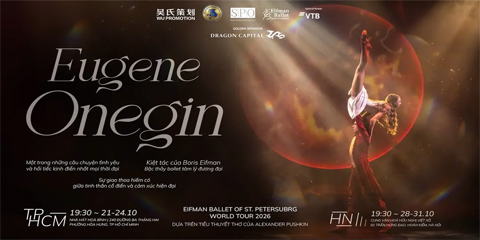
50% DISCOUNT FOR HKBAV MEMBER: EUGENE ONEGIN - EIFMAN BALLET OF ST. PETERSBURG WORLD TOUR 2026
Adapted from the classic novel in verse by acclaimed Russian poet Alexander Pushkin, Eugene Onegin explores timeless themes of love, pride, choices, and irreversible regret. Eifman's distinctive language of psychological ballet is brought to life through Tchaikovsky's music alongside contemporary rock by Alexander Sitkovetsky, creating an extraordinary artistic experience.

MEMBER CORNER / PROMOTIONS
COSMOPARK – ENERGY ADVANTAGES FOR POWER-INTENSIVE INDUSTRIES
As global corporations place increasing emphasis on energy security, renewable energy adoption, and carbon emissions reduction, electricity is no longer viewed merely as a component of technical infrastructure. For high-tech projects, data centers, and large-scale manufacturing facilities, reliable energy infrastructure has become a critical factor in investment location decisions.
VIETNAM ECONOMY INVESTMENT
FOREIGN INVESTORS TO BE WIDENED FOR MARKET ACCESS
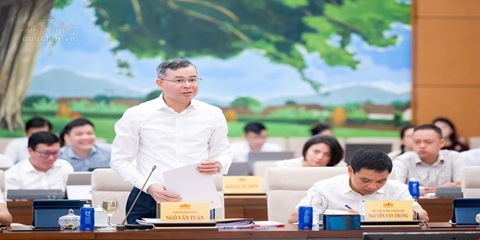
Vietnam is moving to widen market access, improve investment incentives, and streamline procedures, with greater support tied to investors’ actual commitments and results, as part of the law on amending and supplementing a number of articles of the Law on Investment. The proposal was mentioned at the sixth session of the National Assembly Standing Committee in Hanoi on September 30, on amending the Law on Investment.
Events Sponsors






















