Want to be in the loop?
subscribe to
our notification
Business News
AMENDING POLICIES TO FACILITATE PROPERTY MARKET
The property market is forecast to extend its recovery, growth and stable development in 2018 although it will still face numerous challenges in supply and demand relations, access to investment land, and administrative procedures. A series of policies that are about to be issued or amended will play an important role in helping boost transparency and clear obstacles to the real estate market. This will also be a driving force for property businesses to find best solutions and adapt to the new business environment.
Hardest time is behind
Dr Vu Tien Loc, President of the Vietnam Chamber of Commerce and Industry (VCCI), said, the year 2018 has elapsed a half and the real estate market has experienced dramatic changes on a series of disruptive infrastructure projects, favourable traffic routes to central areas, the restart of projects left idle for long, and the hardest time elapsed for real estate investors and companies.
He said, real estate inventories in all segments decreased continuously in the last three years to more than VND20 trillion, down nearly 80 per cent compared to 2015. Specially, in the first half of 2018, the number of newly-established companies increased rapidly while the number of projects pending for licensing are of great many - this is also a good signal for the real estate market in particular and the economy in general.
The property market is forecast to further grow and develop steadily in 2018. In order to ensure the stable development of the real estate market, the Government has taken effective tools for management and monitoring. In addition, it is more important that policy changes have made the real estate market in Vietnam more attractive to investors, especially foreign investors.
In the 2018-2020 period, the real estate market will gradually match supply and demand to attain more sustainable development. Large cities such as Hanoi and Ho Chi Minh City are focusing on developing urban infrastructures to create great potential for businesses to invest and develop real estate market in the medium and long terms.
The fifth meeting session of the 14th National Assembly considered issuing many bills directly related to real estate market such as the “Draft Law on Amendments and Supplements to a Number of Articles of the Land Law”, the “Draft Law on Amendments and Supplements to a Number of Articles of the Law on Housing, the Law on Real Estate Business, Law on Construction, Law on Urban Planning”, the “Draft Law on Amendments and Supplements to a Number of Articles of the Law on Investment and the Law on Enterprises”, “Draft Law on Management of Urban Development”, “Draft Law on Amendments and Supplements to a Number of Articles of the Law on Value Added Tax, the Law on Corporate Income Tax, the Law on Personal Income Tax, and the Law on Special Administrative Units.”
Dr Loc hopes that all legal and policy frameworks will create a favourable legal corridor to promote the healthy development of the real estate market in Vietnam in the coming years.
Unrealistic policies
Mr Nguyen Viet Cuong, Chairman of the Board of Directors of Kosy Group, said, the legal system for the real estate market is not very practical. For example, Decree 45/ND/2014-CP of the Government on collection of land use fees applicable to projects, enterprises must pay all of this money when these projects start. In fact, most projects have no revenue at that time while huge expenses are needed to compensate for ground clearance, ground levelling and construction. Furthermore, according to current regulations, property projects built on the ground can mobilise capital from customers only when their investors complete construction of basic infrastructure. This doubles businesses’ financial hardships if the market slows down.
Therefore, he said that authorities should study and adjust some regulations to allow multiple payment phases in the course of project implementation or during the project life cycle to assist enterprises to take initiative in capital sources. At the same time, authorities should consider allowing businesses to mobilise advance capital from customers and set necessary regulations and conditions to control operations of enterprises, ensure the right use of advance capital and their commitments to customers’ interests.
In addition, so many taxes are being imposed on businesses such as real estate tax, corporate income tax, as well as levied on property buyers and owners. Every draft or tax issue affects the business sentiment, especially interests of foreign companies.
Mr Nguyen Huu Cuong, Chairman of the Board of Directors of VITC JSC, said, in the current context of deep integration, we need financial resources of foreign investors and we should be careful about tax bills. With regard to the Draft Law on Tax and Asset, we should suspend it if we have no official information rather than stir up the property market with leaked information.
Mr Can Van Luc, BIDV's Chief Economist and Member of the National Financial and Monetary Policy Advisory Council
Housing savings funds cannot be developed mainly because of lacking seed capital, regulatory framework and unpractical methods to actual market conditions. In addition, the system of financial institutions has not been diversified. For example, we do not have or do not develop real estate investment trusts (REIT) and housing mortgage agencies. This reality also puts brakes on the development of housing finance markets.
Therefore, it is necessary to have successful common housing savings funds as in other countries like Thailand and Singapore.
Besides, capital markets must be developed to create medium and long-term capital and balance the financial market structure; create seed capital for housing savings funds, and social housing programmes. Business association roles must be also strengthened as well.
Particularly, attention should be paid to drawing FDI flows into target real estate sectors such as basic infrastructure and transport infrastructure and enforcing the Decree on PPP investment form.
Mr Matthew Powell, Director of Savills Hanoi
Vietnam's market is catching the attention of foreign investors because of solid macro-economic background and Vietnam has a huge demand for foreign investment. However, some issues should be addressed and improved to attract more foreign investment.
The first issue is transparency. The second is foreign investors find it very hard to access land for development. Third, foreign investors’ access and launch of property investment projects is obstructed by cumbersome processes and procedures.
Prof. Dang Hung Vo, Former Vice Minister of Natural Resources and Environment
At seminars on vacation property development, all primary investors, secondary investors and representatives of local governments proposed amending both the Land Law and the Law on Real Estate Business towards expanding land-use regimes for land used to develop housing for people.
This will allow investors to choose to: Either allocate residential land to develop housing property projects for people (higher land use fees and longer shelf life) or lease land for developing housing property projects for humans (higher land rent and termed land use).
In addition, it is necessary to extend permissions for foreigners to enter Vietnam to purchase real estate for the purpose of building residence for people linked with tradeable land-use rights. In fact, the Law on Housing and the Law on Real Estate Business ready allow foreigners in Vietnam to own houses linked with residential land-use rights: to live or to lease. This will significantly increase investment funds vacation property, resort, residential property as well as other types of housing-related property.
Mr Nguyen The Diep, Chairman of the Board of Directors of Reenco Song Hong JSC
We have introduced a lot of policies in the past year but problems lie in both market and policy. Firstly, we have restricted houses of less than 45 square metres in the past years. This rule was enforced for a long time and we have recently removed it. This also leads to rising housing demands. Secondly, for low-end or low-cost housing, even social housing, profitability for businesses is so low that not many care much about it. Currently, the demand for affordable housing and social housing is very high, even in times of lacklustre market.
It is clear that the policy mechanism must be continuously adjusted if the demand for affordable and low-end housing is always high. We need to provide necessary conditions and resources for it to develop. Obstacles to low-cost housing lie in policies and mechanisms that need to be addressed.
Other segments such as commercial houses and adjacent villas are working with the market mechanism. High-end apartments are oversupplied and we do not need to worry about it because companies will certain reduce their investment if they cannot sell their products.
Source: VCCI
Related News

INFRASTRUCTURE / CONSTRUCTION / LOGISTIC / PORT
VIỆT NAM-CAMBODIA TRADE GATHERS PACE TOWARDS $20 BILLION TARGET
Trade between Việt Nam and Cambodia continues to grow, remaining a bright spot and a key pillar of bilateral cooperation as the two countries aim to raise two-way trade to US$20 billion in the coming years. After setting a record of more than $11.3 billion last year, bilateral trade reached about $8.7 billion in the first eight months of this year, up 8.3 per cent year on year.
TECHNOLOGY
AI BEGINNING TO RESHAPE RECRUITMENT CRITERIA
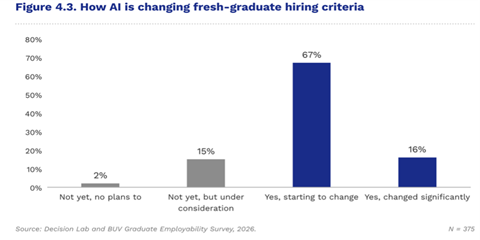
Digital literacy is the only capability area in which fresh graduates meet employers’ expectations, according to a new report. Yet, it is also the standard rising fastest, as businesses increasingly expect new hires to use AI effectively in the workplace. Some 83 per cent of employers say AI has changed, or is beginning to change, their hiring criteria, while 94 per cent report higher expectations for digital and AI capabilities than they had two to three years ago.

INFRASTRUCTURE / CONSTRUCTION / LOGISTIC / PORT
ĐÀ NẴNG GREEN-LIGHTS US$105 MILLION THAI DEVELOPMENT DEAL
The central city has approved an investment proposal by Thailand’s WHA Group to develop infrastructure for the 400ha WHA Đà Nẵng Industrial Park project on two communes of Thăng Bình and Đồng Dương, with an investment of more than VNĐ2.7 trillion (US$105 million). The city said it approved WHA Industrial Development International's status as an investor in the project, which is expected to take place between 2027 and 2034.

VIETNAM ECONOMY INVESTMENT
MOBILE PHONE EXPORTS RISE 20% TO $51.8 BILLION IN FIRST NINE MONTHS
Exports of mobile phones and components rose 20 per cent year-on-year to nearly US$51.8 billion in the first nine months of 2026, with China, the US and Republic of Korea accounting for more than half of the total. Shipments to the three markets reached a combined $26.18 billion, or 50.6 per cent of total exports of the product group during the period, according to data from the Vietnam Department of Customs under the Ministry of Finance.

VIETNAM ECONOMY INVESTMENT
FRUIT AND VEGETABLE EXPORTS POISED TO HIT $10 BILLION IN 2026
Fruit and vegetable exports are on track to reach nearly US$10 billion in 2026, after rising 19.9 per cent year on year to nearly US$7.4 billion in the first nine months, driven by strong seasonal demand and abundant tropical fruit supplies. The Ministry of Agriculture and Environment said the growth reflected stronger international demand for fresh produce and processed agricultural products.
GARMENT / TEXTILE
TEXTILE EXPORTS FACE DUAL CHALLENGES OF SUSTAINING ORDERS AND BOOSTING EFFICIENCY AMID GROWING COMPETITION
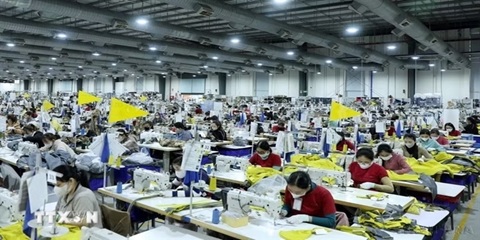
Data shows that the textile and garment sector maintained its growth momentum in the first nine months of this year. The industry's total export turnover reached an estimated US$35.721 billion in the first nine months of this year, up 3.3 per cent year-on-year. Despite posting encouraging export figures, Vietnamese textile and garment enterprises continue to navigate unpredictable market variables.
Events Sponsors






















