Want to be in the loop?
subscribe to
our notification
Business News
APPAREL EXPORT TO EU MUST MEET RULES OF ORIGIN
To provide information about the rules of origin in the EU-Vietnam Free Trade Agreement (EVFTA), the mechanism of origin self-certification, as well as experience of other countries around the world for Vietnamese garment and textile enterprises, the Vietnam Textile and Apparel Association (Vitas) recently cooperated with the European Trade Policy and Investment Support Project (EU-MUTRAP) to hold a workshop on “ Vietnam Textile and Garment Conference on Rules of Origin in the EVFTA Agreement.”
Speaking at the conference, Ms Vu Thi Phuong, Deputy Secretary General of Vitas, said that each FTA has its own rules of origin. Exports must meet requirements on rules of origin to enjoy preferential tax rates governed by relevant FTA agreed by both sides. However, the practical use of tax incentives from signed FTAs has been quite low. Currently, only 35 per cent of Vietnam's export products make full use of the opportunities provided by FTAs, while 65 per cent are still subject to high tariffs. One of the main reasons is that Vietnamese firms lack knowledge about origin. In addition, some rules of origin stipulated by FTAs is tight, but our companies still cannot meet them.
EVFTA negotiations concluded in December 2015. To realise its benefits, Vietnam and the EU agreed to quicken the ratification and bring it into force in 2018. The time is not much for garment and textile enterprises to prepare till then.
However, Vietnam's textile and garment market share in the EU is low, she added. By the end of 2015, Vietnam's textile and apparel products accounted for only 1.9 per cent of the share in the EU since they are imposed a high tax rate of 8 - 12 per cent. This reduces the competitiveness of Vietnamese textiles and garments. After seven years of EVFTA enforcement, all textiles and garments exported to the EU will be entitled zero tax, giving a huge opportunity for Vietnamese textile and apparel companies to boost their market shares. However, rules of origin of fabric hurt weaknesses of Vietnamese exporters. “To take advantage of opportunities, domestic garment companies need to recalculate their appropriate investment and business strategies and shift from low-valued cut, make and trim (CMT) to higher value forms of FOB (free on board) and ODM (original design manufacturing),” Phuong added.
Sharing Phuong’s viewpoint, Ms Dang Phuong Dung, Deputy Director of Vitas Advisory Board and EU-MUTRAP specialist, said, EVFTA tax incentives will bring golden opportunities for textile and garment firms to expand export markets. Nevertheless, the biggest obstacle to Vietnam’s garment and textile shipments to the EU is the rules of origin as they mainly rely on imported fabrics from China. Although Vietnam signed many new-generation FTAs with ASEAN, South Korea and Japan with the rules of origin from fabric afterwards, its manoeuvres of rules of origin are still limited.
Mr Stefan Moser, EU-MUTRAP specialist, said, in order to meet the requirements of EVFTA rules of origin, exports to the EU must meet the requirements of fabric produced in Vietnam or the EU, or from one-third country which has had FTAs with Vietnam and the EU. However, the rate of utilisation of bilateral rules of origin (EU imports of fabric for production and re-export to the EU) is very low because the price of EU fabrics is very expensive with a high transportation cost. “EVFTA opportunities are huge, but meeting rule of origin requirements is mandatory for enterprises. They must be prepared in all aspects to make the most of opportunities,” he emphasised.
At the conference, EU-MUTRAP specialists in rules of origin also clearly answered questions relating to EVFTA rules and procedures of origin certification raised by attending enterprises. This is really useful knowledge and information for Vietnamese garment and textile companies to enter EVFTA-ruled markets. This helps businesses not to be ruled out from the game, but also effectively utilised preferential tariffs, thus raising their chance of success.
Source: VCCI
Related News

INFRASTRUCTURE / CONSTRUCTION / LOGISTIC / PORT
VIỆT NAM-CAMBODIA TRADE GATHERS PACE TOWARDS $20 BILLION TARGET
Trade between Việt Nam and Cambodia continues to grow, remaining a bright spot and a key pillar of bilateral cooperation as the two countries aim to raise two-way trade to US$20 billion in the coming years. After setting a record of more than $11.3 billion last year, bilateral trade reached about $8.7 billion in the first eight months of this year, up 8.3 per cent year on year.
TECHNOLOGY
AI BEGINNING TO RESHAPE RECRUITMENT CRITERIA
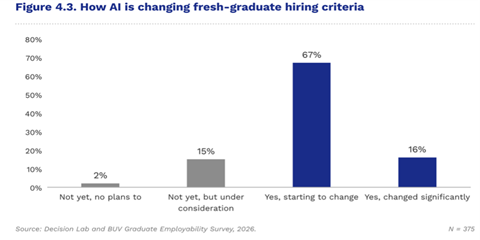
Digital literacy is the only capability area in which fresh graduates meet employers’ expectations, according to a new report. Yet, it is also the standard rising fastest, as businesses increasingly expect new hires to use AI effectively in the workplace. Some 83 per cent of employers say AI has changed, or is beginning to change, their hiring criteria, while 94 per cent report higher expectations for digital and AI capabilities than they had two to three years ago.

INFRASTRUCTURE / CONSTRUCTION / LOGISTIC / PORT
ĐÀ NẴNG GREEN-LIGHTS US$105 MILLION THAI DEVELOPMENT DEAL
The central city has approved an investment proposal by Thailand’s WHA Group to develop infrastructure for the 400ha WHA Đà Nẵng Industrial Park project on two communes of Thăng Bình and Đồng Dương, with an investment of more than VNĐ2.7 trillion (US$105 million). The city said it approved WHA Industrial Development International's status as an investor in the project, which is expected to take place between 2027 and 2034.

VIETNAM ECONOMY INVESTMENT
MOBILE PHONE EXPORTS RISE 20% TO $51.8 BILLION IN FIRST NINE MONTHS
Exports of mobile phones and components rose 20 per cent year-on-year to nearly US$51.8 billion in the first nine months of 2026, with China, the US and Republic of Korea accounting for more than half of the total. Shipments to the three markets reached a combined $26.18 billion, or 50.6 per cent of total exports of the product group during the period, according to data from the Vietnam Department of Customs under the Ministry of Finance.

VIETNAM ECONOMY INVESTMENT
FRUIT AND VEGETABLE EXPORTS POISED TO HIT $10 BILLION IN 2026
Fruit and vegetable exports are on track to reach nearly US$10 billion in 2026, after rising 19.9 per cent year on year to nearly US$7.4 billion in the first nine months, driven by strong seasonal demand and abundant tropical fruit supplies. The Ministry of Agriculture and Environment said the growth reflected stronger international demand for fresh produce and processed agricultural products.
GARMENT / TEXTILE
TEXTILE EXPORTS FACE DUAL CHALLENGES OF SUSTAINING ORDERS AND BOOSTING EFFICIENCY AMID GROWING COMPETITION
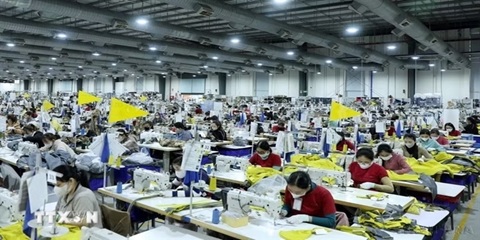
Data shows that the textile and garment sector maintained its growth momentum in the first nine months of this year. The industry's total export turnover reached an estimated US$35.721 billion in the first nine months of this year, up 3.3 per cent year-on-year. Despite posting encouraging export figures, Vietnamese textile and garment enterprises continue to navigate unpredictable market variables.
Events Sponsors






















