Want to be in the loop?
subscribe to
our notification
Business News
APPAREL INDUSTRY SEES STABLE GROWTH AMID PANDEMIC
Despite the devastating impact of the COVID-19 pandemic, Việt Nam’s textile and garment industry has seen stable growth, recording an export turnover of US$8.84 billion in the first quarter of 2022 with an increase of 22.5 per cent against the same period last year.
In many industries, especially labour-intensive ones like the textile and garment industry, labour shortages during the COVID-19 pandemic have directly impacted apparel manufacturers' production and business activities.
Trần Tường Anh, deputy general director of Hòa Thọ Textile and Garment JSC, said early March this year, 1,719 employees in her company were tested positive for COVID-19, accounting for 15 per cent of the company’s total number of employees.
Having a large number of employees to take off from work, the company encountered many difficulties in arranging its production plans. In addition, after returning to work, their health remained poor, and they could not keep up with daily work, leading to low labour productivity. Therefore, the company must negotiate with customers to reschedule delivery times, rearrange production plans, and prioritise urgent orders first.
Employees who previously worked indirectly now have been directly involved in production. The company has also arranged different workplaces and canteen for those who tested positive for COVID-19 to work once health authorities approved it, said Tường Anh.
The Garment 10 Corporation has affiliates in many provinces and cities. During the pandemic, the company still maintained its production as many workers tested positive for COVID-19, said Bạch Thăng Long, the corporation's deputy director.
Meanwhile, 8-3 Textile Co. Ltd. struggled with labour shortages worsened by the crush of new COVID cases forcing many into isolation. However, the company’s board of directors were flexible in changing shifts and rotating workers to ensure production and business activities.
Over the past two years, particularly in the fourth wave of the pandemic, apparel companies have always faced difficulties due to disruption of the global supply chain, leading to a temporary closure of many companies.
Hoàng Văn Linh, chairman of Aligro JSC, said fabrics were based on the seasons. Therefore, his company prioritised garment orders and had enough raw materials.
To cope with uncertainty during the pandemic, the company determined to ensure social and welfare interests for employees to make them feel secure at work, said Linh.
A representative of Hòa Thọ Textile and Garment JSC said workers were required immediately to leave work for treatment if they were infected with COVID-19.
After recovering from illness and returning to work, employees were supported with finance and meals for two weeks.
To deal with labour shortages due to isolation, the company has also been flexible in changing shifts and rotating work to ensure stable production.
Việt Nam has changed its strategy from a Zero COVID policy to safe and flexible adaption and effective control of the COVID-19 pandemic while recovering and developing the economy.
Textile and garment manufacturers under the Vietnam National Textile and Garment Group have received orders until the end of the third quarter and the whole year, thanks to their flexible responses during a pandemic and the robust responses of relevant bodies.
The industry is expected to thrive and earn $43 billion in exports this year.
Manufacturers should seize opportunities and work with partners to tap into the growth potential of the world’s textile and garment market.
Source: VNS
Related News

INFRASTRUCTURE / CONSTRUCTION / LOGISTIC / PORT
VIỆT NAM-CAMBODIA TRADE GATHERS PACE TOWARDS $20 BILLION TARGET
Trade between Việt Nam and Cambodia continues to grow, remaining a bright spot and a key pillar of bilateral cooperation as the two countries aim to raise two-way trade to US$20 billion in the coming years. After setting a record of more than $11.3 billion last year, bilateral trade reached about $8.7 billion in the first eight months of this year, up 8.3 per cent year on year.
TECHNOLOGY
AI BEGINNING TO RESHAPE RECRUITMENT CRITERIA
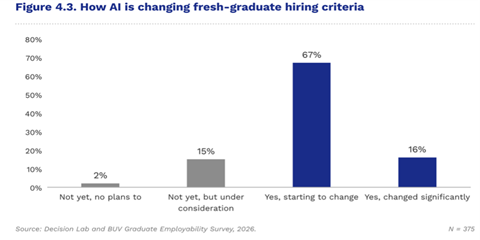
Digital literacy is the only capability area in which fresh graduates meet employers’ expectations, according to a new report. Yet, it is also the standard rising fastest, as businesses increasingly expect new hires to use AI effectively in the workplace. Some 83 per cent of employers say AI has changed, or is beginning to change, their hiring criteria, while 94 per cent report higher expectations for digital and AI capabilities than they had two to three years ago.

INFRASTRUCTURE / CONSTRUCTION / LOGISTIC / PORT
ĐÀ NẴNG GREEN-LIGHTS US$105 MILLION THAI DEVELOPMENT DEAL
The central city has approved an investment proposal by Thailand’s WHA Group to develop infrastructure for the 400ha WHA Đà Nẵng Industrial Park project on two communes of Thăng Bình and Đồng Dương, with an investment of more than VNĐ2.7 trillion (US$105 million). The city said it approved WHA Industrial Development International's status as an investor in the project, which is expected to take place between 2027 and 2034.

VIETNAM ECONOMY INVESTMENT
MOBILE PHONE EXPORTS RISE 20% TO $51.8 BILLION IN FIRST NINE MONTHS
Exports of mobile phones and components rose 20 per cent year-on-year to nearly US$51.8 billion in the first nine months of 2026, with China, the US and Republic of Korea accounting for more than half of the total. Shipments to the three markets reached a combined $26.18 billion, or 50.6 per cent of total exports of the product group during the period, according to data from the Vietnam Department of Customs under the Ministry of Finance.

VIETNAM ECONOMY INVESTMENT
FRUIT AND VEGETABLE EXPORTS POISED TO HIT $10 BILLION IN 2026
Fruit and vegetable exports are on track to reach nearly US$10 billion in 2026, after rising 19.9 per cent year on year to nearly US$7.4 billion in the first nine months, driven by strong seasonal demand and abundant tropical fruit supplies. The Ministry of Agriculture and Environment said the growth reflected stronger international demand for fresh produce and processed agricultural products.
GARMENT / TEXTILE
TEXTILE EXPORTS FACE DUAL CHALLENGES OF SUSTAINING ORDERS AND BOOSTING EFFICIENCY AMID GROWING COMPETITION
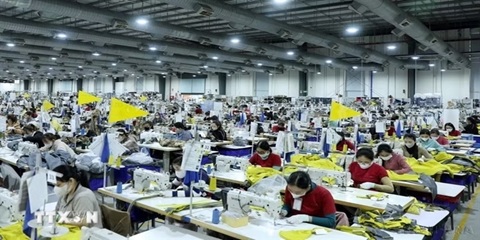
Data shows that the textile and garment sector maintained its growth momentum in the first nine months of this year. The industry's total export turnover reached an estimated US$35.721 billion in the first nine months of this year, up 3.3 per cent year-on-year. Despite posting encouraging export figures, Vietnamese textile and garment enterprises continue to navigate unpredictable market variables.
Events Sponsors






















