Want to be in the loop?
subscribe to
our notification
Business News
ASEAN CUSTOMS TRANSIT SYSTEM LAUNCHED TO BOOST REGIONAL TRADE
Cross-border traders in ASEAN can now take advantage of a newly-launched online customs transit management system – the ASEAN Customs Transit System (ACTS) to accelerate trade in goods by road within ASEAN.
The private sector in ASEAN now has access to a powerful new online system, the ASEAN Customs Transit System (ACTS), which will reduce intra-ASEAN trading challenges and enable companies to benefit fully from the ASEAN Economic Community (AEC) and the free movement of goods across the ASEAN region.
In 2017, ASEAN Economic Ministers set the twin goals of reducing trade transaction costs by 10 per cent by 2020 and doubling intra-ASEAN trade between 2017 and 2025. To realise this goal, the ASEAN Customs Transit System has been developed to allow businesses to lodge e-transit declarations directly with ASEAN Customs Authorities and to track the movement of their goods from loading at departure to delivery at the final destination.
“The implementation of the ASEAN Customs Transit System plays a vital role in facilitating the seamless movement of goods in the region. I believe the system would be an excellent tool in enhancing ASEAN’s trade and production networks as well as establishing a more unified market for its firms and consumers,” said Lim Jock Hoi, Secretary General of ASEAN. “The ACTS could also support post COVID recovery to accelerate the transit movement of medical supplies, vaccines, and personal protective equipment within the member states.”
ASEAN Customs Transit System is simplifying the movement of goods across the region, making it more efficient and cost-effective. Under the ACTS, the private sector can make a single customs transit declaration that covers the transport of goods across multiple ASEAN countries, without the need to make repeated customs declarations or change vehicles at each border. Special arrangements allow reliable traders to load their goods at their own premises in the country of departure, and to deliver the goods to their own premises at destination. Faster customs clearance at borders helps accelerate transit movements, and reduce the time and expense of carrying out regional trade in goods, to the benefit of producers and consumers across the ASEAN region.
The system is managed by a permanent ACTS Central Management Team based in the ASEAN Secretariat in Jakarta, Indonesia, with support from the EU-funded ARISE Plus programme.
"The ACTS is a remarkable achievement that is testament to the strong, dynamic, and long-standing partnership between ASEAN and the European Union,” said Koen Doens, Director General for International Cooperation and Development at the European Commission. “The ACTS will make the movement of goods by road quicker and easier across the borders of the participating ASEAN Member States, thereby reducing costs for businesses and citizens. The EU is proud to have joined ASEAN to make the ACTS a reality, providing European technical expertise and Є10 million since 2012, in addition to the Є5 million invested by our ASEAN partners,” he added.
ARISE Plus has provided extensive ACTS training for stakeholders in the public and private sectors, including customs authorities, government transport agencies, freight forwarders, transporters, banks, and insurance companies. Following the ASEAN Customs Transit System pilot activities in Cambodia, Lao PDR, Malaysia, Singapore, Thailand, and Vietnam, the system has now been formally launched for general use. The first successful ACTS transit movement occurred on October 23 and 24 (Friday and Saturday) with a truck travelling from Singapore via Malaysia to Thailand. The system will soon be available in Myanmar, and depending on business needs may later be expanded to Brunei, Indonesia, and the Philippines.
"We are excited to have the ASEAN Customs Transit System in place,” said Yukki Nugrahawan, chairman of the ASEAN Federation of Forwarders Associations (AFFA). “The freight forwarding community will be one of the main beneficiaries of this system as it offers simplified customs and transport control procedures between different ASEAN Member States and provides predictability on door-to-door delivery times and most importantly reduced transport costs. The ACTS will significantly accelerate transit movements across the region and help us reduce time and expenses of carrying out cross border trade in ASEAN,” he added.
The ASEAN Customs Transit System is an online system developed by ASEAN with the financial support of the European Union under the ARISE Plus programme. The ACTS is an ASEAN trade facilitation initiative under the ASEAN Framework Agreement on the Facilitation of Goods in Transit (AFAFGIT) and the ASEAN Economic Community Blueprint 2025.
Source: VIR
Related News

CHARITY / EXHIBITION / OTHER EVENTS
INVESTMENT OPPORTUNITIES IN CA MAU PROVINCE: 96 PROJECTS AND 20 STRATEGIC PROJECTS
We are pleased to share with you information on investment projects currently seeking investors in Ca Mau Province. Should your esteemed company or association be interested, we kindly invite you to review the project information and complete the registration form via the links provided. The Ho Chi Minh City Investment and Trade Promotion Centre (ITPC) will consolidate the expressions of interest and facilitate connections with the leadership of Ca Mau Province at a meeting tentatively scheduled for 13 November 2026 in Ho Chi Minh City.

MEMBER CORNER / PROMOTIONS
BẰNG KIỀU LIVESHOW - A SYMPHONY OF LOVE UNDER THE GOLDEN GLOW
A masterclass in live music that takes the audience on a soulful journey through immortal love songs, guided by the peerless artistry and emotive storytelling of renowned singer Bằng Kiều. The highlight of the night is his seamless musical chemistry with special guest Triệu Hồng Ngọc, promising passionate and deeply resonant duets inside the magnificent Grand Ballroom.
INFRASTRUCTURE / CONSTRUCTION / LOGISTIC / PORT
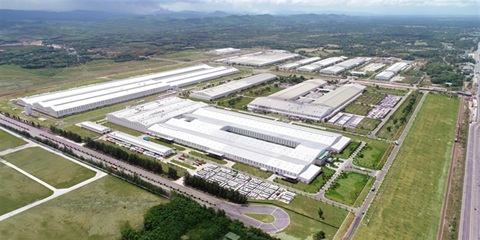
ĐÀ NẴNG GREEN-LIGHTS US$105 MILLION THAI DEVELOPMENT DEAL
The central city has approved an investment proposal by Thailand’s WHA Group to develop infrastructure for the 400ha WHA Đà Nẵng Industrial Park project on two communes of Thăng Bình and Đồng Dương, with an investment of more than VNĐ2.7 trillion (US$105 million). The city said it approved WHA Industrial Development International's status as an investor in the project, which is expected to take place between 2027 and 2034.
VIETNAM ECONOMY INVESTMENT
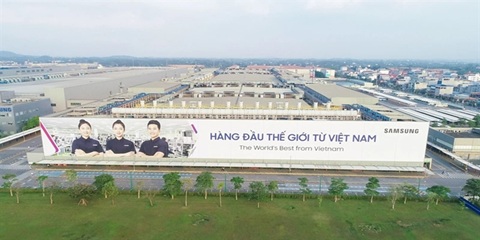
MOBILE PHONE EXPORTS RISE 20% TO $51.8 BILLION IN FIRST NINE MONTHS
Exports of mobile phones and components rose 20 per cent year-on-year to nearly US$51.8 billion in the first nine months of 2026, with China, the US and Republic of Korea accounting for more than half of the total. Shipments to the three markets reached a combined $26.18 billion, or 50.6 per cent of total exports of the product group during the period, according to data from the Vietnam Department of Customs under the Ministry of Finance.
INFRASTRUCTURE / CONSTRUCTION / LOGISTIC / PORT
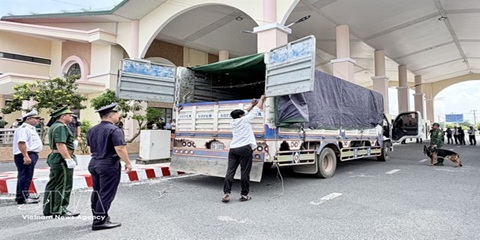
VIỆT NAM-CAMBODIA TRADE GATHERS PACE TOWARDS $20 BILLION TARGET
Trade between Việt Nam and Cambodia continues to grow, remaining a bright spot and a key pillar of bilateral cooperation as the two countries aim to raise two-way trade to US$20 billion in the coming years. After setting a record of more than $11.3 billion last year, bilateral trade reached about $8.7 billion in the first eight months of this year, up 8.3 per cent year on year.
VIETNAM ECONOMY INVESTMENT
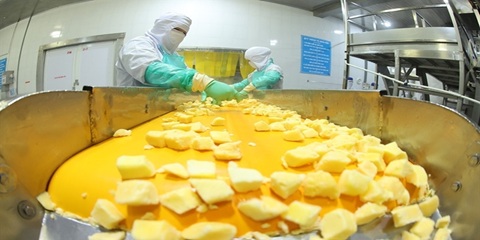
FRUIT AND VEGETABLE EXPORTS POISED TO HIT $10 BILLION IN 2026
Fruit and vegetable exports are on track to reach nearly US$10 billion in 2026, after rising 19.9 per cent year on year to nearly US$7.4 billion in the first nine months, driven by strong seasonal demand and abundant tropical fruit supplies. The Ministry of Agriculture and Environment said the growth reflected stronger international demand for fresh produce and processed agricultural products.
Events Sponsors






















