Want to be in the loop?
subscribe to
our notification
Business News
BẮC NINH DRIVES DIGITAL TRANSFORMATION AT 54,000 SMALL AND MEDIUM-SIZED ENTERPRISES
Bắc Ninh Province is accelerating digital transformation among its small- and medium-sized enterprises to enhance their efficiency and competitiveness and enable integration into global supply chains.
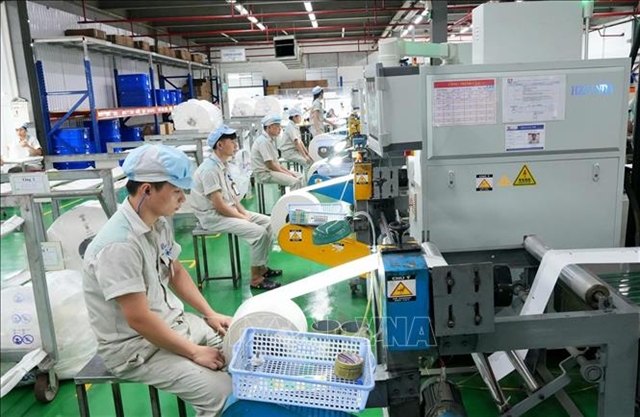
Thăng Long Packaging Production and Import-Export JSC in Bắc Ninh Province has invested in digital transformation to improve operation. — VNA/VNS Photo
BẮC NINH — Bắc Ninh Province is accelerating digital transformation among its small- and medium-sized enterprises to enhance their efficiency and competitiveness and enable integration into global supply chains.
Thăng Long Packaging Production and Import-Export JSC in Từ Sơn Ward is implementing a smart factory model to improve management and production. Bùi Tuấn Ngọc, head of the smart factory project, said the company invested VNĐ1.2 billion (US$45,800) in 2023 for initial platforms and nearly VNĐ3 billion in 2024 for software upgrades.
Transitioning from manual Excel entry to an Internet of Things system has allowed real-time tracking of output, machine status, and maintenance, speeding up management decisions.
The firm also standardised its data and production processes and trained staff to adapt to the new digital workflow. It is planning to invest an estimated VNĐ5 billion to expand this system also to its plastic packaging factory.
Meanwhile, Ha Thanh Fashion JSC in Hoàng Vân Commune is prioritising automation. The company has invested VNĐ18 billion over three years in nearly 100 machines, including automatic fabric cutters and spreaders.
Nguyễn Văn Thao, a manager in the cutting and finishing department, said programmable machinery reduces manual labour, increases accuracy, and enables faster order processing.
The company’s general director, Lê Xuân Tráng, said upgrading technology is essential to meet strict product standards from European partners. With these improvements, the company targets a 7.1 per cent sales increase to VNĐ600 billion by 2026.
Small- and medium-sized enterprises account for around 95 per cent of the province's 54,000 businesses.
However, Vũ Văn Cường, deputy director of the Bắc Ninh Department of Finance, pointed out that many firms struggle with accessing supportive policies, complex administrative procedures, and high borrowing costs, and these often lead to fragmented or ineffective technology investment.
To address this, the province has provided nearly VNĐ4 billion for 1,734 SMEs to create digital signatures.
By 2030, Bắc Ninh aims to help at least 15,000 SMEs assess their digital readiness and assist 8,000 in adopting digital platforms and artificial intelligence.
It is implementing the Politburo's Resolution 57, which promotes the adoption of technology and digital transformation among organisations and businesses.
Mai Sơn, standing deputy chairman of the Bắc Ninh People's Committee, said the province would provide targeted support based on industry needs, including funding for consultancy, the rental and purchase of digital solutions and interest on bank credit obtained for acquiring technologies.
The province will also prioritise digital skills training for executives and workers and expand 5G infrastructure in industrial zones to facilitate broader technology adoption. — VNS
Source: VNS
Related News

INFRASTRUCTURE / CONSTRUCTION / LOGISTIC / PORT
VIỆT NAM-CAMBODIA TRADE GATHERS PACE TOWARDS $20 BILLION TARGET
Trade between Việt Nam and Cambodia continues to grow, remaining a bright spot and a key pillar of bilateral cooperation as the two countries aim to raise two-way trade to US$20 billion in the coming years. After setting a record of more than $11.3 billion last year, bilateral trade reached about $8.7 billion in the first eight months of this year, up 8.3 per cent year on year.
TECHNOLOGY
AI BEGINNING TO RESHAPE RECRUITMENT CRITERIA
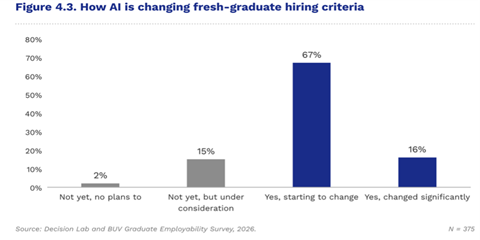
Digital literacy is the only capability area in which fresh graduates meet employers’ expectations, according to a new report. Yet, it is also the standard rising fastest, as businesses increasingly expect new hires to use AI effectively in the workplace. Some 83 per cent of employers say AI has changed, or is beginning to change, their hiring criteria, while 94 per cent report higher expectations for digital and AI capabilities than they had two to three years ago.
INFRASTRUCTURE / CONSTRUCTION / LOGISTIC / PORT
ĐÀ NẴNG GREEN-LIGHTS US$105 MILLION THAI DEVELOPMENT DEAL
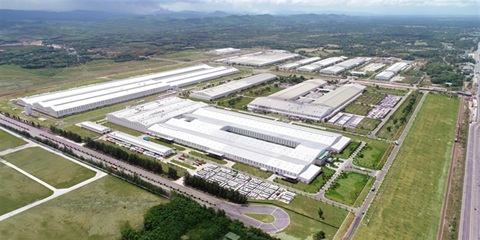
The central city has approved an investment proposal by Thailand’s WHA Group to develop infrastructure for the 400ha WHA Đà Nẵng Industrial Park project on two communes of Thăng Bình and Đồng Dương, with an investment of more than VNĐ2.7 trillion (US$105 million). The city said it approved WHA Industrial Development International's status as an investor in the project, which is expected to take place between 2027 and 2034.

VIETNAM ECONOMY INVESTMENT
MOBILE PHONE EXPORTS RISE 20% TO $51.8 BILLION IN FIRST NINE MONTHS
Exports of mobile phones and components rose 20 per cent year-on-year to nearly US$51.8 billion in the first nine months of 2026, with China, the US and Republic of Korea accounting for more than half of the total. Shipments to the three markets reached a combined $26.18 billion, or 50.6 per cent of total exports of the product group during the period, according to data from the Vietnam Department of Customs under the Ministry of Finance.

VIETNAM ECONOMY INVESTMENT
FRUIT AND VEGETABLE EXPORTS POISED TO HIT $10 BILLION IN 2026
Fruit and vegetable exports are on track to reach nearly US$10 billion in 2026, after rising 19.9 per cent year on year to nearly US$7.4 billion in the first nine months, driven by strong seasonal demand and abundant tropical fruit supplies. The Ministry of Agriculture and Environment said the growth reflected stronger international demand for fresh produce and processed agricultural products.
GARMENT / TEXTILE
TEXTILE EXPORTS FACE DUAL CHALLENGES OF SUSTAINING ORDERS AND BOOSTING EFFICIENCY AMID GROWING COMPETITION
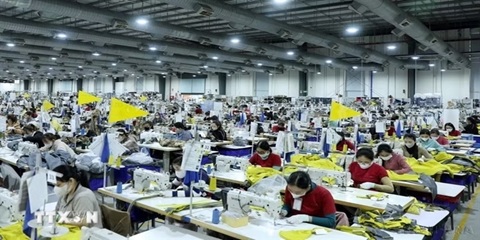
Data shows that the textile and garment sector maintained its growth momentum in the first nine months of this year. The industry's total export turnover reached an estimated US$35.721 billion in the first nine months of this year, up 3.3 per cent year-on-year. Despite posting encouraging export figures, Vietnamese textile and garment enterprises continue to navigate unpredictable market variables.
Events Sponsors






















