Want to be in the loop?
subscribe to
our notification
Business News
BANKS CUT BACK LENDING FOR PROPERTY SECTOR
[15-11-2016] The interest rates on medium- and long-term loans to the property sector have recently increased by 1-1.5 percentage points. The banks’ move is in response to the State Bank of Việt Nam (SBV)’s warning that they should exercise caution, particularly while lending to the high-end property segment, to head off a possible bubble.
In a message in October, the central bank warned that there are signs that lending is focused on real estate, particularly high-value housing.
Meanwhile, according to a report from the Ministry of Construction, supply of high-end housing is higher than that of social housing and the oversupply in the luxury segment is expected to worsen in the next few months.
The SBV’s HCM City office has reported that the end of September banks’outstanding loans were up 13.26 per cent year-on-year at more than VNĐ1.39 trillion.
Analysts said though there is no information about how much exactly has been pumped into housing, they believe it accounts for a majority of the total loans.
This judgment is based on certain reasons, one of which is that investors have recognised the real estate market’s recovery in the last two years. Other asset classes that used to be attractive in the past remain quiet.
Many banks prefer lending to the real estate sector rather than other industries because it is easier to manage since most of the loans are given against collateral.
Some experts said the Vietnamese real estate market is attractive because investors can make use of its opacity to make profits.
To reduce the risks related to real estate investing, the central bank has instructed credit institutions to control growth of credit to the real estate sector, particularly to major projects,
It has also advised them to carefully appraise new projects, especially high-class apartments and resorts before lending to them.
Experts suggested the central bank needs to adjust credit flows into the real estate market based on the feasibility of each project and pay more attention to credit quality by monitoring the use of the loans.
Forex pressure
After the State Bank of Việt Nam allowed banks to continue lending in foreign currencies foreign currency credit growth has increased significantly.
As of September it had gone up 5.44 per cent for the year.
VietinBank’s foreign currency loans rose by 29.7 per cent in the second quarter and by 31.6 per cent in the third quarter.
VietcomBank’s lending grew by 12.2 per cent and 8.7 per cent respectively.
Analysts attributed the strong growth to the increasing demand to fund imports, which spike during the year-end.
Though banks have cut interest rates on đồng loans several times in the last few months, the gap between them and interest rates on foreign currency loans remains big, making the latter more attractive to companies.
The banks too find lending in foreign currencies highly profitable since they have to pay zero interest on foreign currency deposits while they charge interest rates of 3-6 per cent on the loans.
Not surprisingly, foreign currency deposits at most banks have been falling relentlessly.
They fell by 21.7 per cent in the third quarter at BIDV, by 17.9 per cent at Eximbank and by 10.2 per cent at SHB.
The big difference between the growth rates of loans and deposits is expected to cause pressure on the banks’ foreign currency liquidity.
But analysts dismissed these fears saying once US central bank would hike interest rates when the country’s economy makes a full recovery.
This would see the greenback strengthen and encourage people to convert their đồng into dollars, helping increase foreign currency deposits at banks.
The central bank’s policy of not allowing foreign currency loans to exporters will take effect on December 31, and this would bring down banks’ foreign currency lending, thus improving their liquidity.
No interest rate cap
The State Bank of Việt Nam recently issued a draft circular regulating consumer credit activities to foster development of the financial industry.
It allows interest rates on consumer loans to be negotiated between lenders and their borrowers.
This means that the 20 per cent cap on interest rates under the 2015 Civil Code, which is due to take effect in the new year, will not apply to financial services companies.
The circular has been hailed by many experts, who said is a sound decision since it respects the market principle of negotiation between lenders and borrowers.
It is also in line with the central bank’s management orientation and the Law on Credit Institutions that allows such negotiations.
They also warned, however, that the 20 per cent ceiling is too low to hedge the risks involved in consumer credit.
And to continue with the market forces concept, the higher the risk the higher will be the interest rate.
The rate cap will be a non-market administrative measure.
Another good aspect of the draft circular is that it separates consumer lending by banks and finance companies.
The new regulations targeted at financial companies are expected to strongly promote consumer credit activities.
Waiting to buy bank’s bad debts
The Việt Nam Asset Management Company now has non-performing loans worth around US$10 billion.
Analysts said its bad debts are enough and more to ensure any future debt market would operate well.
Notably, most of the bad debts are secured with assets meaning they would be very attractive to investors.
Since being established, the VAMC has worked with 52 investors who want to buy the bad debts, of whom 35 were foreigners.
The company has also signed agreements with 13 overseas investors and six domestic ones to keep their debt buying activities confidential.
Among them are the IFC, Standard Chartered Bank, Jadara Capital, Seven Seas Holding, Blackriver Asset Management, GIC, Yamaichi Securities, VinaCapital, and VIC.
Dr Lê Xuân Nghĩa, director of the Business Development Institute, told Đầu Tư newspaper that many foreign investors want to buy bad debts.
However, bad debts remain one of the biggest problems for the banking sector.
The reason is that few have been settled, and the settlements are happening at snail’s pace. This causes difficulties not only for the lenders but also for all prospective borrowers.
For instance, between 2013 and last June VAMC bought VNĐ247 trillion ($10.9 billion) worth of bad debts from lenders but has only collected VNĐ31.2 trillion ($1.38 billion).
For the tardy collection, analysts blame legal hindrances that prevent investors from entering the debt market.
The Investment Law has debt trading in the list of conditional businesses, but with the Government yet to issue regulations for it, companies keen on entering the market simply do not know what conditions they have to fulfill.
The procedures for transferring land use rights and ownership of assets attached to a land are tortuous and time-consuming while most of the collateral for bad debts consists of property.
In addition, how to seize collateral is not spelled out in the Civil Code, making it difficult to take possession.
Article 301 of the 2015 Civil Code stipulates that the only solution for creditors is to sue debtors to take over collateral.
Consequently, the number of foreign and domestic investors participating in debt trading remains modest.
Source: VIR
Related News
VIETNAM ECONOMY INVESTMENT
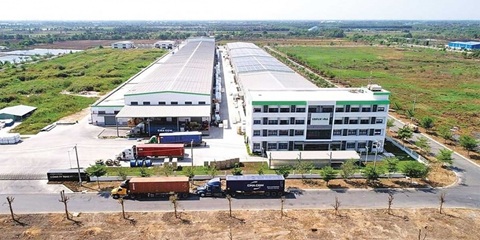
FOREIGN INVESTORS SEEKING A SYNCHRONISED MANUFACTURING ECOSYSTEM
Instead of focusing only on land costs and incentives as usual, foreign investors are seeking a synchronised manufacturing ecosystem, from stable power supply and logistics to shared infrastructure and the convenience of completing residence procedures for experts to serve their long-term investment in the country.

INFRASTRUCTURE / CONSTRUCTION / LOGISTIC / PORT
DONG THAP PROVINCE STEPS UP INDUSTRIAL EXPANSION AND INFRASTRUCTURE CONNECTIVITY
Accelerating public investment, strengthening inter-regional connectivity, and expanding industrial land are helping Dong Thap efficiently bolster competitiveness and drive economic growth. Following the 2025 merger of the former Dong Thap and Tien Giang provinces, the expanded Dong Thap province in the Mekong Delta faces mounting pressure to accelerate infrastructure development and strengthen connectivity among local economic zones, urban areas, industrial parks (IPs), and production centres.
PROPERTY / INDUSTRIAL ZONE
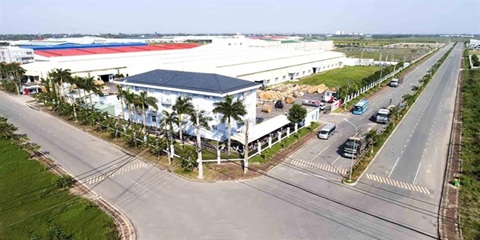
HCM CITY ATTRACTS US$5.7 BILLION INTO EXPORT PROCESSING AND INDUSTRIAL ZONES
HCM City attracted US$5.7 billion in domestic and foreign investment into its export processing and industrial zones during the first nine months of 2026. The figure exceeded the city's full-year target by 31 per cent, highlighting strong momentum in high-quality industrial investment under Resolution No.10-NQ/TW. Total investment reached 131 per cent of the 2026 target of $4.25 billion and represented a 29 per cent increase compared with the same period in 2025, according to the city's Export Processing and Industrial Zones Authority (HEPZA).

BANKING / FINANCE / INSURANCE / TAX
REMITTANCES TO HCM CITY RISE NEARLY 40% IN Q3
Remittances to HCM City reached more than US$2.83 billion in the third quarter of this year, up 39.5 per cent from the previous quarter and 3.6 per cent year-on-year. This was the first quarter showing positive annual growth this year, helping narrow the decline in remittance inflows over the first nine months. According to the State Bank of Vietnam (SBV)’s Regional Branch 2, remittances transferred to HCM City through credit institutions and economic organisations totalled $2.835 billion in Q3, an increase of more than $802 million from the previous quarter.

VIETNAM ECONOMY INVESTMENT
LOCALITIES REPORT BREAKTHROUGH RESULTS IN FDI IN FIRST NINE MONTHS
In Ho Chi Minh City, total registered capital reached $17.2 billion in the first nine months, up 4.2 times from the same period last year. The figure included more than $9.35 billion in newly registered capital and over $4.9 billion in additional capital for existing projects. Foreign investors also registered more than $2.9 billion through capital contributions and share purchases.

TECHNOLOGY
TECH SECTOR GROWTH OPENS UP OPPORTUNITIES FOR VIỆT NAM TO GO GLOBAL
The growth of the electronics, semiconductor and high-tech sectors worldwide is opening up a variety of opportunities for Vietnamese enterprises to integrate more deeply into the global supply chain. However, to become suppliers for these corporations, domestic enterprises must meet rigorous standards regarding quality, technology, productivity and order fulfilment capabilities.
Events Sponsors






















