Want to be in the loop?
subscribe to
our notification
Business News
BANKS HOPE TO LURE FOREIGN INVESTORS
Despite the current increasing foreign investment inflows, merged and acquired banks will consider selling stakes to foreign investors after completing the restructuring to up the attractiveness of sales, bank officials said.
After the merger and acquisition (M&A) process, most banks such as Saigon Commercial Bank (SCB), Sacombank, Saigon-Hanoi Bank (SHB), and Maritime Bank said they are now still focusing on promoting restructuring.
CEO of the Saigon Commercial Bank (SCB) Vo Tan Hoang Van said his bank’s financial situation had improved remarkably under the restructuring process as it accelerated bad debt settlement and cleaned its balance sheet.
SCB will consider selling shares in 2019 after the restructuring is completed, Van said, expecting that the move to attract foreign investment next year would bring more advantages to SCB as the bank’s business performance will be much better than currently.
The Saigon-Hanoi Bank (SHB) is taking the same route. Do Quang Hien, SHB chairman, said that many foreign investors are interested in buying SHB’s stakes. However, the bank would make sure the investors it attracts are those who have long-term investment demands and the ability to support the bank in enhancing governance.
SHB’s board of directors wants foreign strategic shareholders to be economic organisations that have long-term investment demand as well as clear management and governance policies to participate in the bank’s governance and provide technological support to ensure the bank’s sustained development, Hien said.
The bank expects to co-operate with financial groups and foreign investment funds to accelerate its retail segment, exploit capital sources and invest in Vietnamese projects and businesses, he said.
This strategy will set the stage for SHB to make a breakthrough in 2018 and the following years, facilitating profit and revenue growth, Hien said.
Banking experts said it is reasonable for some merged or acquired banks to be cautious and wait for good opportunities to find foreign partners and target strategic partners.
The experts explained after the M&A process, it will take banks several years to recover as they need to pay off bad debts. Banks eventually become stronger after finishing the restructuring process, which in turn helps them easier find the most suitable strategic investors.
Economist Tran Du Lich said that restructured banks need to enhance their strength through support from strategic partners. However, they must be cautious in finding investors as foreign inflows to Vietnamese banks are increasing but are mainly in the form of short-term investments, which does not help them enhance governance and improve technologies.
Source: VIR
Related News
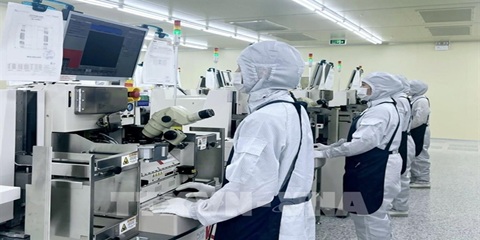
TECHNOLOGY
TECH SECTOR GROWTH OPENS UP OPPORTUNITIES FOR VIỆT NAM TO GO GLOBAL
The growth of the electronics, semiconductor and high-tech sectors worldwide is opening up a variety of opportunities for Vietnamese enterprises to integrate more deeply into the global supply chain. However, to become suppliers for these corporations, domestic enterprises must meet rigorous standards regarding quality, technology, productivity and order fulfilment capabilities.
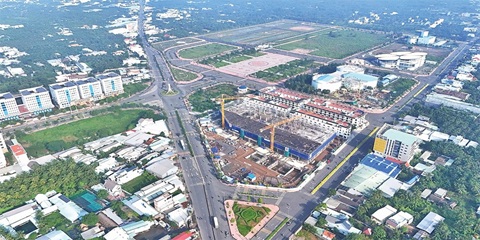
INFRASTRUCTURE / CONSTRUCTION / LOGISTIC / PORT
DONG THAP PROVINCE STEPS UP INDUSTRIAL EXPANSION AND INFRASTRUCTURE CONNECTIVITY
Accelerating public investment, strengthening inter-regional connectivity, and expanding industrial land are helping Dong Thap efficiently bolster competitiveness and drive economic growth. Following the 2025 merger of the former Dong Thap and Tien Giang provinces, the expanded Dong Thap province in the Mekong Delta faces mounting pressure to accelerate infrastructure development and strengthen connectivity among local economic zones, urban areas, industrial parks (IPs), and production centres.
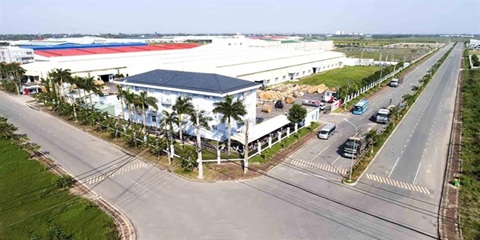
PROPERTY / INDUSTRIAL ZONE
HCM CITY ATTRACTS US$5.7 BILLION INTO EXPORT PROCESSING AND INDUSTRIAL ZONES
HCM City attracted US$5.7 billion in domestic and foreign investment into its export processing and industrial zones during the first nine months of 2026. The figure exceeded the city's full-year target by 31 per cent, highlighting strong momentum in high-quality industrial investment under Resolution No.10-NQ/TW. Total investment reached 131 per cent of the 2026 target of $4.25 billion and represented a 29 per cent increase compared with the same period in 2025, according to the city's Export Processing and Industrial Zones Authority (HEPZA).
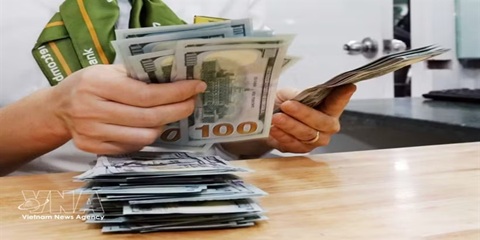
BANKING / FINANCE / INSURANCE / TAX
REMITTANCES TO HCM CITY RISE NEARLY 40% IN Q3
Remittances to HCM City reached more than US$2.83 billion in the third quarter of this year, up 39.5 per cent from the previous quarter and 3.6 per cent year-on-year. This was the first quarter showing positive annual growth this year, helping narrow the decline in remittance inflows over the first nine months. According to the State Bank of Vietnam (SBV)’s Regional Branch 2, remittances transferred to HCM City through credit institutions and economic organisations totalled $2.835 billion in Q3, an increase of more than $802 million from the previous quarter.
VIETNAM ECONOMY INVESTMENT
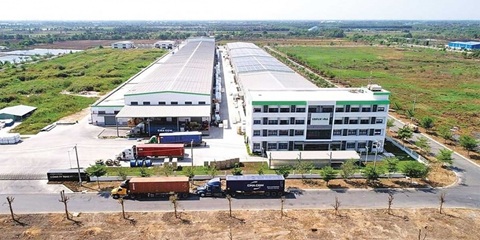
FOREIGN INVESTORS SEEKING A SYNCHRONISED MANUFACTURING ECOSYSTEM
Instead of focusing only on land costs and incentives as usual, foreign investors are seeking a synchronised manufacturing ecosystem, from stable power supply and logistics to shared infrastructure and the convenience of completing residence procedures for experts to serve their long-term investment in the country.
VIETNAM ECONOMY INVESTMENT
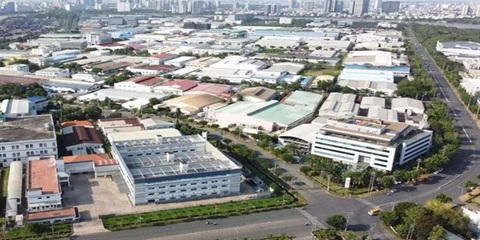
HCM CITY ADDRESSES MANUFACTURING, LAND HURDLES FOR Q4 GROWTH PUSH
HCM City is adjusting growth scenarios for lagging sectors and removing key bottlenecks in manufacturing and industrial land pricing to achieve a 13.23 per cent expansion in the fourth quarter of 2026. This sharp fourth-quarter acceleration is required to secure the city's full-year double-digit targets, following a 9.06 per cent GRDP growth recorded in the first nine months.
Events Sponsors






















