Want to be in the loop?
subscribe to
our notification
Business News
BANKS INCREASE CAPITAL THROUGH PAYING DIVIDENDS IN SHARES
Many large banks are implementing plans to issue shares to pay dividends in the last months of this year.
The move is aimed to increase charter capital, improve financial strength, meet the State Bank of Vietnam (SBV)’s capital safety regulations and expand operating scale.
Accordingly, BIDV plans to issue more than 642 million shares to pay dividends, which will increase the bank’s charter capital from nearly VNĐ50.59 trillion to more than VNĐ57 trillion.
BIDV has recently finalised the dividend entitlement date on November 29 this year, at a rate of 12.69 per cent. Thus, the bank’s shareholders, who hold each 100 BID shares, will receive 12.69 new shares.
Besides BIDV, VietinBank plans to issue more than 564 million shares to pay dividends to increase its charter capital from nearly VNĐ48.056 trillion to VNĐ53.7 trillion.
VietinBank has also closed the ex-rights trading date on November 30 this year. The dividend ratio is 11.7415 per cent, meaning shareholders owning 1,000 shares at the closing date will receive 117 new shares.
Earlier, Vietcombank also officially increased its charter capital to VNĐ55.89 trillion, after paying stock dividends at the rate of 18.1 per cent.
Agribank in the middle of this year was also approved by the National Assembly to supplement charter capital for the 2021-30 period with a maximum of VNĐ17.1 trillion, of which VNĐ6.75 trillion will be added in 2023 and a maximum of nearly VNĐ10.35 trillion will be in 2024 from the State budget.
Not only large State-owned banks, many other private banks have also locked in the right to receive dividends and bonus shares, such as OCB with a dividend ratio of 50 per cent in shares; HDBank with a rate of 15 per cent in shares; and SHB with a ratio of 18 per cent in shares.
Notably, in this November, VPBank for the first time in the past decade finalised the list of shareholders to pay cash dividends at a rate of 10 per cent. With more than 7.9 billion shares in circulation, VPBank spent more than VNĐ7.9 trillion to pay dividends. VPBank was one of the few banks that distributed a portion of dividends in cash this year.
SBV’s statistics showed 28 banks have expected to increase their charter capital by more than VNĐ163 trillion in 2023, higher than last year’s number of VNĐ154 trillion. It is estimated that more than four billion bank shares are issued this year to pay dividends to investors.
According to international credit rating organisation Fitch Ratings, Việt Nam's rapid credit growth in recent years has posed a big challenge for banks in ensuring capital safety. Fitch Ratings believes that the Vietnamese banking system needs additional capital of up to US$10.7 billion, equal to 2.9 per cent of GDP, to ensure risk provisions and maintain the capital adequacy ratio (CAR) at 10 per cent.
Source: VNS
Related News

CHARITY / EXHIBITION / OTHER EVENTS
INVESTMENT OPPORTUNITIES IN CA MAU PROVINCE: 96 PROJECTS AND 20 STRATEGIC PROJECTS
We are pleased to share with you information on investment projects currently seeking investors in Ca Mau Province. Should your esteemed company or association be interested, we kindly invite you to review the project information and complete the registration form via the links provided. The Ho Chi Minh City Investment and Trade Promotion Centre (ITPC) will consolidate the expressions of interest and facilitate connections with the leadership of Ca Mau Province at a meeting tentatively scheduled for 13 November 2026 in Ho Chi Minh City.
MEMBER CORNER / PROMOTIONS
BẰNG KIỀU LIVESHOW - A SYMPHONY OF LOVE UNDER THE GOLDEN GLOW
A masterclass in live music that takes the audience on a soulful journey through immortal love songs, guided by the peerless artistry and emotive storytelling of renowned singer Bằng Kiều. The highlight of the night is his seamless musical chemistry with special guest Triệu Hồng Ngọc, promising passionate and deeply resonant duets inside the magnificent Grand Ballroom.
INFRASTRUCTURE / CONSTRUCTION / LOGISTIC / PORT
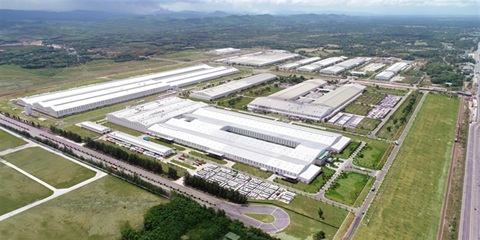
ĐÀ NẴNG GREEN-LIGHTS US$105 MILLION THAI DEVELOPMENT DEAL
The central city has approved an investment proposal by Thailand’s WHA Group to develop infrastructure for the 400ha WHA Đà Nẵng Industrial Park project on two communes of Thăng Bình and Đồng Dương, with an investment of more than VNĐ2.7 trillion (US$105 million). The city said it approved WHA Industrial Development International's status as an investor in the project, which is expected to take place between 2027 and 2034.
VIETNAM ECONOMY INVESTMENT
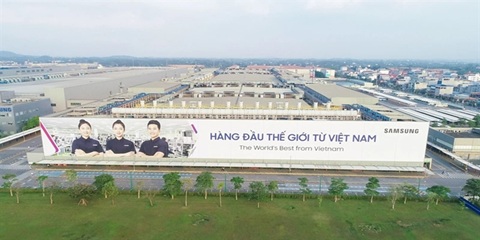
MOBILE PHONE EXPORTS RISE 20% TO $51.8 BILLION IN FIRST NINE MONTHS
Exports of mobile phones and components rose 20 per cent year-on-year to nearly US$51.8 billion in the first nine months of 2026, with China, the US and Republic of Korea accounting for more than half of the total. Shipments to the three markets reached a combined $26.18 billion, or 50.6 per cent of total exports of the product group during the period, according to data from the Vietnam Department of Customs under the Ministry of Finance.
INFRASTRUCTURE / CONSTRUCTION / LOGISTIC / PORT
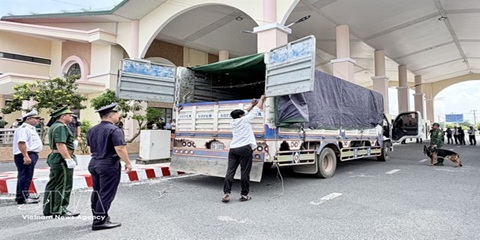
VIỆT NAM-CAMBODIA TRADE GATHERS PACE TOWARDS $20 BILLION TARGET
Trade between Việt Nam and Cambodia continues to grow, remaining a bright spot and a key pillar of bilateral cooperation as the two countries aim to raise two-way trade to US$20 billion in the coming years. After setting a record of more than $11.3 billion last year, bilateral trade reached about $8.7 billion in the first eight months of this year, up 8.3 per cent year on year.
VIETNAM ECONOMY INVESTMENT
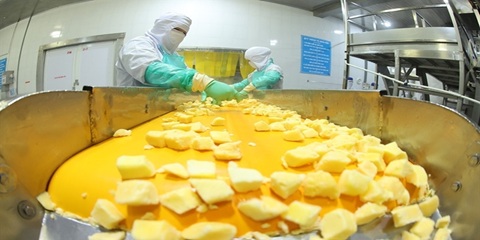
FRUIT AND VEGETABLE EXPORTS POISED TO HIT $10 BILLION IN 2026
Fruit and vegetable exports are on track to reach nearly US$10 billion in 2026, after rising 19.9 per cent year on year to nearly US$7.4 billion in the first nine months, driven by strong seasonal demand and abundant tropical fruit supplies. The Ministry of Agriculture and Environment said the growth reflected stronger international demand for fresh produce and processed agricultural products.
Events Sponsors






















