Want to be in the loop?
subscribe to
our notification
Business News
BANKS PROSPER
Many commercial banks in Vietnam have achieved profit of trillions of dong and are on the right track for the whole year’s target. Tendency of retail customers and consumer loan development takes place at all banks, creating a driving force for increasing profits.
Many banks report high growth
Many commercial banks have reported impressive growth after nine months, earning profit of trillions of Vietnamese Dong. The Joint Stock Commercial Bank for Foreign Trade of Vietnam (Vietcombank) leads the commercial banks in terms of absolute value. Pre-tax profit might jump to VND10,500 billion or even VND11,000 billion.
Vietcombank is the first bank that has bought all the bad debts sold to the Vietnam Asset Management Company (VAMC). The return from the bad debt disposal has been forecast. Over the past few years, Vietcombank has been repaid VND1,500-2,000 billion each year. And in the first nine months of this year, the bank earned VND1,554 billion.
Some smaller scale commercial banks have also reported trillions of Vietnamese Dong including Ho Chi Minh City Development Joint Stock Commercial Bank (HDBank) whose growth has surged 279 per cent, surpassing the whole year plan, and the profit consolidated before tax in the first 9 months of 2017 reaching VND1,912 billion. The HDBank also expects consolidated profit of VND2,400 billion, nearly double its target. This is the strongest breakthrough of the bank after nine years in the market.
The 9-month cumulative profit of LienViet Post Joint Stock Commercial Bank (LienVietPostBank) reached VND1,433 billion, up 65 per cent over the same period and after tax revenue was VND1,125 billion, up 61 per cent.
Another surprise is Sacombank. For the first nine months, Sacombank's net interest income came to VND3,759 billion, up 38 per cent over the last year. The profit before tax and after tax were VND1,025 billion and VND771 billion respectively, 5 times higher than the same period.
The leading commercial banks such as Vietnam Prosperity Joint Stock Commercial Bank (VPBank), Vietnam Technological and Commercial Joint Stock Bank (Techcombank), Military Commercial Joint Stock Bank (MBB), Asia Commercial Bank (ACB), and Saigon – Hanoi Commercial Joint Stock Bank (SHB) are still keeping up their profitability, completely optimistic with their full year plans.
Even some commercial banks have already completed their full year target including the Orient Commercial Joint Stock Bank (OCB) with pre-tax profit of VND789 billion, fulfilling 101 per cent of its full year target. The Tien Phong Commercial Joint Stock Bank (TPBank) also recorded a pre-tax profit of VND807 billion, surpassing its full year target of VND780 billion. The An Binh Commercial Join Stock Bank (ABBank) reached pre-tax profit of VND489 billion and the net profit of VND424 billion, doubling the first nine months of 2016 and 8 per cent higher the full year target (VND450 billion).
The statistical data from the National Financial Supervisory Commission reveals positive figures. Net interest income from credit activities increased sharply (15.8 per cent); the net interest margin increased to 2.8 per cent (2.7 per cent in the same period of 2016); provision profit increased 30.2 per cent over the same period of 2016; the total provisioning expense ratio was 49 per cent, down from 53 per cent in the same period of 2016.
Momentum for profit growth
The big motivation for commercial banks' profitability comes from the process of dealing with bad debts. In many cases, bad debt becomes a reserve for banks, when they set up risk provisions. The bad debts bring back the prospect of reversal and offsetting profitability, and are also a major driving force of many banks this year.
According to the National Financial Supervisory Commission, in the first seven months of 2017, the whole system has successfully dealt with VND45 trillion of bad debt, including 33.6 per cent of bad debt recovered from customers, a significant proportion associated with the profitability.
Commercial banks have also shifted their activities to the retail segment instead of focusing on loans to large projects. The "Big 4" including The Joint Stock Commercial Bank for Foreign Trade of Vietnam (Vietcombank), Vietnam Bank for Agriculture and Rural Development (Agribank), Vietnam Joint Stock Commercial Bank for Industry and Trade (VietinBank) and Joint Stock Commercial Bank for Investment and Development of Vietnam (BIDV) are all targeting the retail sector. In the trend of lowering lending rates, the margins on retail loans and personal loans have become more and more attractive.
A new direction that targets of commercial banks are consumption credit and small personal loans. Consumption credit is profitable for commercial banks with specialised consumer finance companies as VPBank, HDBank, MBBank and SHB. This is also a strong factor in the dynamics to create profits of these banks this year.
Source: VCCI
Related News
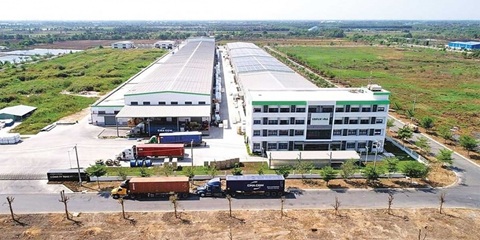
VIETNAM ECONOMY INVESTMENT
FOREIGN INVESTORS SEEKING A SYNCHRONISED MANUFACTURING ECOSYSTEM
Instead of focusing only on land costs and incentives as usual, foreign investors are seeking a synchronised manufacturing ecosystem, from stable power supply and logistics to shared infrastructure and the convenience of completing residence procedures for experts to serve their long-term investment in the country.
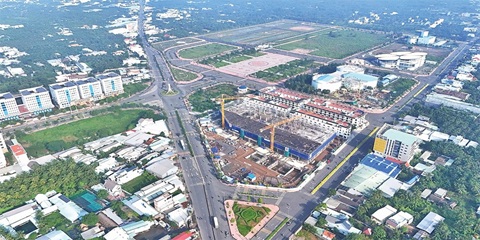
INFRASTRUCTURE / CONSTRUCTION / LOGISTIC / PORT
DONG THAP PROVINCE STEPS UP INDUSTRIAL EXPANSION AND INFRASTRUCTURE CONNECTIVITY
Accelerating public investment, strengthening inter-regional connectivity, and expanding industrial land are helping Dong Thap efficiently bolster competitiveness and drive economic growth. Following the 2025 merger of the former Dong Thap and Tien Giang provinces, the expanded Dong Thap province in the Mekong Delta faces mounting pressure to accelerate infrastructure development and strengthen connectivity among local economic zones, urban areas, industrial parks (IPs), and production centres.
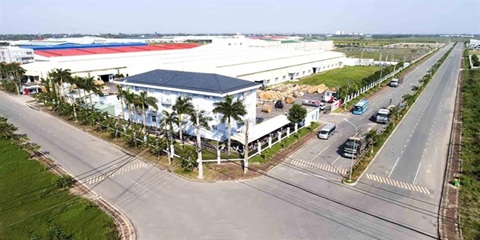
PROPERTY / INDUSTRIAL ZONE
HCM CITY ATTRACTS US$5.7 BILLION INTO EXPORT PROCESSING AND INDUSTRIAL ZONES
HCM City attracted US$5.7 billion in domestic and foreign investment into its export processing and industrial zones during the first nine months of 2026. The figure exceeded the city's full-year target by 31 per cent, highlighting strong momentum in high-quality industrial investment under Resolution No.10-NQ/TW. Total investment reached 131 per cent of the 2026 target of $4.25 billion and represented a 29 per cent increase compared with the same period in 2025, according to the city's Export Processing and Industrial Zones Authority (HEPZA).

BANKING / FINANCE / INSURANCE / TAX
REMITTANCES TO HCM CITY RISE NEARLY 40% IN Q3
Remittances to HCM City reached more than US$2.83 billion in the third quarter of this year, up 39.5 per cent from the previous quarter and 3.6 per cent year-on-year. This was the first quarter showing positive annual growth this year, helping narrow the decline in remittance inflows over the first nine months. According to the State Bank of Vietnam (SBV)’s Regional Branch 2, remittances transferred to HCM City through credit institutions and economic organisations totalled $2.835 billion in Q3, an increase of more than $802 million from the previous quarter.

VIETNAM ECONOMY INVESTMENT
LOCALITIES REPORT BREAKTHROUGH RESULTS IN FDI IN FIRST NINE MONTHS
In Ho Chi Minh City, total registered capital reached $17.2 billion in the first nine months, up 4.2 times from the same period last year. The figure included more than $9.35 billion in newly registered capital and over $4.9 billion in additional capital for existing projects. Foreign investors also registered more than $2.9 billion through capital contributions and share purchases.

TECHNOLOGY
TECH SECTOR GROWTH OPENS UP OPPORTUNITIES FOR VIỆT NAM TO GO GLOBAL
The growth of the electronics, semiconductor and high-tech sectors worldwide is opening up a variety of opportunities for Vietnamese enterprises to integrate more deeply into the global supply chain. However, to become suppliers for these corporations, domestic enterprises must meet rigorous standards regarding quality, technology, productivity and order fulfilment capabilities.
Events Sponsors






















