Want to be in the loop?
subscribe to
our notification
Business News
BANKS SEEK INCREASED CHARTER CAPITAL
It is the bank shareholders meeting season, and topping the agenda, besides the dividend payout ratio, is increasing their regulatory capital. On April 15 Techcombank announced it would hike its charter capital by VND5 trillion (US$220 million) to nearly VND14 trillion ($616 million) this year by selling more shares.
Ho Hung Anh, its chairman, said the higher capital is needed to improve financial strength and competitiveness.
Viet Nam Prosperity Joint Stock Commercial Bank (VPBank) has disclosed plans to issue nearly 329.4 million shares for VND1.4 trillion this year to increase its capital to over VND14 trillion ($622 million).
The money would be used to ensure the bank’s business activities are well funded and also help meet various ratio requirements, a spokesman said.
Banks have also been issuing debt instruments like bonds and certificates of deposit that make up their tier II capital.
Vietcombank and ACB, for instance, successfully issued 10-year bonds last December to raise VND2 trillion and VND3 trillion respectively.
In February and March this year Sacombank and Nam A Bank issued certificates of deposits for seven years.
But analysts said despite their efforts banks would find it very difficult to increase their capital, with bad debts remaining the biggest hurdle, causing apprehension in the minds of investors about putting their money in banks.
Not long ago three struggling banks were bought by the State Bank of Viet Nam (SBV) for zero dong.
Other banks have been placed under the SBV’s control to manage possible risks and prevent the erosion of their assets because their bad debts are almost equivalent to shareholders’ capital.
Why are banks looking to increase their capital at this difficult juncture?
The answer lies in the series of new regulations issued or to be by the central bank to improve banks’ health.
One of them is a road map for reducing from 60 per cent to 40 per cent the maximum ratio of short-term deposits that can be used for medium- and long-term loans. The 60 per cent ratio will remain unchanged this year before being reduced to 50 per cent next and 40 per cent in 2018.
Some 85-90 per cent of banks’ deposits are short-term (up to 12 months), while long-term loans account for 65-70 per cent of the total.
In this scenario a sudden decrease in the ratio of short-term funds used for medium- and long-term loans would cause an increase in loan interest rates and hit credit growth.
The SBV has issued a circular in preparation for the adoption of BASEL II standards by the banking system.
It says banks must have a capital adequacy ratio (CAR) of at least 8 per cent by 2020. CAR is the ratio of capital to risk-weighted assets.
As of last December, the average ratio stood at 12.8 per cent.
To be able to adopt Basel II standards, banks would have to increase capital as their capital adequacy ratio (CAR) would reduce.
This is because the capital requirements are stringent and the assets they have are risk-weighted, meaning the riskier the assets, the greater value they are assigned.
Lenders like BIDV, for instance, which has a CAR of around 9 per cent, would definitely have to increase their capital.
It goes without saying that increasing the capital will also help the banks improve their lending ability.
Analysts believe the banks’ effort to increase their regulatory capital is the first step in preparing for a new period of development.
VN investors eye Laos
Vietnamese companies have invested US$5.1 billion in 269 projects in Laos, the second biggest by any country.
A majority of their projects are in property, particularly in hotels and housing areas.
Among the biggest investors are Long Thanh, Hoang Anh Gia Lai, Muong Thanh, Bim Group, and Ha Do.
Long Thanh Golf Investment and Trading Joint Stock Company’s $1 billion project will comprise a five-star hotel, an 18-hole golf course, luxury villas, schools, and a hospital on an area of 557.4 hectares.
Hoang Anh Gia Lai Group will invest $35 million to build hospitals, transport infrastructure and housing in Attapeu and Sekong provinces.
Ha Do Group is investing $250 million in building the first new urban area in Vientiane, the country’s capital.
Vietnamese real estate businesses are greatly interested in building hotels.
Bim Group and the Lao Ministry of Security have jointly invested in building the country’s first five-star hotel, Crowne Plaza. The hotel, which opened late last month, provides luxury accommodation for tourists in Vientiane.
In recent years Laos has been among the fastest growing economies in the region, with growth averaging around 7 per cent.
The tourism sector is also growing at a rate of knots -- 15.6 per cent a year on average – and contributing significantly to the country’s growth, meaning demand for accommodation and transport is also surging.
According to Savills, the retail space in Vientiane averaged just 0.10 square metres per capita, rather lower compared to other countries in the region, meaning the development potential for retail space is huge.
Besides, Vientiane’s office building market is only 0.6 per cent the size of Bangkok’s, 1 per cent of Jakarta’s and 3 per cent of Ha Noi and Ho Chi Minh City’s.
The apartment market is equivalent to 3 per cent of Bangkok’s and 13 per cent of Ha Noi’s.
The rapid economic growth and undeveloped real estate market have encouraged Vietnamese companies to intensify investment in this country.
Analysts are confident the Lao property market is set to boom.
Political and social stability, a rich and unique culture and a comfortable geographical position are huge advantages that enable Laos to attract more and more foreign investors, including Vietnamese, and tourists from around the world.
Higher fines for violations
A new Government decree imposes fines of VND200,000 and 500,000 on people publicly distributing advertising leaflets that affect urban beauty and traffic safety, and VND5 million and 10 million on the owners of the advertised products or services.
According to the decree, which amends regulations related to penalties for such violations, those putting up advertisements on electric poles, traffic lights and trees will be fined VND1-2 million and the owners, VND5-10 million.
Another new decree amending the penalties for administrative violations in fisheries and animal husbandry increases the fines drastically.
The decree, to come into effect on May 20, increases the fines for pumping water or other substances into animals before slaughtering or into animal products by four to five times to VND20-30 million.
The fine for using banned substances in animal husbandry also quadruples to VND40-50 million.
Those found transporting, trading or possessing animals or animal products containing banned substances will be fined VND40-50 million.
Source: VIR
Related News
VIETNAM ECONOMY INVESTMENT
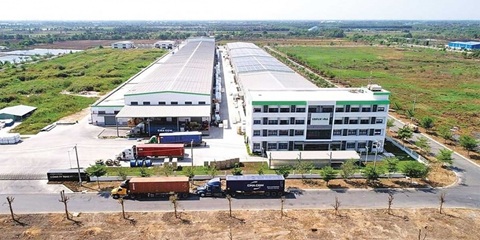
FOREIGN INVESTORS SEEKING A SYNCHRONISED MANUFACTURING ECOSYSTEM
Instead of focusing only on land costs and incentives as usual, foreign investors are seeking a synchronised manufacturing ecosystem, from stable power supply and logistics to shared infrastructure and the convenience of completing residence procedures for experts to serve their long-term investment in the country.
INFRASTRUCTURE / CONSTRUCTION / LOGISTIC / PORT
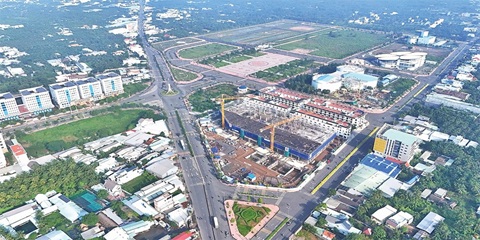
DONG THAP PROVINCE STEPS UP INDUSTRIAL EXPANSION AND INFRASTRUCTURE CONNECTIVITY
Accelerating public investment, strengthening inter-regional connectivity, and expanding industrial land are helping Dong Thap efficiently bolster competitiveness and drive economic growth. Following the 2025 merger of the former Dong Thap and Tien Giang provinces, the expanded Dong Thap province in the Mekong Delta faces mounting pressure to accelerate infrastructure development and strengthen connectivity among local economic zones, urban areas, industrial parks (IPs), and production centres.
PROPERTY / INDUSTRIAL ZONE
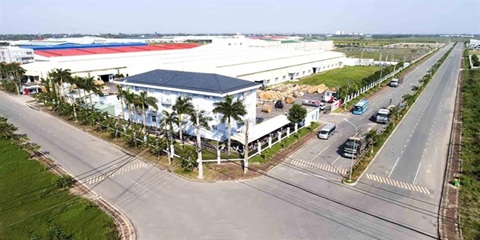
HCM CITY ATTRACTS US$5.7 BILLION INTO EXPORT PROCESSING AND INDUSTRIAL ZONES
HCM City attracted US$5.7 billion in domestic and foreign investment into its export processing and industrial zones during the first nine months of 2026. The figure exceeded the city's full-year target by 31 per cent, highlighting strong momentum in high-quality industrial investment under Resolution No.10-NQ/TW. Total investment reached 131 per cent of the 2026 target of $4.25 billion and represented a 29 per cent increase compared with the same period in 2025, according to the city's Export Processing and Industrial Zones Authority (HEPZA).
BANKING / FINANCE / INSURANCE / TAX
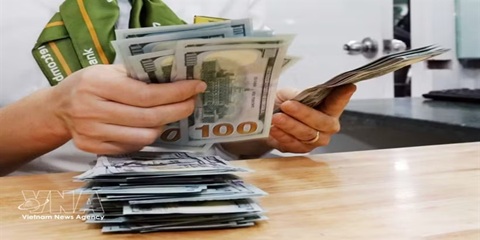
REMITTANCES TO HCM CITY RISE NEARLY 40% IN Q3
Remittances to HCM City reached more than US$2.83 billion in the third quarter of this year, up 39.5 per cent from the previous quarter and 3.6 per cent year-on-year. This was the first quarter showing positive annual growth this year, helping narrow the decline in remittance inflows over the first nine months. According to the State Bank of Vietnam (SBV)’s Regional Branch 2, remittances transferred to HCM City through credit institutions and economic organisations totalled $2.835 billion in Q3, an increase of more than $802 million from the previous quarter.
VIETNAM ECONOMY INVESTMENT
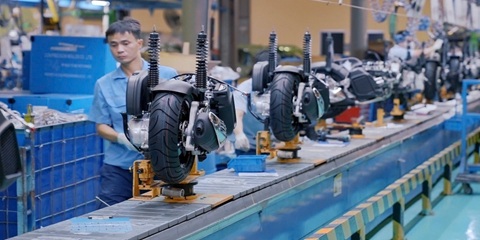
LOCALITIES REPORT BREAKTHROUGH RESULTS IN FDI IN FIRST NINE MONTHS
In Ho Chi Minh City, total registered capital reached $17.2 billion in the first nine months, up 4.2 times from the same period last year. The figure included more than $9.35 billion in newly registered capital and over $4.9 billion in additional capital for existing projects. Foreign investors also registered more than $2.9 billion through capital contributions and share purchases.
TECHNOLOGY
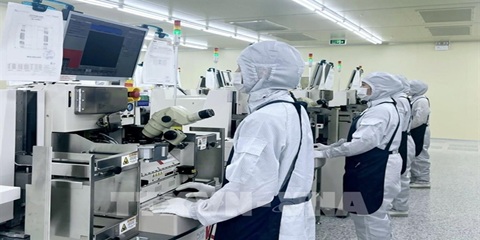
TECH SECTOR GROWTH OPENS UP OPPORTUNITIES FOR VIỆT NAM TO GO GLOBAL
The growth of the electronics, semiconductor and high-tech sectors worldwide is opening up a variety of opportunities for Vietnamese enterprises to integrate more deeply into the global supply chain. However, to become suppliers for these corporations, domestic enterprises must meet rigorous standards regarding quality, technology, productivity and order fulfilment capabilities.
Events Sponsors






















