Want to be in the loop?
subscribe to
our notification
Business News
BOND MARKET SEES STRONG RECOVERY IN FIRST FEW MONTHS
In the first two months of 2025, the total value of bond transactions, including both public and private offerings, reached VNĐ167.2 trillion (over US$6.5 billion), up 19 per cent on year.
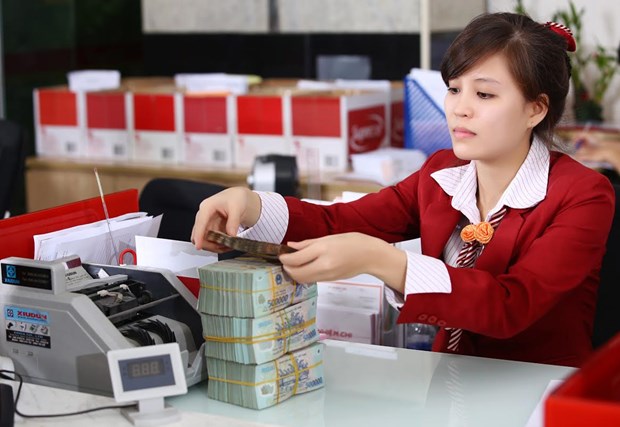
The bond market is expected to grow by 15-20 per cent this year. Photo baotintuc.vn
HÀ NỘI — The Vietnamese bond market is expected to undergo a significant resurgence in 2025, following a tumultuous period marked by volatility and uncertainty.
As the economy gradually stabilises, analysts are predicting a robust recovery driven by a combination of factors, including the increasing need for businesses to raise capital and the strategic initiatives of the banking sector to issue bonds that cater to investor demand.
In the first two months of 2025, the total value of bond transactions, including both public and private offerings, reached VNĐ167.2 trillion (over US$6.5 billion), data compiled by FiinRatings showed.
This figure represents a 19 per cent increase from the peak set in December 2024.
The banking and real estate sectors stand out as the primary drivers of this activity, collectively accounting for approximately 36 per cent and 38.9 per cent of transactions, respectively.
The current landscape reveals that most newly issued corporate bonds are sourced from credit institutions, which constitute a staggering 94.6 per cent of the total.
This trend highlights the critical role that banks play in the bond market, as they seek to bolster their capital bases while meeting the needs of a diverse range of investors.
In 2025, banks are expected to ramp up their bond issuance further, a strategic move aimed at satisfying both credit growth and the pressing demand to lower deposit interest rates.
In the first two months of 2025, the total buyback of corporate bonds reached over VNĐ17.2 trillion, reflecting a year-on-year increase of 22 per cent.
However, February alone saw a dramatic decline in buybacks, plummeting 71.2 per cent from January levels, primarily due to reduced demand from real estate issuers.
This trend highlights the ongoing difficulties faced by companies in this sector, many of which continue to grapple with substantial repayment obligations.
The challenges encountered by the real estate market could pose risks to the broader bond market, necessitating close monitoring by stakeholders.
According to FiinRatings, the number of problematic corporate bonds, those with late interest payments or extended repayment terms, has increased to 77 batches, worth a total value of VNĐ5.54 trillion.
While this rise may initially seem alarming, the overall ratio of problematic bonds has decreased, indicating a potential stabilisation in the market after a period of intense scrutiny.
Up to 20 per cent growth expected
Entering the second quarter of the year, industry experts estimate that around VNĐ40.6 trillion in private bonds will mature.
The real estate sector is expected to account for a substantial portion of these maturities, 40.7 per cent of the total, or VNĐ16.5 trillion.
It was followed by other industries and credit institutions, accounting for 29.2 per cent and 20.2 per cent, respectively.
The Vietnam Bond Market Association said that VNĐ192.3 trillion in bonds will come due over the remaining ten months of the year, with a significant share belonging to both the real estate and banking sectors, equivalent to over VNĐ105 trillion and nearly VNĐ41.2 trillion, respectively.
This upcoming wave of maturities will require careful navigation by issuers and investors alike as they seek to manage liquidity and investment strategies.
The outlook for 2025 is further bolstered by expectations that the bond market will grow by 15-20 per cent, a report from FiinRatings showed.
The growth is driven by commercial banks' aggressive issuance of subordinated bonds, which play a crucial role in supporting credit growth in alignment with government directives.
Maintaining controlled interest rates while facilitating corporate bond issuance is essential for fostering an environment conducive to economic recovery.
Meanwhile, VCB Securities said that the low-interest environment is expected to enable businesses to issue bonds more affordably, allowing them to restructure their financing effectively.
Economic expert, Dr Nguyễn Đức Hưởng, said that recent reforms introduced in late 2025 regarding the issuance of private and public bonds are poised to enhance the quality of bonds available in the market. These changes are expected to draw more investors into the fold, increasing confidence in the bond market.
Institutional investors are likely to play a dominant role, while individual investors may prefer public offerings from reputable issuers with solid credit ratings.
This shift could lead to a more diversified investor base, strengthening the overall market. — BIZHUB/VNS
Source: VNS
Related News

CHARITY / EXHIBITION / OTHER EVENTS
INVESTMENT OPPORTUNITIES IN CA MAU PROVINCE: 96 PROJECTS AND 20 STRATEGIC PROJECTS
We are pleased to share with you information on investment projects currently seeking investors in Ca Mau Province. Should your esteemed company or association be interested, we kindly invite you to review the project information and complete the registration form via the links provided. The Ho Chi Minh City Investment and Trade Promotion Centre (ITPC) will consolidate the expressions of interest and facilitate connections with the leadership of Ca Mau Province at a meeting tentatively scheduled for 13 November 2026 in Ho Chi Minh City.

MEMBER CORNER / PROMOTIONS
BẰNG KIỀU LIVESHOW - A SYMPHONY OF LOVE UNDER THE GOLDEN GLOW
A masterclass in live music that takes the audience on a soulful journey through immortal love songs, guided by the peerless artistry and emotive storytelling of renowned singer Bằng Kiều. The highlight of the night is his seamless musical chemistry with special guest Triệu Hồng Ngọc, promising passionate and deeply resonant duets inside the magnificent Grand Ballroom.

INFRASTRUCTURE / CONSTRUCTION / LOGISTIC / PORT
ĐÀ NẴNG GREEN-LIGHTS US$105 MILLION THAI DEVELOPMENT DEAL
The central city has approved an investment proposal by Thailand’s WHA Group to develop infrastructure for the 400ha WHA Đà Nẵng Industrial Park project on two communes of Thăng Bình and Đồng Dương, with an investment of more than VNĐ2.7 trillion (US$105 million). The city said it approved WHA Industrial Development International's status as an investor in the project, which is expected to take place between 2027 and 2034.

VIETNAM ECONOMY INVESTMENT
MOBILE PHONE EXPORTS RISE 20% TO $51.8 BILLION IN FIRST NINE MONTHS
Exports of mobile phones and components rose 20 per cent year-on-year to nearly US$51.8 billion in the first nine months of 2026, with China, the US and Republic of Korea accounting for more than half of the total. Shipments to the three markets reached a combined $26.18 billion, or 50.6 per cent of total exports of the product group during the period, according to data from the Vietnam Department of Customs under the Ministry of Finance.

INFRASTRUCTURE / CONSTRUCTION / LOGISTIC / PORT
VIỆT NAM-CAMBODIA TRADE GATHERS PACE TOWARDS $20 BILLION TARGET
Trade between Việt Nam and Cambodia continues to grow, remaining a bright spot and a key pillar of bilateral cooperation as the two countries aim to raise two-way trade to US$20 billion in the coming years. After setting a record of more than $11.3 billion last year, bilateral trade reached about $8.7 billion in the first eight months of this year, up 8.3 per cent year on year.
VIETNAM ECONOMY INVESTMENT
FRUIT AND VEGETABLE EXPORTS POISED TO HIT $10 BILLION IN 2026
Fruit and vegetable exports are on track to reach nearly US$10 billion in 2026, after rising 19.9 per cent year on year to nearly US$7.4 billion in the first nine months, driven by strong seasonal demand and abundant tropical fruit supplies. The Ministry of Agriculture and Environment said the growth reflected stronger international demand for fresh produce and processed agricultural products.
Events Sponsors






















