HCMC PROPOSES NO MARKUP ON OFFICIAL LAND PRICES
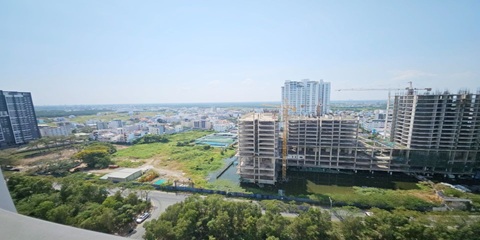
HCMC’s Department of Natural Resources and Environment has proposed setting the land price adjustment coefficient, known as the K factor, at 1 for households and businesses, meaning land-use fees and rents would be calculated directly from the official land price table without any upward adjustment. The proposal, included in the third draft regulation submitted by the department to the land price appraisal council, is intended to ease financial burdens on residents and businesses while supporting a recovery in the real estate market.
HCMC: ‘5+1’ MODEL AIMS TO LIFT SERVICES TO 75% OF GRDP BY 2040
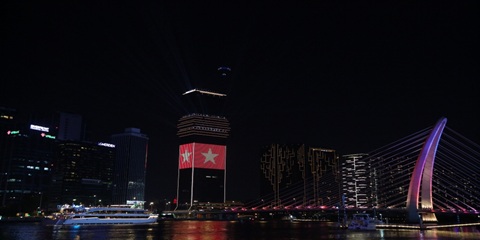
High-value services are set to account for 70-75% of HCMC’s gross regional domestic product (GRDP) by 2040 under a “5+1” development model centered on the Vietnam International Financial Center in HCMC (VIFC-HCMC). The target is outlined in a recently issued plan by the HCMC government to turn the city into a major services hub for Vietnam and the region, with a focus on high-value, modern industries. The plan aims to reshape the economy toward a more efficient and sustainable structure.

KING’S SPOTLIGHT: EXPERIENCE A KING’S CLASSROOM IN HO CHI MINH CITY
For the first time in Ho Chi Minh City, pupils can experience authentic lessons delivered by teachers from King’s College School, Wimbledon - the world’s top 5 school. Through engaging sessions in Logical Math and Language & Communication, pupils will discover how King’s nurtures curiosity, confidence, critical thinking and communication skills.
CAN THO EYES TRANSFORMATION INTO A MODERN INTERNATIONAL LOGISTICS HUB
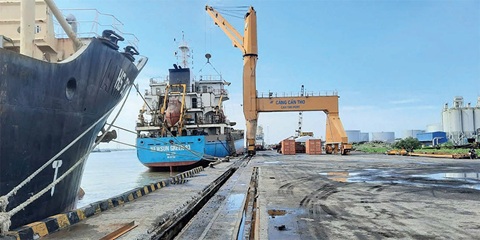
With its extensively expanded economic space, Can Tho now possesses a range of strategic advantages, including an extensive road transport network with both north-south and east-west expressways; an inland waterway transport system; an international airport; a network of ports along the Hau River; a large concentration of industrial parks and agricultural and seafood processing facilities; and connectivity to the Mekong development corridor.
CHINESE INVESTORS SEEK INVESTMENT OPPORTUNITIES IN BAC NINH
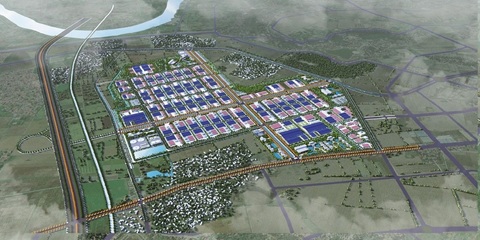
Many Chinese investors are accelerating their plans to expand investment and increase their presence in Bac Ninh by proposing new projects in key sectors such as high technology, electronics, AI, and digital infrastructure. Several large enterprises are also encouraging long-term investment plans in the locality. In late May, a delegation of Chinese enterprises met the province’s leadership to discuss policies related to energy storage, AI computing infrastructure, power supply capacity and industrial park resources.
VIETNAM AIMS FOR 10 STRATEGIC TECH FIRMS WORTH $1 BILLION BY 2030
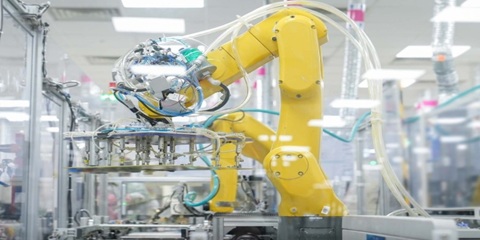
The plan, unveiled on June 17, seeks to drive the development of digital infrastructure, workers, data, strategic technologies, and cybersecurity during the 2026-2030 period. Under the scheme, large-scale strategic technology companies must meet several criteria simultaneously, including annual revenue of at least $1 billion and an average workforce of no fewer than 5,000 employees.
VIETNAM ON TRACK TO TOP $1 TRILLION IN TRADE FOR FIRST TIME
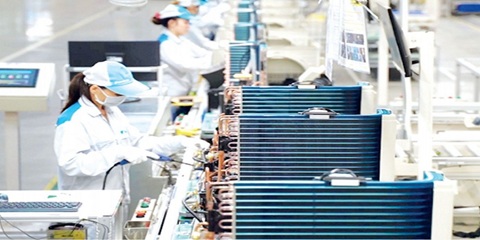
With total import-export turnover reaching approximately $445 billion in the first five months of 2026, Vietnam is on track to surpass the $1 trillion trade milestone for the first time. Speaking at the seminar on export trends on June 17, Nguyen Tuan Viet, CEO of VIETGO, a company specialising in export consultancy and international trade matching, said exports continue to be one of the brightest spots of the economy and are making an important contribution to the government’s double-digit growth target.

VIETNAM POSTS SECOND-HIGHEST AI ADOPTION IN SOUTHEAST ASIA
Microsoft noted that AI adoption in Vietnam has increased stably from 21.2 per cent in the first half of 2025 to 26.5 per cent in the first quarter of 2026. In Southeast Asia, Vietnam trails behind Singapore at 63.4 per cent. Meanwhile, Vietnam outperformed most Southeast Asian peers in AI adoption, including Malaysia (21.8 per cent), the Philippines (20.1 per cent), and Thailand (12.4 per cent).






















