Want to be in the loop?
subscribe to
our notification
Business News
CAPITAL ASSIGNMENT TAX WON’T AFFECT FDI AND M&A: EXPERTS
The Ministry of Finance (MOF) has proposed adjusting the rate of the capital assignment profit tax imposed on foreign enterprises in Vietnam in an effort to simplify the process of collection and treatment of corporate income taxes.
The ministry plans to tax one percent on gross sales instead of 20 percent on capital gains as currently applied in accordance with Decree 12. The taxation will be applied to all capital assignment deals of foreign enterprises, regardless of resident status in Vietnam.
Ta Hong Thai from KPMG Vietnam commented that with the new taxation method, MOF would be relieved of the burden of examining the profits enterprises make in capital assignment deals.
“The market prices fluctuate all the time, therefore, it is difficult to determine the profits the parties of the deals gain,” he explained.
A senior official of the HCMC Taxation Agency admitted that enterprises tend to declare wrong prices and it is very difficult to inspect the taxable amount of capital gains because of various reasons, including the lack of information.
Bao Viet Securities said that taxation based on revenue will make it easier to implement the tax law and MOF will be able to collect tax from all capital assignment deals.
In principle, the new taxation method will make it unfair for those who cannot make profits with their capital assignments, because they will have to pay tax, regardless of whether they make a profit or take a loss.
However, this is not a matter of complaining for foreign investors. Dau Tu quoted Oliver Massmann, general director of Duane Morris LLP, as praising the new scheme as a great effort by the government to unify different tax schemes applied in the world.
Bao Viet Securities also said that the new taxation method would have certain impact on the Vietnamese M&A market, but the impact will be ‘inconsiderable’.
The securities company’s analysts believe that the capital assignment tax isn’t the decisive factor that will affects investor decisions on whether to invest in Vietnam. The investor climate in Vietnam and the health and prospects of the businesses they plan to invest in are most important
“Regarding the taxation policy, what foreign investors want is a transparent, stable and predictable policy. This is a key point the government needs to pay attention to if it wants to attract foreign capital into the M&A market,” said the report of Bao Viet Securities.
M&A deals with the participation of foreign investors account for 77 percent of total M&A value.
Source: VIR
Related News
VIETNAM ECONOMY INVESTMENT
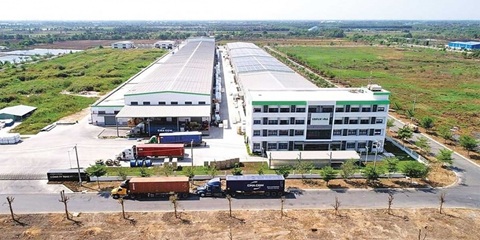
FOREIGN INVESTORS SEEKING A SYNCHRONISED MANUFACTURING ECOSYSTEM
Instead of focusing only on land costs and incentives as usual, foreign investors are seeking a synchronised manufacturing ecosystem, from stable power supply and logistics to shared infrastructure and the convenience of completing residence procedures for experts to serve their long-term investment in the country.
INFRASTRUCTURE / CONSTRUCTION / LOGISTIC / PORT
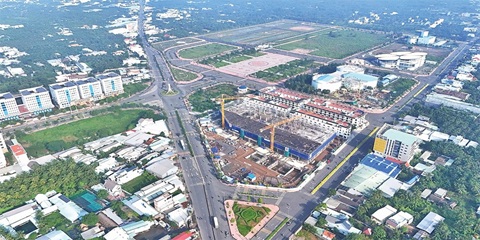
DONG THAP PROVINCE STEPS UP INDUSTRIAL EXPANSION AND INFRASTRUCTURE CONNECTIVITY
Accelerating public investment, strengthening inter-regional connectivity, and expanding industrial land are helping Dong Thap efficiently bolster competitiveness and drive economic growth. Following the 2025 merger of the former Dong Thap and Tien Giang provinces, the expanded Dong Thap province in the Mekong Delta faces mounting pressure to accelerate infrastructure development and strengthen connectivity among local economic zones, urban areas, industrial parks (IPs), and production centres.
PROPERTY / INDUSTRIAL ZONE
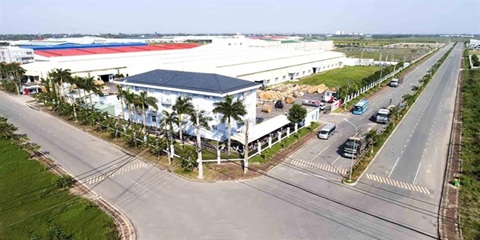
HCM CITY ATTRACTS US$5.7 BILLION INTO EXPORT PROCESSING AND INDUSTRIAL ZONES
HCM City attracted US$5.7 billion in domestic and foreign investment into its export processing and industrial zones during the first nine months of 2026. The figure exceeded the city's full-year target by 31 per cent, highlighting strong momentum in high-quality industrial investment under Resolution No.10-NQ/TW. Total investment reached 131 per cent of the 2026 target of $4.25 billion and represented a 29 per cent increase compared with the same period in 2025, according to the city's Export Processing and Industrial Zones Authority (HEPZA).

BANKING / FINANCE / INSURANCE / TAX
REMITTANCES TO HCM CITY RISE NEARLY 40% IN Q3
Remittances to HCM City reached more than US$2.83 billion in the third quarter of this year, up 39.5 per cent from the previous quarter and 3.6 per cent year-on-year. This was the first quarter showing positive annual growth this year, helping narrow the decline in remittance inflows over the first nine months. According to the State Bank of Vietnam (SBV)’s Regional Branch 2, remittances transferred to HCM City through credit institutions and economic organisations totalled $2.835 billion in Q3, an increase of more than $802 million from the previous quarter.

VIETNAM ECONOMY INVESTMENT
LOCALITIES REPORT BREAKTHROUGH RESULTS IN FDI IN FIRST NINE MONTHS
In Ho Chi Minh City, total registered capital reached $17.2 billion in the first nine months, up 4.2 times from the same period last year. The figure included more than $9.35 billion in newly registered capital and over $4.9 billion in additional capital for existing projects. Foreign investors also registered more than $2.9 billion through capital contributions and share purchases.

TECHNOLOGY
TECH SECTOR GROWTH OPENS UP OPPORTUNITIES FOR VIỆT NAM TO GO GLOBAL
The growth of the electronics, semiconductor and high-tech sectors worldwide is opening up a variety of opportunities for Vietnamese enterprises to integrate more deeply into the global supply chain. However, to become suppliers for these corporations, domestic enterprises must meet rigorous standards regarding quality, technology, productivity and order fulfilment capabilities.
Events Sponsors






















