Want to be in the loop?
subscribe to
our notification
Business News
CHALLENGES TO REFORMS REMAIN TOUGHER IN THE COMING TIME
The Vietnam Chamber of Commerce and Industry (VCCI), together with social organizations, actively collected public and business opinions on the quality of public service practices and administrative reforms provided by ministries and sectors.
Slowing reforms
According to the Report on "Vietnam Business Environment Improvement Program: Assessment by Businesses”, measures to improve the business environment and to support enterprises continue to be implemented notwithstanding the COVID-19 pandemic which coincided with the transitional term of administrations. Business establishment and access to electricity were still rated top (72.5% and 65.9%, respectively), and corporate bankruptcy ranked last (44.4% was rated good or very good).
However, the pace of improvement seemingly slowed down as compared to the performance in previous years and sectoral changes seemed to move oppositely: Lowly scored sectors (bankruptcy, investor protection and import-export) picked up while highly scored sectors (business establishment and access to electricity) declined. Notably, with regard to corporate finance, while credit access in 2020 was perceived to be more difficult than in 2019, tax procedures became much easier. By locality, indicators outperformed 2019 but the pace decelerated.
Tax and social insurance payment procedures made remarkable progress in 2020 but up to 22% of businesses still faced difficulty in carrying out tax administrative procedures such as requests for tax exemption, reduction, refund and payment.
In the real estate sector, property registration and land management had almost no change in scores over the years. Land procedures were still difficult, resulting in no major progress in 2020. The share of enterprises that did not face difficulty in land procedures in the past two years decreased from 39% in 2019 to 29% in 2020. Typical difficulties included insufficient guidance and details provided by public officials (18% of businesses), the long time required for land rights determination (16%) and processes and procedures on contrary to regulations (12%).
Dau Anh Tuan, Director of the VCCI Legal Department, said, 18% of enterprises surveyed carried out land administrative procedures in the last two years. 70% of them said to have difficulty with this formality. This was a very high rate as compared to other indicators such as starting a business, taxation and social insurance. The biggest nuisance to them is the longer-than-regulated time for handling procedures, with 38% having this problem.
“The survey showed that up to 68% of respondents had to cancel or delay their business plans when confronting difficulties in land processes and procedures," he emphasized.
Better performances
VCCI President Vu Tien Loc said that the business and investment environment in Vietnam has made significant headway to be safer and more equal among all economic sectors in recent years. However, he also pointed out that challenges to reforms for a better business environment in the next five years will be much more difficult than what has been done.
“Before making institutions transparent, overlaps and conflicts in business laws must be eliminated. What needs to be done is reviewing and dealing with shortcomings where land law is proven to be a major drag to the overall progress,” said Dr. Loc.
Ms. Tran Thi Hong Minh, President of the Central Institute for Economic Management (CIEM), said, present business conditions are inadequate at the law level. Many business conditions are overlapping, unnecessary, non-transparent or deeply interfering with corporate self-determination. Specialized inspection has made slow progress. The single-window mechanism is not really effective when businesses still have to submit paper documents and agency interconnectivity is weak.
To accelerate the reform of the business environment, two key issues need to be focused on: Business condition reforms and specialized inspection management, she added.
Dau Anh Tuan also noted that it is necessary to reform processes, enhance lawmaking quality, reduce overlapping and bolster professionalism. Licensing agencies should not directly lead draft lawmaking because it may give rise to enforcement costs, including for the society and the business in an enormous apparatus.
Source: VCCI
Related News

CHARITY / EXHIBITION / OTHER EVENTS
INVESTMENT OPPORTUNITIES IN CA MAU PROVINCE: 96 PROJECTS AND 20 STRATEGIC PROJECTS
We are pleased to share with you information on investment projects currently seeking investors in Ca Mau Province. Should your esteemed company or association be interested, we kindly invite you to review the project information and complete the registration form via the links provided. The Ho Chi Minh City Investment and Trade Promotion Centre (ITPC) will consolidate the expressions of interest and facilitate connections with the leadership of Ca Mau Province at a meeting tentatively scheduled for 13 November 2026 in Ho Chi Minh City.

MEMBER CORNER / PROMOTIONS
BẰNG KIỀU LIVESHOW - A SYMPHONY OF LOVE UNDER THE GOLDEN GLOW
A masterclass in live music that takes the audience on a soulful journey through immortal love songs, guided by the peerless artistry and emotive storytelling of renowned singer Bằng Kiều. The highlight of the night is his seamless musical chemistry with special guest Triệu Hồng Ngọc, promising passionate and deeply resonant duets inside the magnificent Grand Ballroom.
INFRASTRUCTURE / CONSTRUCTION / LOGISTIC / PORT
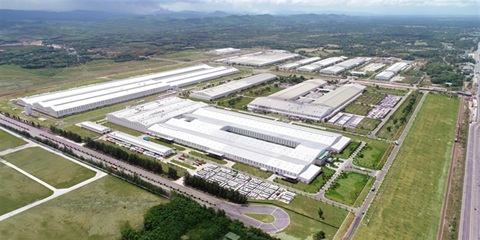
ĐÀ NẴNG GREEN-LIGHTS US$105 MILLION THAI DEVELOPMENT DEAL
The central city has approved an investment proposal by Thailand’s WHA Group to develop infrastructure for the 400ha WHA Đà Nẵng Industrial Park project on two communes of Thăng Bình and Đồng Dương, with an investment of more than VNĐ2.7 trillion (US$105 million). The city said it approved WHA Industrial Development International's status as an investor in the project, which is expected to take place between 2027 and 2034.
VIETNAM ECONOMY INVESTMENT
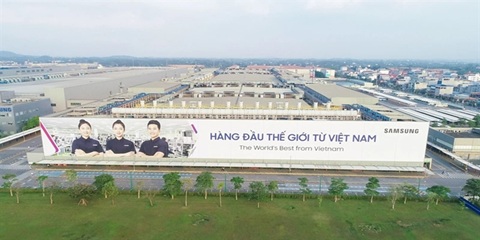
MOBILE PHONE EXPORTS RISE 20% TO $51.8 BILLION IN FIRST NINE MONTHS
Exports of mobile phones and components rose 20 per cent year-on-year to nearly US$51.8 billion in the first nine months of 2026, with China, the US and Republic of Korea accounting for more than half of the total. Shipments to the three markets reached a combined $26.18 billion, or 50.6 per cent of total exports of the product group during the period, according to data from the Vietnam Department of Customs under the Ministry of Finance.

INFRASTRUCTURE / CONSTRUCTION / LOGISTIC / PORT
VIỆT NAM-CAMBODIA TRADE GATHERS PACE TOWARDS $20 BILLION TARGET
Trade between Việt Nam and Cambodia continues to grow, remaining a bright spot and a key pillar of bilateral cooperation as the two countries aim to raise two-way trade to US$20 billion in the coming years. After setting a record of more than $11.3 billion last year, bilateral trade reached about $8.7 billion in the first eight months of this year, up 8.3 per cent year on year.
VIETNAM ECONOMY INVESTMENT
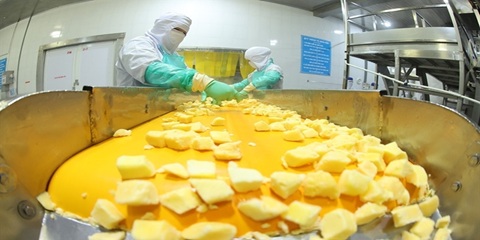
FRUIT AND VEGETABLE EXPORTS POISED TO HIT $10 BILLION IN 2026
Fruit and vegetable exports are on track to reach nearly US$10 billion in 2026, after rising 19.9 per cent year on year to nearly US$7.4 billion in the first nine months, driven by strong seasonal demand and abundant tropical fruit supplies. The Ministry of Agriculture and Environment said the growth reflected stronger international demand for fresh produce and processed agricultural products.
Events Sponsors






















