Want to be in the loop?
subscribe to
our notification
Business News
CHANGE FOR GROWTH
If it continues to be bound by the same rules applicable to other cities and provinces in the country, its development path would be obstructed.
In an interview with Sai Gon Giai Phong in late April, the chairman of the city, Nguyen Thanh Phong, admitted the city’s economic growth is not proportional to its leading role.
Meanwhile, the quality of growth and the competitiveness of the city remain poor. Given the nation’s broader and deeper international integration, the application of the same development policies and regulations to different cities and provinces irrespective of their development levels and conditions is impeding the city’s growth.
According to Phong, the city wants greater access to ODA capital to fund its major projects and more help to raise capital for development projects.
In addition, it wants Government Decree 93/2001/ND-CP on decentralization to be revised in some respects so that the city could have more authority to issue legal documents to increase the efficiency of its management.
At a meeting with Deputy Prime Minister Vuong Dinh Hue last month, the city government put forth a host of proposals including a special financing mechanism.
In particular, the city needs to retain 8-12% of export-import tax revenues and retain funds raised from equitization of State-owned enterprises and divestment of State capital from non-core business operations.
HCMC Party chief Dinh La Thang said the city holds great potential to achieve double-digit growth but there exist certain ceilings which the city have not been able to break through.
According to him, the city has been plagued by a lot of problems.
There is no special policy for the city. Many important projects are in dire need of finances but the current laws and regulations have tied the city’s hands.
Hanoi City has enjoyed all sorts of priorities to develop and upgrade its roads and bridges while HCMC has got no such treatment.
HCMC is responsible for around 30% of the nation’s budget revenues but can retain only 23% of its annual budget revenue and the remainder must go to the central State budget.
In 2014, the city’s budget revenues amounted to VND252 trillion. Meanwhile, Hanoi contributes less to the central State budget but enjoys a much higher percentage, 43%.
At a meeting with the National Assembly Financial and Budgetary Committee early this week, the HCMC government once again asked for a special financing mechanism to stimulate its growth.
Thang made clear the city’s viewpoint that its proposed special financing mechanism is for the benefit of the entire country, not the city alone.
He described the city’s development as a cake, saying the current cake is too small, so the city needs a special mechanism to enlarge the cake so as to earn more and contribute more to the country.
HCMC has long been regarded as the locomotive of the rest of the country but its current status does not match that point. Its economic growth could not rise at a double-digit pace of a breakthrough mechanism is absent, Thang said.
Speaking at the meeting with Deputy Prime Minister Hue, Thang said the city urges the Government to see a special mechanism for the city as what the Government needs to do to fuel growth.
Nguoi Lao Dong quoted Associate Professor Tran Dinh Thien, director of the Vietnam Institute of Economics as saying that in the current circumstances it is critical to grant HCMC a special mechanism since the city as the economic hub needs to address integration challenges. If things remain unchanged, the city would be unable to compete.
It is a must to develop the city into a center for integration of the country.
Vietnam has signed a series of free trade agreements which are not just about tariff cuts and exemptions but improvement of competitiveness, Thien added.
A positive sign is that Deputy Prime Minister Vuong Dinh Hue told the HCMC government last month to propose a breakthrough mechanism for submission to the Government.
If a new mechanism for governance is adopted to unlock the city’s potential, the city would certainly achieve higher growth in foreseeable future./.
Source: VNEP
Related News
BANKING / FINANCE / INSURANCE / TAX
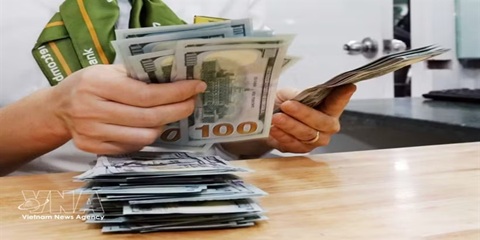
REMITTANCES TO HCM CITY RISE NEARLY 40% IN Q3
Remittances to HCM City reached more than US$2.83 billion in the third quarter of this year, up 39.5 per cent from the previous quarter and 3.6 per cent year-on-year. This was the first quarter showing positive annual growth this year, helping narrow the decline in remittance inflows over the first nine months. According to the State Bank of Vietnam (SBV)’s Regional Branch 2, remittances transferred to HCM City through credit institutions and economic organisations totalled $2.835 billion in Q3, an increase of more than $802 million from the previous quarter.
TECHNOLOGY
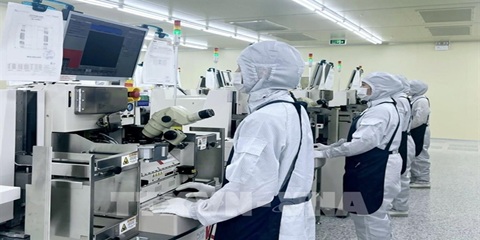
TECH SECTOR GROWTH OPENS UP OPPORTUNITIES FOR VIỆT NAM TO GO GLOBAL
The growth of the electronics, semiconductor and high-tech sectors worldwide is opening up a variety of opportunities for Vietnamese enterprises to integrate more deeply into the global supply chain. However, to become suppliers for these corporations, domestic enterprises must meet rigorous standards regarding quality, technology, productivity and order fulfilment capabilities.
VIETNAM ECONOMY INVESTMENT
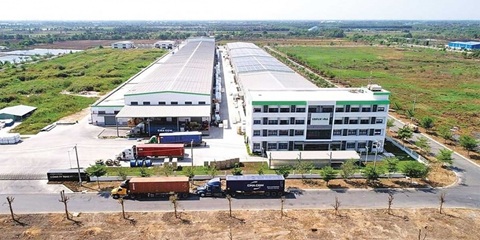
FOREIGN INVESTORS SEEKING A SYNCHRONISED MANUFACTURING ECOSYSTEM
Instead of focusing only on land costs and incentives as usual, foreign investors are seeking a synchronised manufacturing ecosystem, from stable power supply and logistics to shared infrastructure and the convenience of completing residence procedures for experts to serve their long-term investment in the country.
MEMBER CORNER / PROMOTIONS
SENTRYSAFE FHW40200 – PROTECT YOUR VALUABLES, ENJOY PEACE OF MIND!
Looking for a reliable solution to protect your important documents, cash, and valuables from fire and water damage? Genuine SENTRYSAFE - Reliable protection for your valuables and peace of mind! Contact Sen Wai Vietnam for more information and personalized product recommendations.
PROPERTY / INDUSTRIAL ZONE
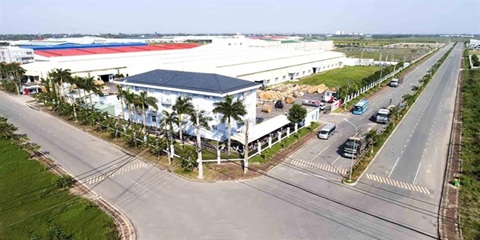
HCM CITY ATTRACTS US$5.7 BILLION INTO EXPORT PROCESSING AND INDUSTRIAL ZONES
HCM City attracted US$5.7 billion in domestic and foreign investment into its export processing and industrial zones during the first nine months of 2026. The figure exceeded the city's full-year target by 31 per cent, highlighting strong momentum in high-quality industrial investment under Resolution No.10-NQ/TW. Total investment reached 131 per cent of the 2026 target of $4.25 billion and represented a 29 per cent increase compared with the same period in 2025, according to the city's Export Processing and Industrial Zones Authority (HEPZA).
INFRASTRUCTURE / CONSTRUCTION / LOGISTIC / PORT
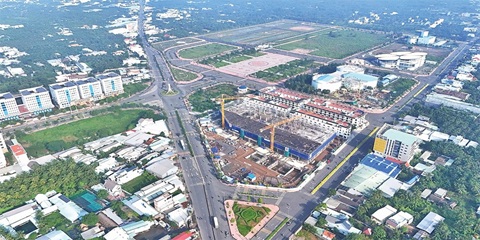
DONG THAP PROVINCE STEPS UP INDUSTRIAL EXPANSION AND INFRASTRUCTURE CONNECTIVITY
Accelerating public investment, strengthening inter-regional connectivity, and expanding industrial land are helping Dong Thap efficiently bolster competitiveness and drive economic growth. Following the 2025 merger of the former Dong Thap and Tien Giang provinces, the expanded Dong Thap province in the Mekong Delta faces mounting pressure to accelerate infrastructure development and strengthen connectivity among local economic zones, urban areas, industrial parks (IPs), and production centres.
Events Sponsors






















