Want to be in the loop?
subscribe to
our notification
Business News
CHANGE TO REAL ESTATE LAW BEGETS CHALLENGES
However, while there are positive changes, several challenges lie ahead as certain provisions of the law remain ambiguous, and discrimination between local investors and foreign investors is still an issue. This article highlights some of key challenges that investors and their advisers should consider prior to investing in and conducting their real estate projects in Vietnam.
Foreign investor and local investor discrimination
There remains a distinction in investment treatment afforded to foreign investors and local investors in the real estate business. For example:
For off-plan properties (sites that have yet to be developed), the Law on Real Estate Business (LOREB) prescribes that local developers are entitled to collect up to 70 per cent of the property value from the purchasers prior to hand-over. However, for foreign invested developers, this amount is limited to 50 per cent of the property value.
Furthermore, foreign investors may only engage in real estate trading in two forms: (i) construction of houses or building on state-leased or state-allocated land for the purpose of sale, lease, or lease-purchase (as the case may be) and (ii) lease of buildings for sublease. However, foreign investors are not permitted to purchase buildings for the real estate business, but may only utilise them as offices or business facilities.
Legal capital for real estate business
Previously, the legal capital for the real estate business was VND6 billion ($279,069). Under the LOREB, at least VND20 billion ($930,232) is required, which applies to companies conducting real estate services (even if it will not be involved in trading).
However, under the draft decree guiding the LOREB, the required legal capital is set at VND20-50 billion ($930,232 - $2.32 million). Companies that conduct real estate services, that do not include trading, and individual brokers are not required to meet this capital requirement.
While the draft decree provides breathing room for investors intending to enter into this sector, at present, it appears that only investors with significant financial capacity are able to enter the market as a real estate business. Individual brokerages and SMEs may be driven out by this steep capital demand.
Conditions for capital mobilisation for residential housing projects
Under the former law, developers were permitted to enter into capital contribution agreements upon approval of the residential housing project, the commencement of the works, and the notification of the Department of Construction. At this stage of development, the contributors had the right to purchase houses.
The current LOREB does not provide clear provisions on the conditions in which developers may mobilise capital for housing projects. Instead, it merely provides that apartments and mixed-use buildings may be put into the market after obtaining the certificate of completion for the building’s foundation.
The draft decree attempts to rectify this ambiguity, by providing that developers may enter into capital contribution agreements after the investment project has been approved, the site clearance is completed, the minutes of handover for the project site has been provided, and the notification to the Department of Construction has been delivered. However, note that the contributors of capital are prohibited from receiving houses from the contribution.
The draft decree is more welcoming compared to the LOREB (which will ultimately take precedence), in that developers may immediately mobilise capital after the completion of site clearance. However, the provisions apply pressure on investors by limiting capital mobilisation and the right of the contributors.
Guarantee requirements
As of 1 July 2015, developers now require a bank guarantee prior to selling or leasing off-plan residential houses to secure their financial obligations to their clients in the event that the developers fail to hand over the property as scheduled. However, the amount to be guaranteed has not been clarified.
The LOREB also requires the guarantee be terminated upon the property being handed over to the purchaser. However, under Circular 07/2015/TT-NHNN governing bank guarantees, the State Bank of Vietnam requires the guarantee to be effective for at least 30 days after property handover. This has led to an overlap and conflict in the law, confusing both developers and banks on the application of the real estate guarantee.
Real estate valuation services
Under the LOREB, real estate valuation services are no longer categorised as “real estate services” and are now governed by the Law on Price. The Law on Price sets forth certain conditions required for these services, which are considerably stricter than those of the LOREB.
The LOREB provides transitional provisions to individual appraisers, but not to companies carrying out real estate valuation services prior to the LOREB’s effective date. Therefore, there should be a transitional period for such companies to meet the conditions required by this law.
It is worth noting that under the Law on Price, companies whose “corporate” shareholders (whether local or foreign) hold more than 35 per cent of its charter capital will not be permitted to provide valuation services. Such a provision restricts the companies – even the foreign invested companies – to conduct real estate valuation services in Vietnam.
It appears that the LOREB puts wind in the sails of the real estate market; however, the law still contains certain unclear provisions that may adversely impact investors, thus narrowing foreign cash inflow into Vietnam. We expect that the Vietnamese Government will promptly issue the appropriate guidance and revisions to revive the real estate market.
Source: VNEP
Related News

INFRASTRUCTURE / CONSTRUCTION / LOGISTIC / PORT
VIỆT NAM-CAMBODIA TRADE GATHERS PACE TOWARDS $20 BILLION TARGET
Trade between Việt Nam and Cambodia continues to grow, remaining a bright spot and a key pillar of bilateral cooperation as the two countries aim to raise two-way trade to US$20 billion in the coming years. After setting a record of more than $11.3 billion last year, bilateral trade reached about $8.7 billion in the first eight months of this year, up 8.3 per cent year on year.
TECHNOLOGY
AI BEGINNING TO RESHAPE RECRUITMENT CRITERIA
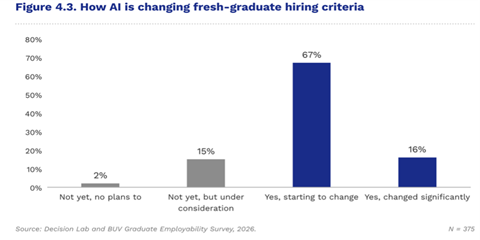
Digital literacy is the only capability area in which fresh graduates meet employers’ expectations, according to a new report. Yet, it is also the standard rising fastest, as businesses increasingly expect new hires to use AI effectively in the workplace. Some 83 per cent of employers say AI has changed, or is beginning to change, their hiring criteria, while 94 per cent report higher expectations for digital and AI capabilities than they had two to three years ago.

INFRASTRUCTURE / CONSTRUCTION / LOGISTIC / PORT
ĐÀ NẴNG GREEN-LIGHTS US$105 MILLION THAI DEVELOPMENT DEAL
The central city has approved an investment proposal by Thailand’s WHA Group to develop infrastructure for the 400ha WHA Đà Nẵng Industrial Park project on two communes of Thăng Bình and Đồng Dương, with an investment of more than VNĐ2.7 trillion (US$105 million). The city said it approved WHA Industrial Development International's status as an investor in the project, which is expected to take place between 2027 and 2034.

VIETNAM ECONOMY INVESTMENT
MOBILE PHONE EXPORTS RISE 20% TO $51.8 BILLION IN FIRST NINE MONTHS
Exports of mobile phones and components rose 20 per cent year-on-year to nearly US$51.8 billion in the first nine months of 2026, with China, the US and Republic of Korea accounting for more than half of the total. Shipments to the three markets reached a combined $26.18 billion, or 50.6 per cent of total exports of the product group during the period, according to data from the Vietnam Department of Customs under the Ministry of Finance.

VIETNAM ECONOMY INVESTMENT
FRUIT AND VEGETABLE EXPORTS POISED TO HIT $10 BILLION IN 2026
Fruit and vegetable exports are on track to reach nearly US$10 billion in 2026, after rising 19.9 per cent year on year to nearly US$7.4 billion in the first nine months, driven by strong seasonal demand and abundant tropical fruit supplies. The Ministry of Agriculture and Environment said the growth reflected stronger international demand for fresh produce and processed agricultural products.

GARMENT / TEXTILE
TEXTILE EXPORTS FACE DUAL CHALLENGES OF SUSTAINING ORDERS AND BOOSTING EFFICIENCY AMID GROWING COMPETITION
Data shows that the textile and garment sector maintained its growth momentum in the first nine months of this year. The industry's total export turnover reached an estimated US$35.721 billion in the first nine months of this year, up 3.3 per cent year-on-year. Despite posting encouraging export figures, Vietnamese textile and garment enterprises continue to navigate unpredictable market variables.
Events Sponsors






















