Want to be in the loop?
subscribe to
our notification
Business News
CONSTRUCTION MATERIALS INDUSTRY'S REVENUE TO REACH $47 BILLION
Despite significant domestic demand due to low housing rates and incomplete infrastructure, Việt Nam's construction materials industry faces challenges, according to insiders.
During a recent seminar on the development of Việt Nam’s modern and sustainable construction materials sector on November 9, Lê Trung Thành, head of the Department of Building Materials at the Ministry of Construction, revealed that the industry generated around US$47 billion annually, contributing 11 per cent to the national GDP.
According to Thành, the domestic demand for construction materials remains substantial due to low housing areas nationwide, with the urbanisation rate at around 43 per cent and incomplete infrastructure in transportation and energy sectors. These factors provide a significant room for development in the construction materials industry.
However, in recent years, the Vietnamese construction materials industry has encountered numerous challenges.
Both consumption and revenue have decreased, posing risks of production stagnation and business disruptions for enterprises, potentially leading to job losses and impacting socio-economic development.
Nguyễn Quang Hiệp, director of the Institute of Building Materials, pointed out that many production sectors primarily invested in small to medium scales, particularly in areas such as brick and tile manufacturing, fired clay, unfired bricks, stone extraction and construction sand.
Consequently, the application of science and technology in production faced significant challenges.
The production of materials in Việt Nam relied heavily on input factors like mineral resources, technology, energy and capital. The balance between supply and demand for various product types was inadequate, resulting in overstocking and underutilisation of business production capacity, he added.
However, the utilisation of alternative raw materials, promoting economic circularity in construction material production, had not received sufficient attention and appropriate investment.
Hiệp highlighted the importance of the government and enterprises continuing to enhance management, apply science and technology and focus on developing new environmentally friendly high-performance construction materials.
Quách Hữu Thuận, deputy general director of Viglacera, said that the integration of technology, innovation and creativity remained the consistent guiding principle.
This approach is the key to Viglacera's successful and powerful brand, according to Thuận.
Viglacera is currently seen as a pioneering domestic enterprise in innovation and creativity in the field of construction material production. By consistently investing in cutting-edge global technologies and focusing on green technologies and products, it aims to become a top choice when penetrating demanding markets like Europe, North America and the Middle East.
However, in the current fiercely competitive landscape, Thuận believes that the government and relevant ministries need to establish robust policies to support consumption and encourage the use of new high-tech products.
This includes setting up technical barriers for imports and ensuring fair treatment similar to other countries. Additionally, updating technical regulations, standards, and timely price notifications for new product lines are essential to facilitate usage in national projects.
Meanwhile, Thành also sees the current challenges in the construction materials industry as an opportunity to assess the capabilities and efficiency of enterprises and products.
To enhance productivity, quality, and competitiveness in both domestic and international markets, it requires efforts in technology application, marketing, and environmental protection from all stakeholders.
Source: VNS
Related News

MEMBER CORNER / PROMOTIONS
HCMC | CERTIFIED SUSTAINABILITY PROFESSIONAL (CSP) TRAINING | REGISTRATION OPEN
As sustainability becomes deeply embedded in corporate strategy and supply-chain operations across Vietnam, Hong Kong Business Association Vietnam is pleased to endorse the upcoming Certified Sustainability Professional (CSP) training program by the Asia Institute for Sustainability (AIS) - a premier internationally recognized ESG credential in Vietnam.
VIETNAM ECONOMY INVESTMENT
HCM CITY SAYS HOW IT PLANS TO ACHIEVE 10-11% ANNUAL EXPORT GROWTH FOR REST OF DECADE
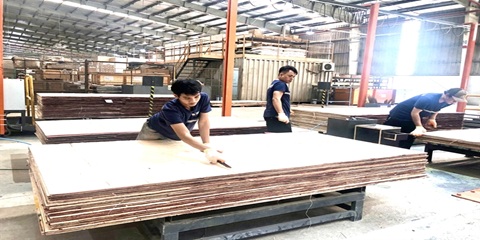
The southern economic hub aims to strengthen its role as the country’s largest import-export centre while developing into a regional transhipment centre in Southeast Asia, supported by green and digital transformation and a circular economy. HCM City has outlined measures to expand production capacity, cut logistics costs, diversify export markets, and help businesses meet increasingly stringent international standards as it targets average annual export growth of 10-11 per cent through 2030.
VIETNAM ECONOMY INVESTMENT
HCM CITY LEADS ECONOMIC RESTRUCTURING IN SOUTHEAST REGION
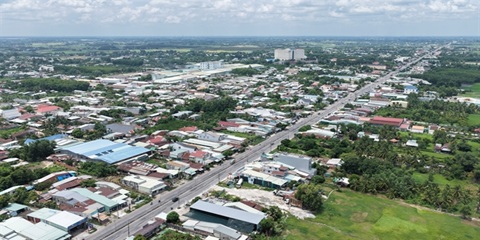
According to Associate Professor, Dr Vũ Tuấn Hưng, director of the Institute of Social Sciences of the Southern Region, the Southeast is a strategically important socio-economic space in Việt Nam’s development given its advantages in location, industry, trade, services, logistics, science and technology, urbanisation and human resources.
TECHNOLOGY
DIGITAL TRANSFORMATION TURNED INTO PRACTICAL TOOLS FOR PEOPLE, BUSINESSES
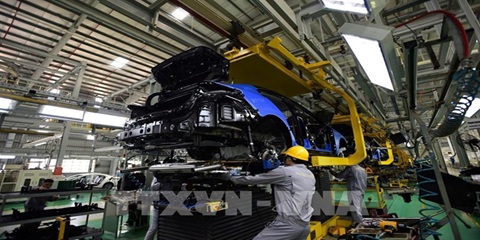
Việt Nam is moving its digital transformation agenda beyond policy frameworks and individual technology platforms towards practical applications that address everyday needs, as authorities seek measurable outcomes from science, technology and innovation. Under Politburo Resolution No. 57-NQ/TW issued on December 22, 2024, the implementation is increasingly shifting from simply completing assigned tasks towards developing concrete products and services for citizens and businesses.
TECHNOLOGY
APPLYING TECHNOLOGY FOR ECONOMIC TRANSFORMATION
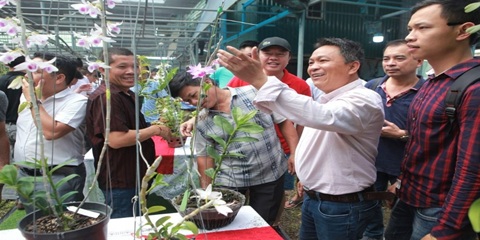
Having completed its new rural development program, Hanoi is shifting its focus toward improving development quality and building smart, sustainable rural areas. The transformation of Dong La orchid-growing village in An Khanh, a western commune of Hanoi, shows how digital technology is becoming a driver of production, market expansion, and higher incomes for local residents.

MEMBER CORNER / PROMOTIONS
VIGLACERA HONORED AS THE "LEADING GREEN INDUSTRIAL REAL ESTATE DEVELOPER 2026"
Organized by the Vietnam Investment Review, this prestigious awards program recognizes industry pioneers advancing eco-industrial parks, clean energy transition, and rigorous ESG standards. Outperforming competitors through a rigorous evaluation, Viglacera Corporation – JSC proudly ranked among the Top 5 highest-positioned enterprises in the Leading Green Industrial Real Estate Developers 2026 category, reinforcing its premier position in Vietnam’s industrial real estate sector.
Events Sponsors






















