Want to be in the loop?
subscribe to
our notification
Business News
CREDIT GROWTH FAR FROM YEAR-END TARGET DESPITE FALLING INTEREST RATES
During a bank-business connectivity meeting in Thái Nguyên Province on Wednesday, Deputy Governor Phạm Thanh Hà revealed that as of September 29, the total credit for the entire economy reached nearly VNĐ12.7 quadrillion (US$531.2 billion), marking a 6.92 per cent increase since early this year.
The correlation between credit and economic growth suggests that the lower-than-expected GDP growth in the third quarter will exert substantial pressure on attaining the annual credit target of 14 per cent set for this year.
Experts predict that credit growth may slow down, reaching around 12 per cent in 2023 due to less favourable real estate conditions, a slowdown in export growth and manufacturing difficulties. Especially, the real estate business and real estate consumer loans, which account for 70 per cent of the banking sector, have also seen a significant decline.
According to the survey on credit institutions' business trends and expectations in the fourth quarter of 2023 by the State Bank of Vietnam (SBV), these institutions anticipate a continued decrease in the average deposit and lending interest rates by 0.26 to 0.35 percentage points in the final quarter of 2023.
The central bank has lowered the operating interest rates four times since the beginning of the year by 0.5 to 2.0 percentage points per annum, considering the continuing global upward trend in interest rates. The average lending rate for short-term loans now stands below 6 per cent per annum, while the lending rate is 8 per cent per annum, according to SBVs report.
In terms of credit growth, credit institutions expect the total banking system debt to increase by 4.6 per cent in the fourth quarter and 12.3 per cent for the entire year 2023. This expectation is 0.2 percentage points lower than the results from the third quarter of 2023.
Credit institutions' expectations for credit growth are lower than the SBV's initial target of around 14-15 per cent for 2023, aligning with the estimates of most experts and securities companies.
Although the central bank has actively reduced interest rates, the current economic challenges are not primarily due to interest rates but stem from risks in the business environment and other factors affecting investment decisions and business expansion.
Nguyễn Thị Vinh, chairwoman of the Thái Nguyên Women Entrepreneurs Association and CEO of Thái Hưng Trading Company, believes that the current interest rate environment is favourable for businesses.
However, Vinh admits that interest rates are not the primary concern for businesses at the moment. She emphasises that the most significant challenges are the market conditions, order volume and legal issues.
Capital surplus
Ending September, the banking system retains over VNĐ1 quadrillion that cannot be pumped into the economy.
While the interest rates for deposits have decreased, the capital mobilisation in banks has continued to increase over the past nine months. The BIDV Securities Company reported that the total amount of non-term deposits in the banking system has reached nearly VNĐ400 trillion, surpassing the required reserve of around VNĐ280 trillion. Interbank interest rates remain stable at less than 1 per cent.
In response to the surplus liquidity in the banking system, SBV resumed market operations since September 21, issuing Treasury bills (T-bills) with a total scale of VNĐ111 trillion on October 3. Deputy Governor Phạm Thanh Hà mentioned that the central bank had to adjust short-term T-bill issuances to reduce excess liquidity in the system, aiming not to have a significant impact on interest rates.
Experts anticipate that, given the high level of available liquidity, the central bank will likely continue to issue T-bills in the coming sessions. The total scale of issuances will depend on how the market situation will impact overall liquidity. If credit growth intensifies in the late months of the year, the central bank will release these bills to support part of the liquidity for the market.
Considerable credit room
Regarding credit demand, there remains ample space for credit expansion this year. Economic growth for the initial nine months of 2023 only achieved 4.24 per cent, significantly falling short of the annual target of 6.5 per cent.
Following numerous reductions in deposit interest rates, banks have started introducing various preferential loan packages with attractive interest rates to boost credit demand, promote business and production, and support consumer spending in the final months of the year.
For instance, Vietcombank has reduced deposit interest rates nearly 10 times and loan interest rates five times for all customer segments, both individuals and businesses. The bank has also reduced interest rates for over 240,000 customers with outstanding loans exceeding VNĐ1 quadrillion.
BIDV has announced a VNĐ300 trillion credit package with interest rates 0.5 to 2 percentage points lower than normal lending rates. Agribank has implemented a credit package of VNĐ100 trillion and $500 million for business customers, with short-term loan interest rates starting from 5 per cent per annum and medium- to long-term loan interest rates from 8 per cent per annum.
Governor Nguyễn Thị Hồng believes that with the signs of recovery in production, business, and increasing credit demand typically seen in the final months of the year, credit will continue to rise in the near future.
Simultaneously, several preferential credit packages are actively being implemented. For example, disbursement of the VNĐ15 trillion credit package for the aquaculture sector, launched in mid-July, has reached around VNĐ5.5 trillion. There are 40 projects, with a total loan demand of around VNĐ16 trillion, which have satisfied disbursement conditions of the VNĐ120 trillion credit package.
"If the National Assembly approves amendments to the Real Estate Business Law and the Housing Law allowing businesses to buy houses for workers in this October session, the potential for loan demand from this package will increase," said Governor Nguyễn Thị Hồng.
Source: VNS
Related News

CHARITY / EXHIBITION / OTHER EVENTS
INVESTMENT OPPORTUNITIES IN CA MAU PROVINCE: 96 PROJECTS AND 20 STRATEGIC PROJECTS
We are pleased to share with you information on investment projects currently seeking investors in Ca Mau Province. Should your esteemed company or association be interested, we kindly invite you to review the project information and complete the registration form via the links provided. The Ho Chi Minh City Investment and Trade Promotion Centre (ITPC) will consolidate the expressions of interest and facilitate connections with the leadership of Ca Mau Province at a meeting tentatively scheduled for 13 November 2026 in Ho Chi Minh City.

MEMBER CORNER / PROMOTIONS
BẰNG KIỀU LIVESHOW - A SYMPHONY OF LOVE UNDER THE GOLDEN GLOW
A masterclass in live music that takes the audience on a soulful journey through immortal love songs, guided by the peerless artistry and emotive storytelling of renowned singer Bằng Kiều. The highlight of the night is his seamless musical chemistry with special guest Triệu Hồng Ngọc, promising passionate and deeply resonant duets inside the magnificent Grand Ballroom.
INFRASTRUCTURE / CONSTRUCTION / LOGISTIC / PORT
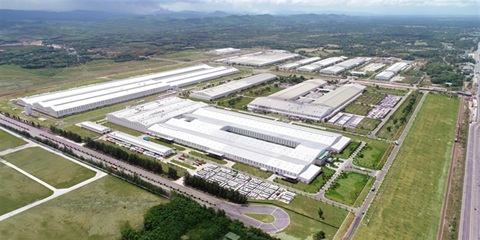
ĐÀ NẴNG GREEN-LIGHTS US$105 MILLION THAI DEVELOPMENT DEAL
The central city has approved an investment proposal by Thailand’s WHA Group to develop infrastructure for the 400ha WHA Đà Nẵng Industrial Park project on two communes of Thăng Bình and Đồng Dương, with an investment of more than VNĐ2.7 trillion (US$105 million). The city said it approved WHA Industrial Development International's status as an investor in the project, which is expected to take place between 2027 and 2034.

VIETNAM ECONOMY INVESTMENT
MOBILE PHONE EXPORTS RISE 20% TO $51.8 BILLION IN FIRST NINE MONTHS
Exports of mobile phones and components rose 20 per cent year-on-year to nearly US$51.8 billion in the first nine months of 2026, with China, the US and Republic of Korea accounting for more than half of the total. Shipments to the three markets reached a combined $26.18 billion, or 50.6 per cent of total exports of the product group during the period, according to data from the Vietnam Department of Customs under the Ministry of Finance.

INFRASTRUCTURE / CONSTRUCTION / LOGISTIC / PORT
VIỆT NAM-CAMBODIA TRADE GATHERS PACE TOWARDS $20 BILLION TARGET
Trade between Việt Nam and Cambodia continues to grow, remaining a bright spot and a key pillar of bilateral cooperation as the two countries aim to raise two-way trade to US$20 billion in the coming years. After setting a record of more than $11.3 billion last year, bilateral trade reached about $8.7 billion in the first eight months of this year, up 8.3 per cent year on year.
VIETNAM ECONOMY INVESTMENT
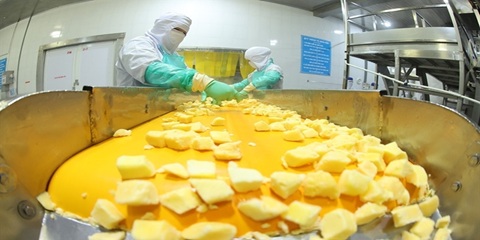
FRUIT AND VEGETABLE EXPORTS POISED TO HIT $10 BILLION IN 2026
Fruit and vegetable exports are on track to reach nearly US$10 billion in 2026, after rising 19.9 per cent year on year to nearly US$7.4 billion in the first nine months, driven by strong seasonal demand and abundant tropical fruit supplies. The Ministry of Agriculture and Environment said the growth reflected stronger international demand for fresh produce and processed agricultural products.
Events Sponsors






















