Want to be in the loop?
subscribe to
our notification
Business News
CUSTOMS REVENUE FROM IMPORTS AND EXPORTS UP 17.4%
Vietnam’s budget revenue from import-export activities reached VND352.766 trillion (US$13.568 billion) in the first eight months of 2026, up 17.4% from the same period in 2025. Alongside the growth in goods trade, the customs sector is accelerating administrative reforms, digital transformation and risk control to facilitate businesses while securing revenue.

Director General of Vietnam Customs Nguyen Van Tho chairs the conference to review August performance and outline tasks for the coming period
Reforming Procedures to Sustain Revenue
According to the Customs Department, Vietnam’s total import-export turnover in the first eight months of 2026 reached US$770.14 billion, up 28.7% from the same period last year. Of this, exports reached US$374.84 billion, up 22.4%, while imports reached US$395.3 billion, up 35.3%. The goods trade balance recorded a deficit of US$20.46 billion.
Against the backdrop of strong trade growth, revenue from import-export activities also continued to rise. From the beginning of the year through August, revenue reached VND352.766 trillion (US$13.568 billion), equivalent to 78.2% of the assigned target of VND451 trillion (US$17.346 billion) and 68.3% of the target of VND516.5 trillion (US$19.865 billion). Compared with the same period in 2025, revenue increased by VND52.308 trillion (US$2.012 billion), or 17.4%.
On average, the customs sector collected around VND44.096 trillion (US$1.696 billion) per month in budget revenue from import-export activities. This result partly reflects the expansion of trade flows, with total import-export turnover surpassing US$770 billion after just eight months.
To sustain revenue while supporting businesses, administrative reform continues to be an important task for the customs sector. In August, the Customs Department reduced and simplified 35 of 39 administrative procedures under the plan and implemented an additional 13 procedures, reaching 123.1% of the target. The plan to cut 16 business conditions was also revised for inclusion in a government resolution, reaching 100% of the target.
Reducing procedures and shortening processing times not only helps businesses lower compliance costs but also speeds up the movement of goods. As import-export activities expand, these efforts also provide an important foundation for sustaining and increasing budget revenue over the long term.
Digital Transformation and Risk Management to Secure Revenue
Alongside administrative reform, digital transformation is becoming an increasingly important tool in the customs sector’s management approach. The VNACCS/VCIS system and related satellite systems continue to operate stably and securely 24/7, ensuring smooth customs clearance.
From January 1 to August 20, 2026, the Customs Department received more than 85.73 million declarations, of which more than 85.71 million were submitted online. Customs authorities are also preparing information technology systems and technical infrastructure to pilot authentication of customs declarants for low-value goods through connections with the national population database and VNeID.
These are concrete steps in implementing Resolution 57-NQ/TW of the Politburo on the development of science and technology, innovation and national digital transformation. For the customs sector, digital transformation is no longer limited to moving procedures online but aims to fundamentally change the management approach, shifting from manual processing to data-based management, automation and risk analysis.
Actual channeling from July 15 to August 14 showed that 2.16 million declarations were channeled, with the Green Channel accounting for 71.51%, the Yellow Channel 26.39% and the Red Channel 2.1%. Through risk management, the sector detected 952 violating declarations through channeling and shifted them to inspection channels. This approach allows customs authorities to focus resources on shipments, businesses and sectors with higher risk levels rather than conducting broad manual inspections. As a result, most compliant trade activities are facilitated, while abnormal signs remain under control.
Notably, in implementing Resolution 57-NQ/TW, the customs sector is focusing on foundational projects such as the information technology system for Digital Customs, expansion of the National Single Window Portal and connection to the ASEAN Single Window in Phase 3. Connecting VNeID with customs systems to authenticate declarants for low-value goods also shows that digital transformation is being integrated into specific stages of customs operations.
Data-based management is therefore expected not only to speed up customs clearance but also to improve the ability to identify risks related to fraud, incorrect HS codes, declared values, origins and goods policies, all of which directly affect budget revenue.
In addition, post-clearance audits continue to be intensified. From December 15, 2025 to August 14, 2026, the sector issued 1,109 post-clearance audit decisions and completed 875 audits. Total assessed tax and penalties reached VND4.7818 trillion (US$183.9 million), equivalent to 120% of the target assigned for all of 2026. Actual budget collections reached VND3.47059 trillion (US$133.5 million), equivalent to 87% of the annual target of VND4 trillion (US$153.8 million). Areas subject to focused inspections included high-risk areas such as goods origin, intellectual property, HS codes, valuation and goods policies. Strengthening post-clearance audits helps promptly detect violations, prevent revenue losses and ensure fair competition among businesses.
In the final months of the year, Director General of the Department of Vietnam Customs Nguyen Van Tho requested that the entire sector continue to closely pursue budget revenue targets while strengthening efforts to prevent revenue losses, trade fraud, transfer pricing, tax evasion and violations of customs laws. This will be accompanied by continued efforts to reduce and simplify administrative procedures, speed up customs clearance and improve risk management.
After eight months, revenue of VND352.766 trillion (US$13.568 billion) had reached 78.2% of the annual target. To achieve the VND451 trillion (US$17.346 billion) target, the customs sector needs to collect approximately VND98.234 trillion (US$3.778 billion) more in the final four months of the year, equivalent to nearly VND24.559 trillion (US$944.6 million) per month. This puts considerable pressure on the sector, particularly as revenue remains dependent on developments in import-export activities.
Against this backdrop, accelerating implementation of Resolution 57-NQ/TW is particularly significant for the customs sector. As data becomes connected, procedures are digitized and management shifts further toward risk analysis, customs authorities gain additional tools to facilitate trade while maintaining tight control over areas at risk of revenue losses. This will provide an important foundation for the customs sector to improve management efficiency, protect revenue and work toward building a modern, digitalized and transparent customs system in the years ahead.
Source: VCCI
Related News

INFRASTRUCTURE / CONSTRUCTION / LOGISTIC / PORT
VIỆT NAM-CAMBODIA TRADE GATHERS PACE TOWARDS $20 BILLION TARGET
Trade between Việt Nam and Cambodia continues to grow, remaining a bright spot and a key pillar of bilateral cooperation as the two countries aim to raise two-way trade to US$20 billion in the coming years. After setting a record of more than $11.3 billion last year, bilateral trade reached about $8.7 billion in the first eight months of this year, up 8.3 per cent year on year.
TECHNOLOGY
AI BEGINNING TO RESHAPE RECRUITMENT CRITERIA
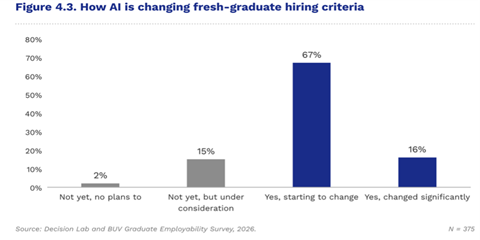
Digital literacy is the only capability area in which fresh graduates meet employers’ expectations, according to a new report. Yet, it is also the standard rising fastest, as businesses increasingly expect new hires to use AI effectively in the workplace. Some 83 per cent of employers say AI has changed, or is beginning to change, their hiring criteria, while 94 per cent report higher expectations for digital and AI capabilities than they had two to three years ago.

INFRASTRUCTURE / CONSTRUCTION / LOGISTIC / PORT
ĐÀ NẴNG GREEN-LIGHTS US$105 MILLION THAI DEVELOPMENT DEAL
The central city has approved an investment proposal by Thailand’s WHA Group to develop infrastructure for the 400ha WHA Đà Nẵng Industrial Park project on two communes of Thăng Bình and Đồng Dương, with an investment of more than VNĐ2.7 trillion (US$105 million). The city said it approved WHA Industrial Development International's status as an investor in the project, which is expected to take place between 2027 and 2034.

VIETNAM ECONOMY INVESTMENT
MOBILE PHONE EXPORTS RISE 20% TO $51.8 BILLION IN FIRST NINE MONTHS
Exports of mobile phones and components rose 20 per cent year-on-year to nearly US$51.8 billion in the first nine months of 2026, with China, the US and Republic of Korea accounting for more than half of the total. Shipments to the three markets reached a combined $26.18 billion, or 50.6 per cent of total exports of the product group during the period, according to data from the Vietnam Department of Customs under the Ministry of Finance.

VIETNAM ECONOMY INVESTMENT
FRUIT AND VEGETABLE EXPORTS POISED TO HIT $10 BILLION IN 2026
Fruit and vegetable exports are on track to reach nearly US$10 billion in 2026, after rising 19.9 per cent year on year to nearly US$7.4 billion in the first nine months, driven by strong seasonal demand and abundant tropical fruit supplies. The Ministry of Agriculture and Environment said the growth reflected stronger international demand for fresh produce and processed agricultural products.
GARMENT / TEXTILE
TEXTILE EXPORTS FACE DUAL CHALLENGES OF SUSTAINING ORDERS AND BOOSTING EFFICIENCY AMID GROWING COMPETITION
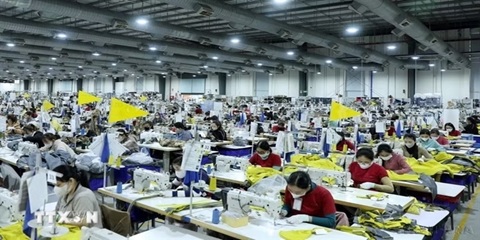
Data shows that the textile and garment sector maintained its growth momentum in the first nine months of this year. The industry's total export turnover reached an estimated US$35.721 billion in the first nine months of this year, up 3.3 per cent year-on-year. Despite posting encouraging export figures, Vietnamese textile and garment enterprises continue to navigate unpredictable market variables.
Events Sponsors






















