Want to be in the loop?
subscribe to
our notification
Business News
CUSTOMS SECTOR ACCELERATES STATE BUDGET REVENUE
Removing difficulties for enterprises
The GDC reported positive economic signs for Vietnam, with exports rebounding as global market demand recovers. Over the first 10 months, the country's total import-export turnover reached US$647.87 billion, up 15.8% (US$88.57 billion) compared to the same period last year. Exports in the first 10 months reached US$335.59 billion, up 14.9% (US$43.54 billion), while imports totaled US$312.28 billion, up 16.8% (US$45.03 billion). Vietnam recorded a trade surplus of US$23.31 billion, down 6% from the same period last year.
Given the achievements of the first 10 months and the recent growth rate, experts forecast that Vietnam's import-export turnover could reach a record US$800 billion in 2024.
Deputy General Director Nguyen Van Tho of the GDC highlighted the positive third-quarter results, particularly in trade facilitation, revenue collection, and anti-smuggling efforts. However, with limited time left in 2024 and a heavy workload, he urged local customs departments to prioritize key measures, ensuring timely and compliant goods clearance and tax refunds to support enterprises.
Strengthening inspection and control
The GDC urged accelerated reforms, a better business environment, and stronger national competitiveness. Priorities include addressing enterprise challenges, attracting investment, expanding production, and boosting growth to support state revenue. Customs departments will enhance policy communication, diversify enterprise support, innovate taxpayer outreach, and ensure timely revenue collection to meet 2024 targets.
The GDC also instructed units to enhance state management effectiveness and prevent revenue loss in budget collection. This includes strengthening information gathering, identifying potential risks, and implementing measures for inspection, monitoring and control.
In the third quarter, smuggling and cross-border violations surged, with customs prosecuting 10 cases and transferring 39, adding VND141.1 billion to the state budget. Prosecutions rose 25%, and transfers increased 50% year-on-year. In the first nine months, customs handled 12,949 violations worth VND23,757 billion.
The GDC requested a review and inspection of goods names, codes and tax rates during both customs clearance and post-clearance stages. This aims to detect and address cases of incorrect code declarations, disguised goods names, or incomplete descriptions used to apply lower or preferential tax rates. Special attention should be given to items on the list of risky import and export goods, particularly regarding classification and tax rate applications, as well as items that have been specifically addressed in official dispatches for guidance and correction.
The GDC instructed the implementation of value inspection and consultation during customs procedures, as well as post-clearance value inspections for goods and enterprises at risk of false value declarations. This is to ensure accurate determination of customs and tax values, using verification measures to prevent and detect price fraud. Appropriate actions will be taken based on regulations. Additionally, a review and classification of collectible and uncollectible debts is required, along with efforts to collect and settle tax debts.
The GDC instructed a strengthened inspection and review process for tax-exempt and non-taxable subjects under the Law on Export Tax, Import Tax and other tax laws. Tax exemption procedures must be properly followed in accordance with legal and guidance documents from the Ministry of Finance and the GDC.
In cases where issues arise during tax exemption procedures, especially those involving specialized management ministries (e.g., determining domestically produced goods for raw materials and components exempt from import tax, or goods for environmental protection as per the Ministry of Natural Resources and Environment), these should be promptly reported to the GDC for further communication with the Ministry of Finance. Additionally, the GDC emphasized the urgent need to review and process tax refunds and excess tax payments to the correct entities by December 2024.
The GDC directed the strengthening of inspections and reviews for cases exempted from additional import taxes, such as anti-dumping, self-defense and anti-subsidy taxes, based on decisions from the Ministry of Industry and Trade (MoIT). If the quantity of exempted goods exceeds the amounts specified in the MoIT's decisions, or if the goods are not used for production, the relevant organizations and individuals should be notified. The tax on non-compliant goods will be determined according to the additional import tax rate specified in the official decisions of the MoIT, and further procedures should be carried out in accordance with tax management laws.
Source: VCCI
Related News

VIETNAM ECONOMY INVESTMENT
VIETNAMESE COMPANIES OPTIMISTIC ON INTERNATIONAL GROWTH
Vietnamese businesses are among the most confident about the outlook for international trade, according to HSBC’s Global Trade Pulse Survey 2026, released on November 16. The survey captures the views of 10,000 senior business leaders across 26 markets on trade, tariffs, supply chains, and technology. Findings show that 94 per cent of Vietnamese businesses expect their international trade to grow over the next two years. Vietnam ranks joint top in the survey with the Philippines, compared with 86 per cent globally.
TECHNOLOGY
VIỆT NAM'S DIGITAL TECHNOLOGY INDUSTRY REVENUE SURGES 53% TO $254.6B
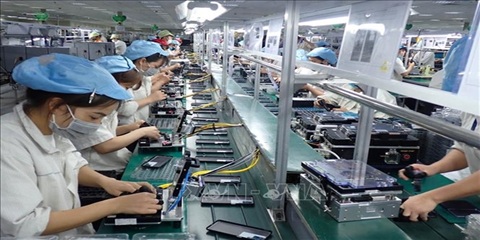
Việt Nam's digital technology industry generated an estimated US$254.6 billion in revenue in the first 10 months of 2026, up 53 per cent from a year earlier, while exports rose 46.2 per cent to $212 billion, the Ministry of Science and Technology said in its latest report. According to the report, hardware and electronics exports reached an estimated $30.681 billion in October, up 108 per cent from the same month last year.

CHARITY / EXHIBITION / OTHER EVENTS
BOCHK ‧ HKPC FUTURE VIETNAM: HANOI BUSINESS DELEGATION ON DIGITAL TRANSFORMATION AND INDUSTRIAL INNOVATION
Interested in exploring Vietnam’s latest developments in digital transformation, technology adoption and industrial innovation? Organised by the Hong Kong Productivity Council (HKPC) and fully supported by Bank of China (Hong Kong) Limited, the "Future Vietnam: Hanoi Business Delegation on Digital Transformation and Industrial Innovation” will feature visits to leading high-tech enterprises across Vietnam and engage with local chambers of commerce, industry organisations and associations. Join us to expand your high-value business network and seize emerging opportunities in the ASEAN market!
GARMENT / TEXTILE
TEXTILE, GARMENT FIRMS REFORM TO MEET CPTPP ORIGIN RULES
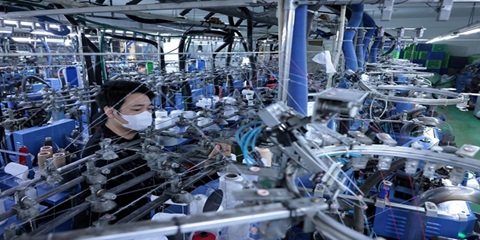
Vietnamese textile and garment manufacturers are aggressively restructuring their supply chains and diversifying material sources to unlock untapped tariff benefits. To capitalise on the Comprehensive and Progressive Agreement for Trans-Pacific Partnership (CPTPP), companies are racing to align with the pact's strict "yarn-forward" rules — a task made difficult by a shortage of raw materials within the trade bloc.

TECHNOLOGY
ĐÀ NẴNG SEEKS TO BUILD HIGH-TECH AGRICULTURE, INTEGRATED VALUE CHAINS
Đà Nẵng is seeking to transform its agricultural sector from a supplier of raw materials into a technology-driven, market-oriented economy, with investment opportunities spanning concentrated production areas, deep processing, logistics and agricultural product distribution. The city aims to shift from traditional agricultural production towards agricultural economic development, organising value chains and increasing the technological content and added value of products through closer links between production and processing.
INFRASTRUCTURE / CONSTRUCTION / LOGISTIC / PORT
HCM CITY ACCELERATES POWER INFRASTRUCTURE INVESTMENT TO ATTRACT HIGH-TECH CAPITAL
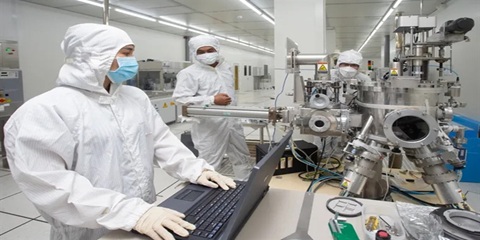
High-tech projects, particularly data centres, are not confined to SHTP but are also expanding into export processing zones and industrial parks across HCM City, driving up electricity demand. Proactively developing power infrastructure, diversifying energy supplies and expanding access to green energy are becoming essential for HCM City to maintain its competitive edge in attracting high-tech foreign direct investment (FDI).
Events Sponsors