Want to be in the loop?
subscribe to
our notification
Business News
DANANG LINES UP FRESH URBAN AREAS TO MATCH ASIAN STANDARDS
Danang is aiming to become an international seaport city and the growth pole of the key economic zone of the central Vietnam and Central Highlands regions.
According to a master plan for the development of Danang approved this month, the city’s urban space is organised into 12 subdivisions.
Accordingly, the subdivision along the Han River and the East Coast covers over 6,600 hectares. Danang Bayside Subdivision is about 1,530ha, while Lien Chieu Seaport Subdivision covers 1,285ha. High-tech sub-zone and Green Core Center Subdivision have an area of almost 5,600ha and 4,780ha, respectively. The area of the Innovation Subdivision is about 3,900ha.
The Airport Subdivision spans across an area of about 1,327ha, while the Hillside Urban Subdivision spreads across an area of about 2,729ha. Other areas include the High-Tech Agriculture Subdivision, the Development Reserve Subdivision, and the Western Ecological Subdivision. Meanwhile, the Eastern Ecological Subdivision covers Hoang Sa district and Son Tra Peninsula.
The master plan creates a strong driving force for Danang’s upcoming urban development. In particular, each subdivision represents a large-scale project.
At the Hillside Subdivision, the city is calling for investment in the development of a smart urban and non-tariff complex in Hoa Vang district. At the Innovation Subdivision, appeals are getting underway for investment flows into the Hoa Xuan creative space project that will have a large software park and an associated service area in combination with residential housing.
Similarly, at Danang High-Tech Park, the city is calling for the investment in a data centre, an office building complex, and IT exhibition area. At Lien Chieu Seaport Subdivision, the city is seeking funding in logistics projects, including in Lien Chieu Port and Kim Lien Cargo Terminal Logistics Centre.
The six inner urban districts will be oriented for redevelopment according to the ‘compact city’ model, reducing the construction density of the existing central urban core area, improving the land use coefficient, developing more urban amenities, and integrating with the transport system.
Existing urban areas with a lower population density than the core ones will develop with a higher population and construction density in accordance with regulations, forming public green spaces in residential areas and public spaces in residential areas.
According to the plan, the city will expand its new urban areas to the west and northwest sides. By 2030, urban areas will cover nine communes and part of Hoa Ninh Commune, with an urbanisation rate of over 90 per cent.
Danang plans to develop Hoa Vang district to meet the urban standards of Grade 4. About 80 per cent of communes are eligible to become wards and to establish towns as soon as possible. By 2030, Hoa Vang will be home to 430,000 people, of which the permanent population is about 380,000. The administrative centre will be located in Hoa Phong.
The goal of the plan for this decade and beyond is to build Danang into one of the major socioeconomic centres of the country and a Southeast Asian centre for startups, innovation, tourism, trade, finance, logistics, high-tech industry, IT, and supporting industries.
Source: VIR
Related News

MEMBER CORNER / PROMOTIONS
KNIC ENGAGES WITH GOVERNMENT AND HIGH-TECH BUSINESS COMMUNITIES IN CHINA
From Beijing to Shandong, KN Holdings and KN Industrial City are continuing to expand their engagement with government authorities, trade promotion organizations, and high-tech business communities in China. In Beijing, the delegation met with the Center for International Economic and Technological Cooperation under the Ministry of Industry and Information Technology (MIIT), exchanging perspectives on industrial and technology cooperation between the two markets.
VIETNAM ECONOMY INVESTMENT
VIETNAM’S TRADE TOPS $825 BILLION BY MID-SEPTEMBER
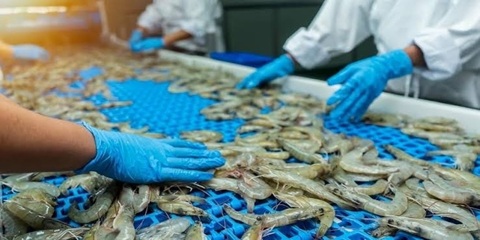
Figures released on September 21 showed goods trade reached nearly $55 billion in the first 15 days of September alone, bringing cumulative turnover since the beginning of the year to more than $825 billion. The strong growth reflects robust trade flows, with demand for consumer goods and production inputs remaining high.

TECHNOLOGY
VIỆT NAM'S BUSINESSES MOVE TOWARDS AI AGENTS
Việt Nam’s AI landscape is entering a new phase as businesses move beyond generative AI (GenAI) tools designed to assist human users towards autonomous AI, agentic AI and AI agents that can take action with limited supervision, experts have said. The shift comes as Việt Nam seeks to accelerate science and technology, innovation and digital transformation under Politburo Resolution 57-NQ/TW, issued on December 22, 2024.
GARMENT / TEXTILE
VIỆT NAM TARGETS $48 BILLION IN TEXTILE-GARMENT EXPORTS
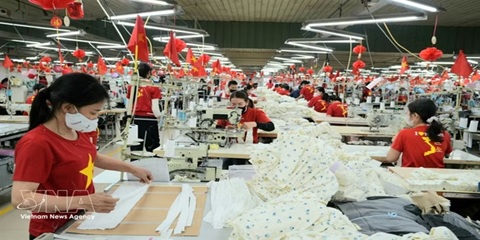
Việt Nam’s textile and garment industry is facing both opportunities and challenges amid complex and unpredictable developments in the global market, prompting businesses to improve growth quality, optimise production costs and enhance adaptability in pursuit of an export turnover of about $48 billion this year. The target is considered an important milestone that requires concerted efforts from management agencies and the business community.
INFRASTRUCTURE / CONSTRUCTION / LOGISTIC / PORT
CUTTING LOGISTICS COSTS KEY TO BOOSTING EXPORTS
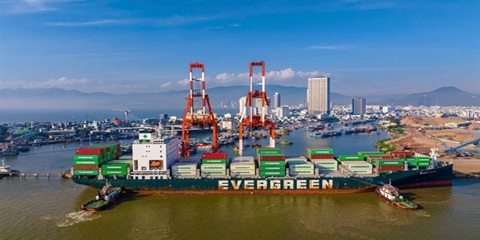
Reducing costs has become an increasingly urgent priority for import-export activities, particularly logistics costs, a conference in Hà Nội was told on Tuesday. According to Deputy General Director of the Ministry of Industry and Trade's Agency for Foreign Trade, Trần Thanh Hải, import-export activities has remained a bright spot for the economy in recent years, playing an important role and helping drive macroeconomic growth.
LEGAL UPDATE / POLICY
FLEXIBLE FISCAL POLICY HELPS DRIVE ECONOMIC GROWTH
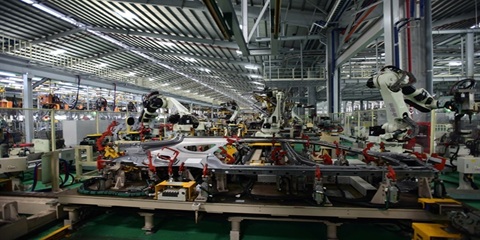
Việt Nam’s fiscal policy has been implemented in a targeted expansionary manner since early 2026, helping maintain macroeconomic stability and supporting the country’s goal of achieving double-digit economic growth. According to the Ministry of Finance, State budget revenue in the first eight months of 2026 was estimated at VNĐ2.02 quadrillion (US$77.7 billion), equivalent to 80 per cent of the annual estimate and up 16 per cent year-on-year.
Events Sponsors






















