Want to be in the loop?
subscribe to
our notification
Business News
DECREE 205/2025/ND-CP: NEW DRIVER FOR SUPPORTING INDUSTRY DEVELOPMENT
The Government issued Decree 205/2025/ND-CP on amendments and supplements to Decree 111/2015/ND-CP on accelerating development of supporting industries. Effective from September 1, 2025, the new decree introduces a series of support policies regarding technology, human resources, environment, legal frameworks, and investment, and lays a solid foundation for enhancing the competitiveness of Vietnamese companies. The new policy is expected to help supporting industries integrate more deeply into global supply chains and contribute to Vietnam’s progress toward industrialization and modernization goals.
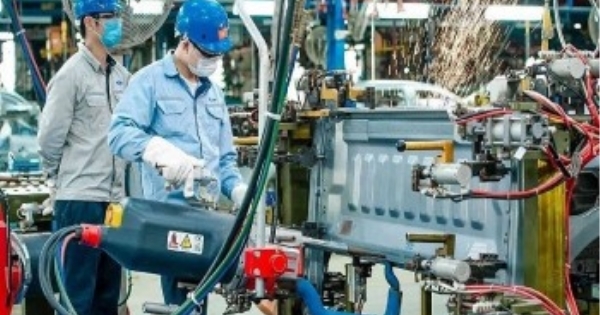
By enhancing professional skills and expertise, Vietnam can move from low-cost manufacturing to high value-added production
Promoting technology transfer
Decree 205/2025/ND-CP focuses on supporting research, development, and technology transfer in supporting industries. Organizations and individuals engaged in the production of prioritized products are entitled to incentives from the National Technology Innovation Fund, the National Foundation for Science and Technology Development, and the Vietnam National High-Tech Development Program. In particular, collaborative projects between businesses and science-technology organizations are eligible for up to 50% support for expenses related to machinery, equipment, prototypes, software, training, consulting, inventions, and intellectual property. Capacity-building activities for experts and technology consulting units can receive up to 70% of total funding.
These incentives enable businesses, especially small and medium-sized enterprises (SMEs), to access advanced technologies to improve product quality and increase competitiveness in international markets. However, to take full advantage of these incentives, they must enhance their technical and financial capabilities. Transparent resource allocation mechanisms are also essential to prevent misdirected support and ensure meaningful impact on supporting industries.
Uplifting human resources
To meet the demand for high-quality labor, the decree provides funding support for domestic and overseas training programs for outstanding students, lecturers, researchers, technicians, and technical workers in supporting industries. Funding is mobilized from the Supporting Industry Development Program and national training programs.
These training policies aim to address the shortage of highly skilled labor - a major barrier preventing many Vietnamese companies from participating in global supply chains. By improving professional skills and expertise, Vietnam can shift from low-cost manufacturing to high value-added production, thus aligning with Industry 4.0 megatrend. Nonetheless, the effectiveness of these policies depends on close coordination among businesses, training institutions, and local authorities in developing practical training programs, as well as implementing talent retention strategies to prevent brain drain.
Environmental protection and quality assurance support
The decree adds three provisions relating to environmental, legal, and quality assurance support, aimed at fostering sustainable industrial development and improving product standards. Development projects for supporting industrial parks or industrial clusters are eligible for environmental protection incentives in accordance with current laws. Manufacturers of prioritized products also receive similar support, proving Vietnam’s commitments to green industrial development.
In terms of quality assurance, businesses are eligible for up to 50% support for such activities as renting of testing laboratories, product testing, inspection of new goods, copyright registration, intellectual property, barcodes, measurement, and measurement calibration. These supports enable businesses to meet international standards - a prerequisite for participating in global supply chains in such industries as electronics, automobile, and precision engineering.
Legal assistance and investment incentives
Legally, SMEs manufacturing prioritized supporting industrial products are entitled to assistance under the Law on Support for SMEs, including legal consulting and simplified administrative procedures. This helps reduce regulatory burdens on small businesses, which often face difficulties in complying with complex legal requirements.
Regarding investment, projects manufacturing prioritized products are eligible for land and water surface rent exemptions or reductions, along with tax incentives in accordance with the law. These policies create a favorable environment to attract both domestic and foreign investment, helping Vietnam compete with Thailand, Indonesia and other countries to become a regional manufacturing hub. However, strict supervision is needed to prevent abuse of incentives and enhance management capacity to effectively support investors.
Despite offering many opportunities, the enforcement of Decree 205/2025/ND-CP may face challenges because businesses, especially SMEs, have limited financial and technical capacity. Transparent resource allocation, clear implementation guidelines, and inter-sector coordination are essential to make sure that policies are effective and reach the right subjects.
The decree provides a foundation for Vietnam’s supporting industries to integrate into global supply chains through policies on support regarding technology, human resources, environment, legal frameworks, and investment. The success of the decree depends on effective implementation and close cooperation among the government, enterprises, and relevant stakeholders, aiming to upgrade supporting industries and facilitating the country’s industrialization and modernization.
Source: VCCI
Related News

BANKING / FINANCE / INSURANCE / TAX
REMITTANCES TO HCM CITY RISE NEARLY 40% IN Q3
Remittances to HCM City reached more than US$2.83 billion in the third quarter of this year, up 39.5 per cent from the previous quarter and 3.6 per cent year-on-year. This was the first quarter showing positive annual growth this year, helping narrow the decline in remittance inflows over the first nine months. According to the State Bank of Vietnam (SBV)’s Regional Branch 2, remittances transferred to HCM City through credit institutions and economic organisations totalled $2.835 billion in Q3, an increase of more than $802 million from the previous quarter.
TECHNOLOGY
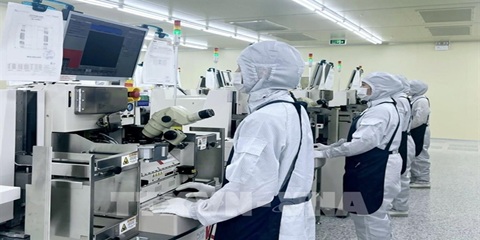
TECH SECTOR GROWTH OPENS UP OPPORTUNITIES FOR VIỆT NAM TO GO GLOBAL
The growth of the electronics, semiconductor and high-tech sectors worldwide is opening up a variety of opportunities for Vietnamese enterprises to integrate more deeply into the global supply chain. However, to become suppliers for these corporations, domestic enterprises must meet rigorous standards regarding quality, technology, productivity and order fulfilment capabilities.
VIETNAM ECONOMY INVESTMENT
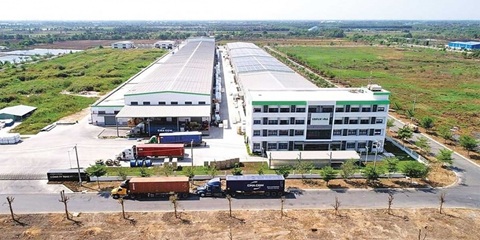
FOREIGN INVESTORS SEEKING A SYNCHRONISED MANUFACTURING ECOSYSTEM
Instead of focusing only on land costs and incentives as usual, foreign investors are seeking a synchronised manufacturing ecosystem, from stable power supply and logistics to shared infrastructure and the convenience of completing residence procedures for experts to serve their long-term investment in the country.
MEMBER CORNER / PROMOTIONS
SENTRYSAFE FHW40200 – PROTECT YOUR VALUABLES, ENJOY PEACE OF MIND!
Looking for a reliable solution to protect your important documents, cash, and valuables from fire and water damage? Genuine SENTRYSAFE - Reliable protection for your valuables and peace of mind! Contact Sen Wai Vietnam for more information and personalized product recommendations.
PROPERTY / INDUSTRIAL ZONE
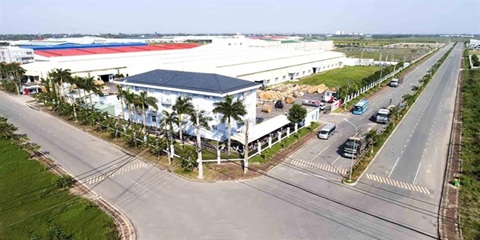
HCM CITY ATTRACTS US$5.7 BILLION INTO EXPORT PROCESSING AND INDUSTRIAL ZONES
HCM City attracted US$5.7 billion in domestic and foreign investment into its export processing and industrial zones during the first nine months of 2026. The figure exceeded the city's full-year target by 31 per cent, highlighting strong momentum in high-quality industrial investment under Resolution No.10-NQ/TW. Total investment reached 131 per cent of the 2026 target of $4.25 billion and represented a 29 per cent increase compared with the same period in 2025, according to the city's Export Processing and Industrial Zones Authority (HEPZA).
INFRASTRUCTURE / CONSTRUCTION / LOGISTIC / PORT
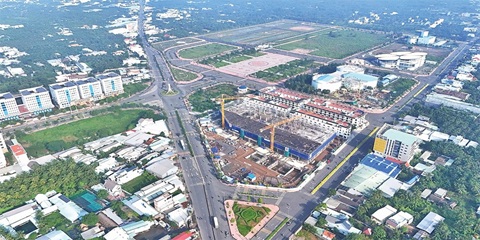
DONG THAP PROVINCE STEPS UP INDUSTRIAL EXPANSION AND INFRASTRUCTURE CONNECTIVITY
Accelerating public investment, strengthening inter-regional connectivity, and expanding industrial land are helping Dong Thap efficiently bolster competitiveness and drive economic growth. Following the 2025 merger of the former Dong Thap and Tien Giang provinces, the expanded Dong Thap province in the Mekong Delta faces mounting pressure to accelerate infrastructure development and strengthen connectivity among local economic zones, urban areas, industrial parks (IPs), and production centres.
Events Sponsors






















