Want to be in the loop?
subscribe to
our notification
Business News
DECREES CLARIFY CONTAINER DEPOT QUESTIONS
Newly-constructed inland container depots (ICD) must have a minimum area of five hectares and be up to environmental protection and fire and explosion prevention standards.
The requirement has been clarified in newly issued Government decree 38/2017/ND-CP on the management of ICDs in Việt Nam.
According to the decree, ICDs are used to wrap and unload goods transported via containers and move them to sea ports and other locations.
ICDs are also used to complete customs procedures on imports and exports, temporarily store goods and repair containers.
The decrees clarifies that ICDs must be formed following ICD development planning that has been approved and attached with primary transport corridors to connect sea ports.
ICDs must have at least two transport methods and have enough land funds for offices and long-term development.
The Government has assigned the Transport Ministrty to establish, publish and update a list of ICDs annually on the portals of the ministry and Marine Department.
The ministry is also in charge of State management of ICDs, directing inter-sector activities and implementing regulations.
According to the decree, Vietnamese and foreign organisations and individuals investing in Vietnamese ICDs must follow decree regulations.
Investments in ICD construction must be in keeping with ICD development planning and related planning, it said.
The decree also requires ICD investors to submit to the ministry’s Marine Department a copy of construction investment decision, its design, design approval decision and the project’s environmental assessment.
Figures from the ministry show that there are 24 ICDs in Việt Nam. There are ten ICDs in the north, which are connected with Hải Phòng. However, most have no connection with other modes of transport such as railways and waterways.
According to Nguyễn Xuân Sang, director of the Ministry of Transport’s Marine Department, in the south, ten ICDs are connected with the sea ports of Vũng Tàu and HCM City, seven of which are linked with domestic waterways.
Many ICDs in the north are not connected with the sea, rivers or railroads. Thus, these ICDs are restricted to supplying road transport services and storage.
In the south, ICDs operate more effectively. Up to 80 per cent of goods nationwide are transported via these depots. However, some ICDs are located inside the city, causing traffic jams. It is necessary to relocate these depots.
Most of the ICDs in the country have poorly constructed warehouses, which results in inefficiency, Sang said.
Decree 38/2017/ND-CP serves as a foundation for the ICD system across the country to develop according to planning.
According to the Government’s ICD planning until 2020 with a vision to 2030, the ICD system is expected to reach the capacity of 6 million TEU (twenty-foot equivalent units, a standard unit for describing a ship’s cargo capacity) each year. By 2030, the figure is hoped to hit 14.2 million TEU.
Source: VIR
Related News

MEMBER CORNER / PROMOTIONS
HCMC | CERTIFIED SUSTAINABILITY PROFESSIONAL (CSP) TRAINING | REGISTRATION OPEN
As sustainability becomes deeply embedded in corporate strategy and supply-chain operations across Vietnam, Hong Kong Business Association Vietnam is pleased to endorse the upcoming Certified Sustainability Professional (CSP) training program by the Asia Institute for Sustainability (AIS) - a premier internationally recognized ESG credential in Vietnam.
VIETNAM ECONOMY INVESTMENT
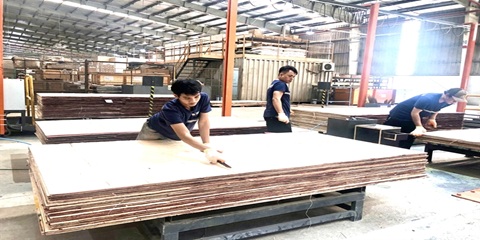
HCM CITY SAYS HOW IT PLANS TO ACHIEVE 10-11% ANNUAL EXPORT GROWTH FOR REST OF DECADE
The southern economic hub aims to strengthen its role as the country’s largest import-export centre while developing into a regional transhipment centre in Southeast Asia, supported by green and digital transformation and a circular economy. HCM City has outlined measures to expand production capacity, cut logistics costs, diversify export markets, and help businesses meet increasingly stringent international standards as it targets average annual export growth of 10-11 per cent through 2030.
VIETNAM ECONOMY INVESTMENT
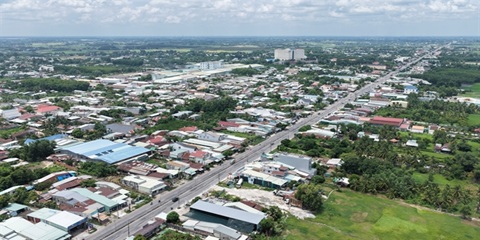
HCM CITY LEADS ECONOMIC RESTRUCTURING IN SOUTHEAST REGION
According to Associate Professor, Dr Vũ Tuấn Hưng, director of the Institute of Social Sciences of the Southern Region, the Southeast is a strategically important socio-economic space in Việt Nam’s development given its advantages in location, industry, trade, services, logistics, science and technology, urbanisation and human resources.
TECHNOLOGY
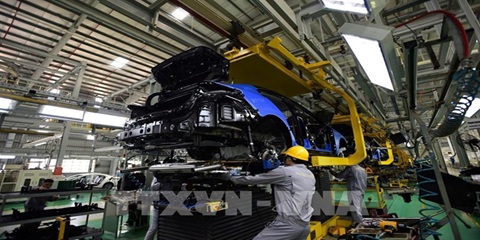
DIGITAL TRANSFORMATION TURNED INTO PRACTICAL TOOLS FOR PEOPLE, BUSINESSES
Việt Nam is moving its digital transformation agenda beyond policy frameworks and individual technology platforms towards practical applications that address everyday needs, as authorities seek measurable outcomes from science, technology and innovation. Under Politburo Resolution No. 57-NQ/TW issued on December 22, 2024, the implementation is increasingly shifting from simply completing assigned tasks towards developing concrete products and services for citizens and businesses.
TECHNOLOGY
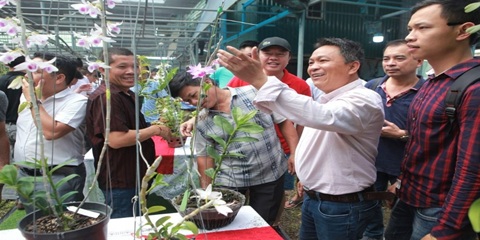
APPLYING TECHNOLOGY FOR ECONOMIC TRANSFORMATION
Having completed its new rural development program, Hanoi is shifting its focus toward improving development quality and building smart, sustainable rural areas. The transformation of Dong La orchid-growing village in An Khanh, a western commune of Hanoi, shows how digital technology is becoming a driver of production, market expansion, and higher incomes for local residents.

MEMBER CORNER / PROMOTIONS
VIGLACERA HONORED AS THE "LEADING GREEN INDUSTRIAL REAL ESTATE DEVELOPER 2026"
Organized by the Vietnam Investment Review, this prestigious awards program recognizes industry pioneers advancing eco-industrial parks, clean energy transition, and rigorous ESG standards. Outperforming competitors through a rigorous evaluation, Viglacera Corporation – JSC proudly ranked among the Top 5 highest-positioned enterprises in the Leading Green Industrial Real Estate Developers 2026 category, reinforcing its premier position in Vietnam’s industrial real estate sector.
Events Sponsors






















