Want to be in the loop?
subscribe to
our notification
Business News
DEVELOPERS DINE ON INDUSTRIAL LAND
As Vietnam has emerged as an attractive option for companies seeking to diversify their manufacturing operations, industrial zone developers are planning to expand their land banks to welcome new investments heading to the country.
Spotting out Vietnam as a secure destination for most investors, especially after its successes in tackling the health crisis, Hyosung Dong Nai of South Korea’s Hyosung Vina decided to expand its factory and manufacturing lines in Vietnam. However, they have been waiting for a long time to be given land area for the expansion.
Hyosung Dong Nai was granted the investment certificate in May 2015 with the investment capital of $660 million on an area of 22 hectares in Nhon Trach 5 Industrial Park (IP) to manufacture industrial materials, textiles, chemicals, and heavy electrical machinery.
The company has almost completely disbursed the capital into this project and has hired close to 2,000 labourers so far. Due to the demand to expand business, Hyosung Dong Nai wanted to rent an additional 10ha in the IP, however, the park was fully occupied.
Cao Tien Sy, general director of Dong Nai Industrial Zone Authority (DIZA), said he had introduced a land plot to Hyosung in Nhon Trach 6 IP in the same province, which was also filling up at a rapid pace. If Hyosung keeps hesitating, he warned this IP would run out of land as well. “The demand is increasing very fast and IPs are filling up quickly,” Sy told VIR.
Dong Nai is an industrial province with a very high occupancy rate of industrial land, with 31 out of 32 IPs reporting an average occupancy rate of over 80 per cent.
Dang Trong Duc, deputy general director of conglomerate Khai Toan Group cum director of KTG Industrial, told VIR that Vietnam is a very promising option for companies because it is both a gateway to the ASEAN and has an extensive network of large trade agreements.
“The Vietnamese government is also trying to create a favourable investment environment for foreign businesses by providing tax incentives and simplifying legal procedures. Affordable, abundant labour force and newly built infrastructure projects are also a motivation for businesses wishing to operate in Vietnam,” Duc said.
According to the Department for Economic Zones Management under the Ministry of Planning and Investment, as of the end of March, Vietnam had 335 industrial zones (IZs) with the total land area of more than 97,000ha. Of these, 260 zones have been put into operation and 75 are under construction. Operational zones have an average occupancy of 75.7 per cent.
While COVID-19 has seriously impacted IZs and manufacturers alike, occupancy rates in the first quarter of 2020 were still above 72 per cent. During the period, a series of new investors including Luxshare-ICT, Goertek, and Hanwha Aero Engines moved to Vietnam while others like Foxconn, Sharp, TCL, Nintendo, Pegatron, and Lenovo are considering similar moves.
Meanwhile, Becamex IDC is one of the businesses owning the largest industrial land area with nearly 15,000ha, including the holdings of VSIP in which the corporation holds 49 per cent. Most of Becamex’s established IZs boast nearly 100 per cent occupancy, while the new ones are being occupied very quickly.
In the north, Kinh Bac City Development Holding Corporation (KBC) is the premier IZ developer, holding 5,134ha, who is a partner of manufacturing giants like Samsung and LG. While its zones are not fully occupied yet, the corporation plans to put some into operation this year like Nam Son Hap Linh (60ha).
Despite the relatively high level of investment in infrastructure in Vietnam, the development of an integrated and synchronous infrastructure system remains behind schedule.
According to Duc from KTG Industrial, which has three IZs in the north and four in the south, many projects are still behind schedule and do not meet the expectations of investors. Vietnam needs to continue to maintain its current level of investment and accelerate the development of highways and utility networks, including renewable energy.
“Cross-border trade processes also need to be improved. Cross-border transaction costs in Vietnam are less competitive than in most countries in the region, with administrative costs now accounting for the largest proportion of this,” Duc said.
Meanwhile, a representative from Amata Group, which has three IPs in Vietnam, said COVID-19 has iced foreign companies’ plans in Vietnam.
Last year, foreign investors showed high commitment and were rearing to go, but since the epidemic, they have adopted a wait-and-see approach.
“Even if Vietnam is successfully controlling the disease, we need more time for foreign developers to start pouring investment into the country as they have to clean their own house first before venturing into other markets. Apart from this, logistics and transportation activities have not returned to normal yet. Foreign experts, meanwhile, are also facing difficulties to return to Vietnam to work,” the representative said.
Meanwhile, Vo Sy Nhan, co-founder and managing director of Gaw NP Industrial also told VIR that potential to develop industrial property in Vietnam is huge, however, slow infrastructure development, fast-increasing land prices, and human resources issues at some localities provide strong headwinds.
Source: VIR
Related News

INFRASTRUCTURE / CONSTRUCTION / LOGISTIC / PORT
VIỆT NAM-CAMBODIA TRADE GATHERS PACE TOWARDS $20 BILLION TARGET
Trade between Việt Nam and Cambodia continues to grow, remaining a bright spot and a key pillar of bilateral cooperation as the two countries aim to raise two-way trade to US$20 billion in the coming years. After setting a record of more than $11.3 billion last year, bilateral trade reached about $8.7 billion in the first eight months of this year, up 8.3 per cent year on year.
TECHNOLOGY
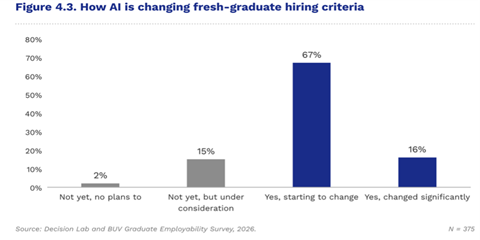
AI BEGINNING TO RESHAPE RECRUITMENT CRITERIA
Digital literacy is the only capability area in which fresh graduates meet employers’ expectations, according to a new report. Yet, it is also the standard rising fastest, as businesses increasingly expect new hires to use AI effectively in the workplace. Some 83 per cent of employers say AI has changed, or is beginning to change, their hiring criteria, while 94 per cent report higher expectations for digital and AI capabilities than they had two to three years ago.

INFRASTRUCTURE / CONSTRUCTION / LOGISTIC / PORT
ĐÀ NẴNG GREEN-LIGHTS US$105 MILLION THAI DEVELOPMENT DEAL
The central city has approved an investment proposal by Thailand’s WHA Group to develop infrastructure for the 400ha WHA Đà Nẵng Industrial Park project on two communes of Thăng Bình and Đồng Dương, with an investment of more than VNĐ2.7 trillion (US$105 million). The city said it approved WHA Industrial Development International's status as an investor in the project, which is expected to take place between 2027 and 2034.

VIETNAM ECONOMY INVESTMENT
MOBILE PHONE EXPORTS RISE 20% TO $51.8 BILLION IN FIRST NINE MONTHS
Exports of mobile phones and components rose 20 per cent year-on-year to nearly US$51.8 billion in the first nine months of 2026, with China, the US and Republic of Korea accounting for more than half of the total. Shipments to the three markets reached a combined $26.18 billion, or 50.6 per cent of total exports of the product group during the period, according to data from the Vietnam Department of Customs under the Ministry of Finance.

VIETNAM ECONOMY INVESTMENT
FRUIT AND VEGETABLE EXPORTS POISED TO HIT $10 BILLION IN 2026
Fruit and vegetable exports are on track to reach nearly US$10 billion in 2026, after rising 19.9 per cent year on year to nearly US$7.4 billion in the first nine months, driven by strong seasonal demand and abundant tropical fruit supplies. The Ministry of Agriculture and Environment said the growth reflected stronger international demand for fresh produce and processed agricultural products.
GARMENT / TEXTILE
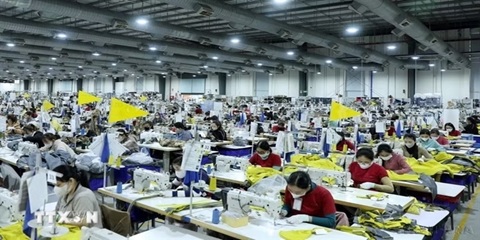
TEXTILE EXPORTS FACE DUAL CHALLENGES OF SUSTAINING ORDERS AND BOOSTING EFFICIENCY AMID GROWING COMPETITION
Data shows that the textile and garment sector maintained its growth momentum in the first nine months of this year. The industry's total export turnover reached an estimated US$35.721 billion in the first nine months of this year, up 3.3 per cent year-on-year. Despite posting encouraging export figures, Vietnamese textile and garment enterprises continue to navigate unpredictable market variables.
Events Sponsors






















