Want to be in the loop?
subscribe to
our notification
Business News
DEVELOPMENT BANKS EXTEND ROLE IN GREEN-RELATED LOANS
Major investment banking institutions are seeking opportunities to provide more green loans for Vietnam to support its net-zero transition.
European Investment Bank (EIB) vice president Kris Peeters told VIR when he visited Vietnam last week that the non-profit credit institution and lending arm of the EU is eager to meet with partners in Vietnam to provide more green loans for environmentally friendly projects in various sectors from transport, water treatment, and smart urban development to renewable energy and infrastructure.
“We have been providing loans for seven projects in Vietnam with total loans of €561 million ($602.8 million), and we hope the figure will double in the coming time,” Peeters said.
Last year, the EIB invested over €70 billion ($75.2 billion) in many green projects worldwide.
“We want to increase our investment portfolio and Vietnam is also on our priority list, as the country’s economy is going green, meaning the growing need for relevant projects in many sectors,” Peeters said. “Vietnam is an important market for the EIB. It is in critical need of huge investment in infrastructure and is witnessing rapid economic growth, which has been resulting in overloaded infrastructure and lack of energy in the context of a fast-growing population.”
The EIB and Vietnam’s’ Ministry of Finance (MoF) have agreed on a framework loan of €500 million ($536.3 million) for Vietnam to implement goals related to the Just Energy Transition Partnership (JETP). A deal on the loan is expected to be signed in October in Brussels.
“Both sides are working together to complete necessary procedures and specific projects proposed by Vietnam before the signing,” Peeters said.
One of the key purposes for the EIB to come to Vietnam to provide green loans is that Vietnam is now implementing commitments on achieving net-zero emissions by 2050, and is formulating its own resource mobilisation plan to carry out JETP commitments.
Last December, leaders from Vietnam and the International Partners Group (IPG) agreed on the JETP, worth $15.5 billion for Vietnam. Also at that time, Prime Minister Pham Minh Chinh and Minister of Finance Ho Duc Phoc visited the EIB headquarters in Luxembourg to find out what the bank can do to make Vietnam’s ambitions in green investments a reality.
Vietnam is required to publish a JETP plan by November to identify new investment requirements and opportunities in areas like wind, solar, transmission, energy efficiency, storage, electric vehicles, training, and vocational support among others, as well as measures to facilitate the deployment of investment towards delivering Vietnam’s just energy transition.
Currently, the EIB, together with the French Development Agency, the Japan International Cooperation Agency, and KfW, are financing the 1.2GW Bac Ai pumped storage hydropower project under construction in the south-central province of Ninh Thuan.
The project is being developed in two phases by Vietnam Electricity (EVN) with an estimated investment of $909.7 million. Construction commenced in 2020 and the facility is expected to be completed by 2028.
Late last year, Peeters and EVN inked an MoU on cooperation to enable the direct financing of power projects in Vietnam and strengthen partnerships in electricity generation, storage, transmission, distribution and sales, and also covers the energy transition towards decarbonisation. The EIB is also providing loans for Vietnam’s metro line 2 in Ho Chi Minh City and metro line 3 in Hanoi .
Meanwhile, the Asian Development Bank (ADB) and GreenYellow Smart Solutions Vietnam Co., Ltd. last week signed a loan agreement of $13.8 million for rooftop photovoltaic (PV) solar systems to help increase the supply of clean and affordable energy for commercial and industrial consumers in Vietnam.
The financing package comprises a $3 million A loan from ADB’s ordinary capital resources and $10.8 million parallel loans from FMO, responsAbility Fund, and Société Générale, with the ADB as mandated lead arranger.
“The ADB is increasingly focused on mobilising private capital to finance renewable energy projects that the region urgently needs,” said Suzanne Gaboury, ADB director-general for private sector operations. “Solar PV rooftop offers an efficient way for Vietnam to deploy substantial amounts of additional renewable energy capacity while providing reliable, low-cost energy to consumers, which helps to attract and retain business and enhance Vietnam’s global competitiveness.”
Rooftop solar is an emerging form of renewable energy supply in Vietnam, and its adoption in this sector has been hindered by high upfront costs and limited financing channels. With a planned total installed capacity of up to 32.3MW at its peak, this project is set to increase clean energy supply to the sector by at least 31.5 gigawatt-hours annually, reducing over 15,000 tonnes of carbon emissions by 2025.
The ADB said that it is discussing with the IPG on its role within the JETP framework in Vietnam, including contribution through the energy transition mechanism, which is a programme aimed at helping confront the issue of climate change by reducing greenhouse gas emissions in Asia-Pacific.
Source: VIR
Related News
MEMBER CORNER / PROMOTIONS
KNIC ENGAGES WITH GOVERNMENT AND HIGH-TECH BUSINESS COMMUNITIES IN CHINA
From Beijing to Shandong, KN Holdings and KN Industrial City are continuing to expand their engagement with government authorities, trade promotion organizations, and high-tech business communities in China. In Beijing, the delegation met with the Center for International Economic and Technological Cooperation under the Ministry of Industry and Information Technology (MIIT), exchanging perspectives on industrial and technology cooperation between the two markets.
VIETNAM ECONOMY INVESTMENT
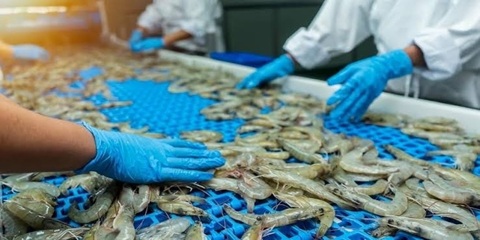
VIETNAM’S TRADE TOPS $825 BILLION BY MID-SEPTEMBER
Figures released on September 21 showed goods trade reached nearly $55 billion in the first 15 days of September alone, bringing cumulative turnover since the beginning of the year to more than $825 billion. The strong growth reflects robust trade flows, with demand for consumer goods and production inputs remaining high.

TECHNOLOGY
VIỆT NAM'S BUSINESSES MOVE TOWARDS AI AGENTS
Việt Nam’s AI landscape is entering a new phase as businesses move beyond generative AI (GenAI) tools designed to assist human users towards autonomous AI, agentic AI and AI agents that can take action with limited supervision, experts have said. The shift comes as Việt Nam seeks to accelerate science and technology, innovation and digital transformation under Politburo Resolution 57-NQ/TW, issued on December 22, 2024.
GARMENT / TEXTILE
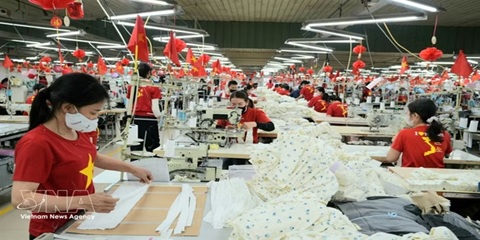
VIỆT NAM TARGETS $48 BILLION IN TEXTILE-GARMENT EXPORTS
Việt Nam’s textile and garment industry is facing both opportunities and challenges amid complex and unpredictable developments in the global market, prompting businesses to improve growth quality, optimise production costs and enhance adaptability in pursuit of an export turnover of about $48 billion this year. The target is considered an important milestone that requires concerted efforts from management agencies and the business community.
INFRASTRUCTURE / CONSTRUCTION / LOGISTIC / PORT
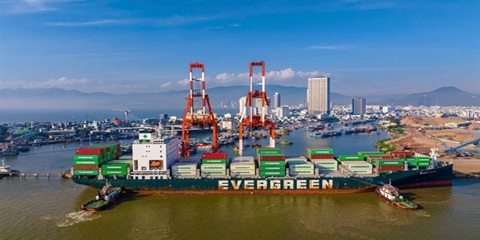
CUTTING LOGISTICS COSTS KEY TO BOOSTING EXPORTS
Reducing costs has become an increasingly urgent priority for import-export activities, particularly logistics costs, a conference in Hà Nội was told on Tuesday. According to Deputy General Director of the Ministry of Industry and Trade's Agency for Foreign Trade, Trần Thanh Hải, import-export activities has remained a bright spot for the economy in recent years, playing an important role and helping drive macroeconomic growth.
LEGAL UPDATE / POLICY
FLEXIBLE FISCAL POLICY HELPS DRIVE ECONOMIC GROWTH
Việt Nam’s fiscal policy has been implemented in a targeted expansionary manner since early 2026, helping maintain macroeconomic stability and supporting the country’s goal of achieving double-digit economic growth. According to the Ministry of Finance, State budget revenue in the first eight months of 2026 was estimated at VNĐ2.02 quadrillion (US$77.7 billion), equivalent to 80 per cent of the annual estimate and up 16 per cent year-on-year.
Events Sponsors






















