Want to be in the loop?
subscribe to
our notification
Business News
DIVERGENCE IN PROFIT FORECASTS LIKELY HEADING INTO 2024
Multiple securities reports have forecasted that the pre-tax profit of the entire banking industry will experience a deceleration and subsequently exhibit a significant divergence over the next year, but bank stocks are still highly sought after.
In its report released last week on the banking industry, Vietcombank Securities (VCBS) projected that the pre-tax profit of the industry will witness a growth of approximately 10 per cent in 2023. However, this growth rate is notably lower than the average growth rate of nearly 35 per cent observed in the previous year.
VCBS specifically highlights the likelihood of a divergence in profit prospects among different banking groups, which is expected to become more pronounced in 2024.
“Some smaller banks may experience decelerated growth or even negative growth in 2024 if there is a deterioration in the real estate market and the global macroeconomic situation. This would result in a slowdown in credit growth and make it difficult for customers to repay their debts, especially when circulars and policies that provide support expire,” the report said.
Similarly, Ho Chi Minh City Securities Corporation (HSC) estimates that the average profit of the research group will only see an increase of 12-15 per cent in 2023. Particularly in the latter half of the year, HSC expects profits to rise by over 20 per cent compared to the same period.
VCBS pointed out that one of the main reasons for this deceleration in profit stems from the ongoing efforts of banks to resolve bad debts and recover capital, given the challenges faced due to the stagnant real estate market which serves as the primary collateral for most loans, hence significantly impacts the industry’s credit quality.
Nevertheless, the on-balance-sheet bad debt ratio and provisioning level are not anticipated to experience a significant increase in 2023, thanks to the government’s decree on supporting the extension of corporate bonds, and a circular allowing loan restructuring.
Addressing credit quality, Pham Nhu Anh, general director of Military Bank, predicts ongoing challenges and uncertainties for the real estate market over the next year or so. Factors such as incomplete construction, delayed product handovers, and legal procedure complications contribute to these difficulties. Additionally, dwindling confidence among homebuyers directly affects loan demand and the ability to comply with payment commitments.
“These challenges will directly impact the stability of the real estate market and negatively affect related industries such as iron and steel, building materials, and construction, consequently reducing banks’ credit quality,” Anh noted.
The first bank to announce a profit decline after six months was LienVietPostBank. By June 30, it completed 41 per cent of the yearly plan but marked a decline of 31.8 per cent compared to the same period the previous year. Despite a slight increase compared to the end of 2022, the bad debt ratio remained within a safe range.
Although Vietcombank has yet to release its financial statements, general director Nguyen Thanh Tung disclosed that capital mobilisation and credit growth in the first six months of the year increased by 6.6 and 2.6 per cent, respectively, compared to the same period last year.
Up to now, investors have approached banking stocks with caution, particularly concerning the bond market, real estate, and bad debt pressures. However, as these issues are gradually resolved, bank stocks are becoming more attractive at their current valuations.
HSC in its report demonstrated that the valuation of bank stocks is currently at its lowest level in the past five years. Moreover, the internal health of banks has significantly improved, and the banking industry has benefited the most from the long-term economic growth narrative.
As a result, the expectation of excellent business performance is anticipated to dispel some of the investors’ pessimism surrounding banking stocks, particularly for banks with strong resilience.
HSC also added several bank codes to the recommended list for the year’s second half, including HDB, MBB, and TCB. According to HSC experts, these stocks still offer attractive valuations, provided that the overall risk factors are mitigated.
VCBS believed that banks maintaining a healthy credit balance amid the prevailing economic challenges present low-risk investment opportunities, which are expected to yield acceptable profits in the second half of 2023.
“We assess the investment outlook for banking stocks to be in line with the market, as industry-wide price-to-book valuations currently stand approximately 20 per cent below the five-year average. Banks with good asset quality and exceptional growth rates among others in the industry are considered suitable options for long-term investment,” VCBS recommended.
Source: VIR
Related News

MEMBER CORNER / PROMOTIONS
KNIC ENGAGES WITH GOVERNMENT AND HIGH-TECH BUSINESS COMMUNITIES IN CHINA
From Beijing to Shandong, KN Holdings and KN Industrial City are continuing to expand their engagement with government authorities, trade promotion organizations, and high-tech business communities in China. In Beijing, the delegation met with the Center for International Economic and Technological Cooperation under the Ministry of Industry and Information Technology (MIIT), exchanging perspectives on industrial and technology cooperation between the two markets.

VIETNAM ECONOMY INVESTMENT
VIETNAM’S TRADE TOPS $825 BILLION BY MID-SEPTEMBER
Figures released on September 21 showed goods trade reached nearly $55 billion in the first 15 days of September alone, bringing cumulative turnover since the beginning of the year to more than $825 billion. The strong growth reflects robust trade flows, with demand for consumer goods and production inputs remaining high.

TECHNOLOGY
VIỆT NAM'S BUSINESSES MOVE TOWARDS AI AGENTS
Việt Nam’s AI landscape is entering a new phase as businesses move beyond generative AI (GenAI) tools designed to assist human users towards autonomous AI, agentic AI and AI agents that can take action with limited supervision, experts have said. The shift comes as Việt Nam seeks to accelerate science and technology, innovation and digital transformation under Politburo Resolution 57-NQ/TW, issued on December 22, 2024.

GARMENT / TEXTILE
VIỆT NAM TARGETS $48 BILLION IN TEXTILE-GARMENT EXPORTS
Việt Nam’s textile and garment industry is facing both opportunities and challenges amid complex and unpredictable developments in the global market, prompting businesses to improve growth quality, optimise production costs and enhance adaptability in pursuit of an export turnover of about $48 billion this year. The target is considered an important milestone that requires concerted efforts from management agencies and the business community.
INFRASTRUCTURE / CONSTRUCTION / LOGISTIC / PORT
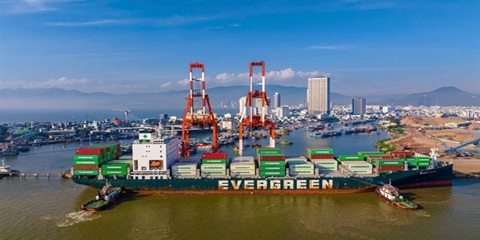
CUTTING LOGISTICS COSTS KEY TO BOOSTING EXPORTS
Reducing costs has become an increasingly urgent priority for import-export activities, particularly logistics costs, a conference in Hà Nội was told on Tuesday. According to Deputy General Director of the Ministry of Industry and Trade's Agency for Foreign Trade, Trần Thanh Hải, import-export activities has remained a bright spot for the economy in recent years, playing an important role and helping drive macroeconomic growth.

LEGAL UPDATE / POLICY
FLEXIBLE FISCAL POLICY HELPS DRIVE ECONOMIC GROWTH
Việt Nam’s fiscal policy has been implemented in a targeted expansionary manner since early 2026, helping maintain macroeconomic stability and supporting the country’s goal of achieving double-digit economic growth. According to the Ministry of Finance, State budget revenue in the first eight months of 2026 was estimated at VNĐ2.02 quadrillion (US$77.7 billion), equivalent to 80 per cent of the annual estimate and up 16 per cent year-on-year.
Events Sponsors






















