Want to be in the loop?
subscribe to
our notification
Business News
DOMESTIC MARKET SEEN AS KEY GROWTH PILLAR FOR WOOD INDUSTRY
Experts argued that stronger local demand could reduce the sector's dependence on overseas markets and improve its resilience to global economic shocks
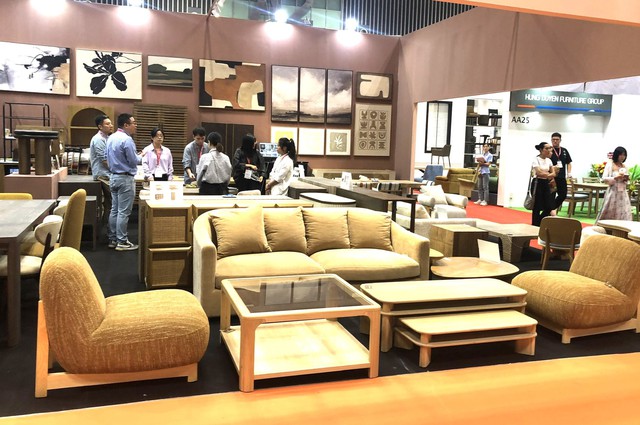
A showroom of wood and interior products in HCM City. The domestic wood and furniture market is increasingly seen as a new source of growth for the wood processing industry. — Photo chinhphu.vn
HÀ NỘI — The wood industry should treat the domestic market as a strategic growth pillar rather than a fall back when exports weaken, industry executives and policymakers said during a conference on developing the local wood product market on August 6.
Valued at about US$5 billion a year and projected to exceed $7 billion by 2030, the domestic wood and furniture market is increasingly seen as a new source of growth for one of Việt Nam's largest export industries, they said.
Experts argued that stronger local demand could reduce the sector's dependence on overseas markets and improve its resilience to global economic shocks
The wood industry has built its reputation on exports, with overseas shipments estimated at $17.3 billion in 2025. Vietnamese wood products are sold in more than 160 countries and territories, meeting demanding standards in the US, the European Union and Japan.
Industry representatives said that success has exposed a gap at home, where the domestic market has yet to receive the same strategic attention despite its size and growth potential.
Nguyễn Sỹ Hoài, secretary-general of the Việt Nam Timber and Forest Product Association (VIFOREST), said domestic spending on wood and furniture averages about $50 per person a year, putting the market's current value at around $5 billion.
Some studies estimate the market is already approaching $7 billion and could exceed $7.3 billion by 2030 if annual growth of 7 per cent to 9 per cent is maintained, he said.
The potential could be even larger as those estimates do not fully account for demand from green public procurement, social housing projects and the biomass energy sector, all of which are expected to expand in the coming years.
Phùng Quốc Mẫn, vice chairman of VIFOREST and chairman of the Handicraft and Wood Industry Association of Ho Chi Minh City (HAWA), said manufacturers have already demonstrated their capabilities in production, design, management and sustainability by competing successfully in international markets.
The challenge now is translating those strengths into stronger domestic demand.
"Exports and the domestic market should not be viewed as alternatives but as two complementary pillars," Mẫn said.
"Exports integrate businesses into global value chains, while the domestic market provides the foundation for building brands, diversifying revenue and improving resilience against external shocks."
HAWA proposed giving the domestic market a more prominent role in industry policy, including by considering preferences for Việt Namese wood products in public procurement, strengthening promotion of locally made products and leveraging exporters' reputation to boost consumer confidence.
They also are development of supporting market infrastructure such as business databases, digital trading platforms and product exhibition centres.
VIFOREST said the domestic market's biggest constraint is not demand but weak market infrastructure.
Technical standards remain incomplete, while information on businesses, products and market size is fragmented. Systems for product traceability, quality certification and emissions disclosure are also inconsistent, making it harder for consumers to identify legally sourced, high-quality products and reducing incentives for companies to invest for the long term.
Industry representatives said establishing common standards, reliable databases and robust certification and traceability systems would be essential to building a more transparent and higher-value domestic market.
Experts also said green public procurement could help stimulate demand by prioritising legally sourced, low-emission wood products in public construction projects, in line with Việt Nam's legal framework and international commitments.
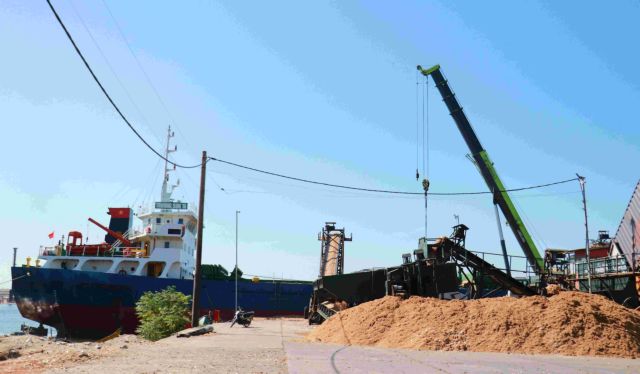
Tiến Phong Company's wood chip products are being loaded onto a ship for export. — VNA/VNS Photo
From a business perspective, Lê Đức Nghĩa, Chairman of An Cường Wood JSC, said companies would need to invest consistently in branding, distribution networks, customer service and corporate governance to unlock the domestic market's potential.
He called for national quality standards and product labeling requirements for wood products sold domestically to help consumers identify certified products while providing a clearer basis for government procurement.
Nghĩa also urged policies to encourage the use of plantation timber, develop supporting industries, improve market data and strengthen links between wood processors and raw material suppliers.
He said digital transformation had become a key competitive advantage, adding that digitising the company's management system had improved operational efficiency and lifted profit margins by 2 to 3 percentage points without a corresponding increase in staffing.
Vũ Hải Bằng, chief executive of Woodsland JSC, said the domestic market offers opportunities well beyond manufacturing, particularly in higher value-added activities such as distribution, design, installation and after-sales services.
"If we fail to develop the domestic market effectively, foreign companies will enter and capture the high value-added segments," Bằng said.
He said Việt Nam should accelerate the development of technical and material standards while improving regulatory oversight and transparency in tax administration to ensure fair competition.
Việt Nam has about 10.1 million hectares of natural forests and 4.9 million hectares of planted forests, including roughly 4.1 million hectares designated for timber production. Around 880,000 hectares are certified under the Forest Stewardship Council (FSC) and the Programme for the Endorsement of Forest Certification (PEFC) systems.
The country's furniture, wood panel, pellet and woodchip industries consume an estimated 59 million cu.m of raw materials each year, underscoring the importance of plantation forests to the sector's supply chain.
However, supply chains remain fragmented, with raw materials largely traded through intermediaries, making it more difficult to meet the Vietnamese Government's traceability requirements and the European Union's Deforestation Regulation (EUDR).
Industry executives said closer links between plantation forests, wood processors and distribution networks, combined with stronger technical standards and traceability systems, would be critical to expanding the domestic market, increasing value-added production and supporting the long-term sustainable growth of Việt Nam's wood industry. —VNS
Source: VNS
Related News

INFRASTRUCTURE / CONSTRUCTION / LOGISTIC / PORT
VIỆT NAM-CAMBODIA TRADE GATHERS PACE TOWARDS $20 BILLION TARGET
Trade between Việt Nam and Cambodia continues to grow, remaining a bright spot and a key pillar of bilateral cooperation as the two countries aim to raise two-way trade to US$20 billion in the coming years. After setting a record of more than $11.3 billion last year, bilateral trade reached about $8.7 billion in the first eight months of this year, up 8.3 per cent year on year.
TECHNOLOGY
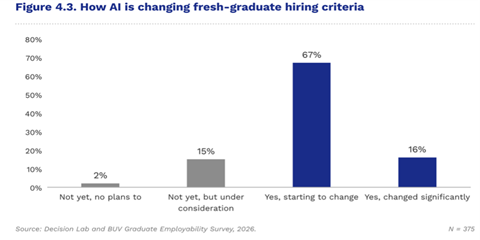
AI BEGINNING TO RESHAPE RECRUITMENT CRITERIA
Digital literacy is the only capability area in which fresh graduates meet employers’ expectations, according to a new report. Yet, it is also the standard rising fastest, as businesses increasingly expect new hires to use AI effectively in the workplace. Some 83 per cent of employers say AI has changed, or is beginning to change, their hiring criteria, while 94 per cent report higher expectations for digital and AI capabilities than they had two to three years ago.

INFRASTRUCTURE / CONSTRUCTION / LOGISTIC / PORT
ĐÀ NẴNG GREEN-LIGHTS US$105 MILLION THAI DEVELOPMENT DEAL
The central city has approved an investment proposal by Thailand’s WHA Group to develop infrastructure for the 400ha WHA Đà Nẵng Industrial Park project on two communes of Thăng Bình and Đồng Dương, with an investment of more than VNĐ2.7 trillion (US$105 million). The city said it approved WHA Industrial Development International's status as an investor in the project, which is expected to take place between 2027 and 2034.

VIETNAM ECONOMY INVESTMENT
MOBILE PHONE EXPORTS RISE 20% TO $51.8 BILLION IN FIRST NINE MONTHS
Exports of mobile phones and components rose 20 per cent year-on-year to nearly US$51.8 billion in the first nine months of 2026, with China, the US and Republic of Korea accounting for more than half of the total. Shipments to the three markets reached a combined $26.18 billion, or 50.6 per cent of total exports of the product group during the period, according to data from the Vietnam Department of Customs under the Ministry of Finance.

VIETNAM ECONOMY INVESTMENT
FRUIT AND VEGETABLE EXPORTS POISED TO HIT $10 BILLION IN 2026
Fruit and vegetable exports are on track to reach nearly US$10 billion in 2026, after rising 19.9 per cent year on year to nearly US$7.4 billion in the first nine months, driven by strong seasonal demand and abundant tropical fruit supplies. The Ministry of Agriculture and Environment said the growth reflected stronger international demand for fresh produce and processed agricultural products.
GARMENT / TEXTILE
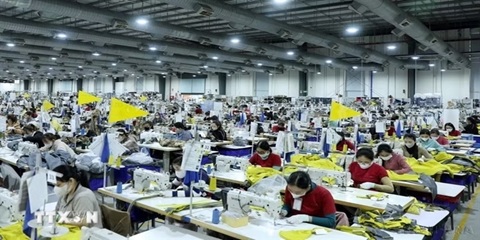
TEXTILE EXPORTS FACE DUAL CHALLENGES OF SUSTAINING ORDERS AND BOOSTING EFFICIENCY AMID GROWING COMPETITION
Data shows that the textile and garment sector maintained its growth momentum in the first nine months of this year. The industry's total export turnover reached an estimated US$35.721 billion in the first nine months of this year, up 3.3 per cent year-on-year. Despite posting encouraging export figures, Vietnamese textile and garment enterprises continue to navigate unpredictable market variables.
Events Sponsors






















