Want to be in the loop?
subscribe to
our notification
Business News
E-COMMERCE WORKFORCE NEEDS BOOSTING
The country’s e-commerce market surpassed US$25 billion last year, growing by 22 per cent year-on-year, and now accounts for approximately nine per cent of total retail sales in goods and consumer services.

The workshop on technology management in the digital age held in Hà Nội on Tuesday. Photo thoibaonganhang.vn
HÀ NỘI — The e-commerce market has experienced rapid growth, leading to a surge in demand for highly skilled talent.
The country’s e-commerce market surpassed US$25 billion last year, growing by 22 per cent year-on-year, and now accounts for approximately nine per cent of total retail sales in goods and consumer services.
Meanwhile, the human resources for e-commerce were currently both lacking and weak, said Nguyễn Hữu Tuấn, director of the Centre for E-commerce and Digital Technology Development (eComDX) under the Việt Nam E-commerce and Digital Economy Agency, Ministry of Industry and Trade, at the workshop on technology management in the digital age held in Hà Nội on Tuesday.
To solve this situation, Tuấn believed that the 'on-demand' training model between the State and enterprises was a potential solution. This is a flexible model that meets market demand, providing both theoretical knowledge and focusing on practice, effectively connecting labour supply and demand.
However, for this model to operate effectively and sustainably, there needed to be clear and transparent co-ordination between the State and enterprises, he said.
Training programmes, even those 'on-demand', also needed to ensure the provision of basic knowledge and core skills, helping students adapt to the ever-changing e-commerce environment in the long term, he added.
In addition, he said that e-commerce training programmes were increasingly diverse and had positive changes thanks to the application of new technology.
Some universities have begun to integrate subjects related to new technologies into their curricula, such as AI applications in e-commerce, blockchain and cryptocurrencies, AI in finance, big data management and analysis.
The Việt Nam E-commerce and Digital Economy Agency has also implemented many digital technology training programmes for businesses and local departments to raise awareness and increase capacity to apply technology to e-commerce activities.
From a domestic policy perspective, Dr Nguyễn Minh Thảo from the Central Institute for Economic Management (CIEM), affirmed that Việt Nam has made significant progress in developing the digital economy but still faces numerous challenges, such as a shortage of digital talent, limited innovation capacity, and inconsistencies in policies to encourage R&D investment.
"To move fast and sustainably, the institutions must stay ahead of technology. We need to expand the policy experimentation space, promote sandbox models and develop soft policies to support businesses, while ensuring the safety of digital systems and managing systemic risks," Thảo emphasised.
Resolution 57-NQ/TW represented a political turning point as it was the first time that digital transformation, innovation, and science and technology had been identified as three strategic breakthroughs in the country's development, she added.
The objectives have been set that by 2030, Việt Nam aims to be among the top three ASEAN countries in AI research capacity and by 2045, the digital economy is expected to contribute at least 50 per cent of GDP. — VNS
Source: VNS
Related News

INFRASTRUCTURE / CONSTRUCTION / LOGISTIC / PORT
VIỆT NAM-CAMBODIA TRADE GATHERS PACE TOWARDS $20 BILLION TARGET
Trade between Việt Nam and Cambodia continues to grow, remaining a bright spot and a key pillar of bilateral cooperation as the two countries aim to raise two-way trade to US$20 billion in the coming years. After setting a record of more than $11.3 billion last year, bilateral trade reached about $8.7 billion in the first eight months of this year, up 8.3 per cent year on year.
TECHNOLOGY
AI BEGINNING TO RESHAPE RECRUITMENT CRITERIA
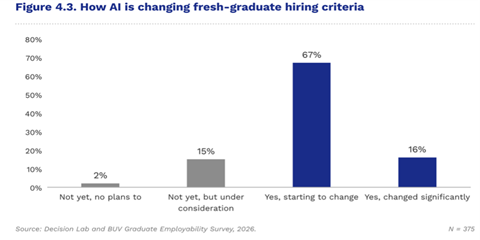
Digital literacy is the only capability area in which fresh graduates meet employers’ expectations, according to a new report. Yet, it is also the standard rising fastest, as businesses increasingly expect new hires to use AI effectively in the workplace. Some 83 per cent of employers say AI has changed, or is beginning to change, their hiring criteria, while 94 per cent report higher expectations for digital and AI capabilities than they had two to three years ago.

INFRASTRUCTURE / CONSTRUCTION / LOGISTIC / PORT
ĐÀ NẴNG GREEN-LIGHTS US$105 MILLION THAI DEVELOPMENT DEAL
The central city has approved an investment proposal by Thailand’s WHA Group to develop infrastructure for the 400ha WHA Đà Nẵng Industrial Park project on two communes of Thăng Bình and Đồng Dương, with an investment of more than VNĐ2.7 trillion (US$105 million). The city said it approved WHA Industrial Development International's status as an investor in the project, which is expected to take place between 2027 and 2034.

VIETNAM ECONOMY INVESTMENT
MOBILE PHONE EXPORTS RISE 20% TO $51.8 BILLION IN FIRST NINE MONTHS
Exports of mobile phones and components rose 20 per cent year-on-year to nearly US$51.8 billion in the first nine months of 2026, with China, the US and Republic of Korea accounting for more than half of the total. Shipments to the three markets reached a combined $26.18 billion, or 50.6 per cent of total exports of the product group during the period, according to data from the Vietnam Department of Customs under the Ministry of Finance.

VIETNAM ECONOMY INVESTMENT
FRUIT AND VEGETABLE EXPORTS POISED TO HIT $10 BILLION IN 2026
Fruit and vegetable exports are on track to reach nearly US$10 billion in 2026, after rising 19.9 per cent year on year to nearly US$7.4 billion in the first nine months, driven by strong seasonal demand and abundant tropical fruit supplies. The Ministry of Agriculture and Environment said the growth reflected stronger international demand for fresh produce and processed agricultural products.
GARMENT / TEXTILE
TEXTILE EXPORTS FACE DUAL CHALLENGES OF SUSTAINING ORDERS AND BOOSTING EFFICIENCY AMID GROWING COMPETITION
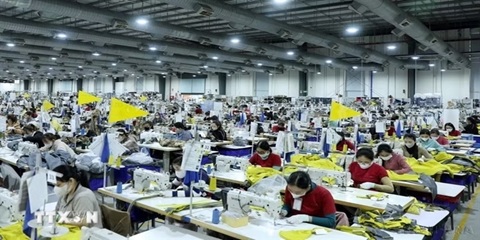
Data shows that the textile and garment sector maintained its growth momentum in the first nine months of this year. The industry's total export turnover reached an estimated US$35.721 billion in the first nine months of this year, up 3.3 per cent year-on-year. Despite posting encouraging export figures, Vietnamese textile and garment enterprises continue to navigate unpredictable market variables.
Events Sponsors






















