Want to be in the loop?
subscribe to
our notification
Business News
EFFORTS TO HELP LABOUR-INTENSIVE INDUSTRIES RETAIN EMPLOYEES
In the hope of recovery, businesses are making great efforts to maintain production and retain staff amid an economic slump.
Not only the labour-intensive textile industry of Việt Nam, but the entire global market is facing difficulties due to decreasing demands induced by a recession, according to Lê Tiến Trường, chairman of Vietnam National Textile and Garment Group (Vinatex).
In addition to the increasingly stringent requirements for a production price reduction, faster delivery and higher quality, brands are demanding that businesses in the supply chain follow multiple policies on sustainability, green practices, energy saving and emission limiting.
Trường told Người lao động (Labourer) newspaper: “An important solution for the textile industry today is to elevate its position in the supply chain, in order to respond to the needs of long-term, reputable partners.
“Therefore, they must retain highly qualified workers to be able to respond to demands when the market recovers.”
Member enterprises from HCM City Association of Garment, Textile, Embroidery and Knitting (AGTEX) are also seeking solutions to maintain production and keep employees on their payroll, with the aim of not having any workers laid off due to the shortage of orders.
AGTEX chairman Phạm Xuân Hồng said that nearly 70 per cent of these firms were affected due to a 20 to 30 per cent drop in orders, the majority of which are exports.
The remaining 30 per cent of these businesses still see a stable volume of orders.
Hồng said: “As of right now, AGTEX businesses are not working overtime, and they even reduce the working hours to sustain production and help provide work to its staff.
“They are also seeking smaller orders and production partnerships to ensure income for labourers.”
The average bonus for Tết (Lunar New Year) holiday for workers is 1.5 times the monthly salary. Some businesses opt to divide this payment into two parts, one paid a month before Tết and the other half a month after the holiday.
Nguyễn Ngọc Lân, general director of Nhà Bè Garment JSC, one of the larger corporations that were less affected by the economic downturn, said that his company still maintains the productive atmosphere in the factories despite shortened working hours.
Lân said: “It will help reassure workers to return after Tết, while also ensuring that the factories catch up with the production schedule right after the market recovers.
“Maintaining production will also help strengthen the confidence of major brands, giving them more peace of mind when ordering from Vietnamese businesses.”
Amid the fluctuations of the labour market before the Tết holiday, HCM City’s Department of Labour, Invalids and Social Affairs is focusing on reviewing employment demands, while also proactively working with neighbouring cities and provinces to organise job fairs prior to and after the holiday.
According to the department’s deputy director Nguyễn Văn Lâm, surveys revealed that many people wanted to stay in the city and find new jobs, while others don’t have the intention to seek employment immediately and would wait until after Tết.
Usually, after Tết is when people return to the city to seek new employment opportunities or change jobs.
Vietnam Chamber of Commerce and Industry (VCCI) said that the case where workers are laid off or have their working hours reduced at the end of the year is only taking place in several places and sectors.
However, layoffs in some labour-intensive industries such as textiles and footwear have had a negative impact on the general labour market, which has just recovered after the COVID-19 pandemic.
Vi Thị Hồng Minh, deputy director of VCCI bureau of employer activities, said that connecting unemployed people to job opportunities is only a temporary solution.
In the long term, there must be support policies for businesses to retain employees.
A VCCI survey also stated that many businesses want to keep staff on the payrolls, but the financial pressure proves to be too much for them to bear.
Therefore, governmental policies are needed for simplified procedures, diverse credit sources, and relaxed requirements for easier access to financial support in order for businesses to retain their staff.
Another suggestion is to reduce trade union fees and extend the payment period for social insurance so that enterprises have more resources to maintain their production, which also helps with staff employment.
Source: VNS
Related News

CHARITY / EXHIBITION / OTHER EVENTS
INVESTMENT OPPORTUNITIES IN CA MAU PROVINCE: 96 PROJECTS AND 20 STRATEGIC PROJECTS
We are pleased to share with you information on investment projects currently seeking investors in Ca Mau Province. Should your esteemed company or association be interested, we kindly invite you to review the project information and complete the registration form via the links provided. The Ho Chi Minh City Investment and Trade Promotion Centre (ITPC) will consolidate the expressions of interest and facilitate connections with the leadership of Ca Mau Province at a meeting tentatively scheduled for 13 November 2026 in Ho Chi Minh City.

MEMBER CORNER / PROMOTIONS
BẰNG KIỀU LIVESHOW - A SYMPHONY OF LOVE UNDER THE GOLDEN GLOW
A masterclass in live music that takes the audience on a soulful journey through immortal love songs, guided by the peerless artistry and emotive storytelling of renowned singer Bằng Kiều. The highlight of the night is his seamless musical chemistry with special guest Triệu Hồng Ngọc, promising passionate and deeply resonant duets inside the magnificent Grand Ballroom.
INFRASTRUCTURE / CONSTRUCTION / LOGISTIC / PORT
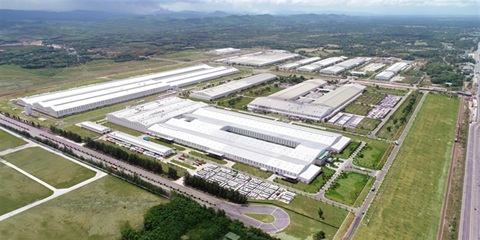
ĐÀ NẴNG GREEN-LIGHTS US$105 MILLION THAI DEVELOPMENT DEAL
The central city has approved an investment proposal by Thailand’s WHA Group to develop infrastructure for the 400ha WHA Đà Nẵng Industrial Park project on two communes of Thăng Bình and Đồng Dương, with an investment of more than VNĐ2.7 trillion (US$105 million). The city said it approved WHA Industrial Development International's status as an investor in the project, which is expected to take place between 2027 and 2034.
VIETNAM ECONOMY INVESTMENT
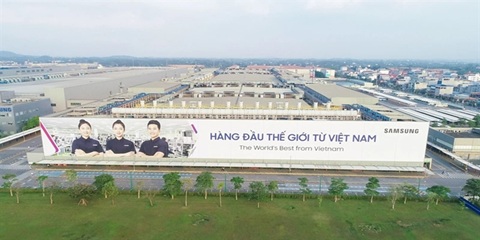
MOBILE PHONE EXPORTS RISE 20% TO $51.8 BILLION IN FIRST NINE MONTHS
Exports of mobile phones and components rose 20 per cent year-on-year to nearly US$51.8 billion in the first nine months of 2026, with China, the US and Republic of Korea accounting for more than half of the total. Shipments to the three markets reached a combined $26.18 billion, or 50.6 per cent of total exports of the product group during the period, according to data from the Vietnam Department of Customs under the Ministry of Finance.

INFRASTRUCTURE / CONSTRUCTION / LOGISTIC / PORT
VIỆT NAM-CAMBODIA TRADE GATHERS PACE TOWARDS $20 BILLION TARGET
Trade between Việt Nam and Cambodia continues to grow, remaining a bright spot and a key pillar of bilateral cooperation as the two countries aim to raise two-way trade to US$20 billion in the coming years. After setting a record of more than $11.3 billion last year, bilateral trade reached about $8.7 billion in the first eight months of this year, up 8.3 per cent year on year.
VIETNAM ECONOMY INVESTMENT
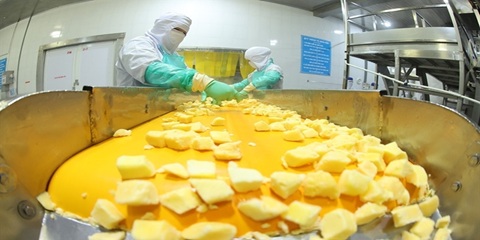
FRUIT AND VEGETABLE EXPORTS POISED TO HIT $10 BILLION IN 2026
Fruit and vegetable exports are on track to reach nearly US$10 billion in 2026, after rising 19.9 per cent year on year to nearly US$7.4 billion in the first nine months, driven by strong seasonal demand and abundant tropical fruit supplies. The Ministry of Agriculture and Environment said the growth reflected stronger international demand for fresh produce and processed agricultural products.
Events Sponsors






















