Want to be in the loop?
subscribe to
our notification
Business News
ENTERPRISES DIVERSIFY PLANS TO ADAPT TO COVID-19 PANDEMIC
Vietnamese enterprises have proven their dynamism and high adaptability to the situation as the fourth outbreak of the COVID-19 pandemic has led to successive social distancing measures over the past month.
Tô Hoài Nam, vice president and general secretary of the Việt Nam Association of Small and Medium Enterprises (VINASME), said that in the context of the COVID-19 pandemic, Vietnamese businesses had really made many changes to adapt to difficulties and challenges.
Many businesses have organised rotational work for employees to minimise absence and leave no one behind; applied cost-saving measures by adjusting personnel towards concentration and giving priority to positions generating direct revenue; at the same time, created conditions for some positions to work from home.
Along with that, businesses reviewed spending plans in the direction of minimalism and adjusted investment programmes which are not urgent or are no longer suitable for pandemic conditions and after it is over to adapt to changes in consumer behaviour.
Enterprises also actively negotiated to reduce office rent and production and business rates; adjusted internal regulations to ensure the safety of labour positions, while also ensuring the maintenance of operations.
In addition, enterprises also have implemented internal policies to strongly encourage initiatives and creativity in production and business, meeting the requirements of pandemic prevention and control while maintaining revenue growth.
Nam also said that many businesses had actively changed and sought credit sources with lower interest rates from the Government's supportive policies, commercial banks' support packages as well as finding new sources of supply of raw materials, sources of new goods or services, or implemented the "sharing economy" with customers, business partners or investors and consumers.
There are also businesses converting to online sales, attaching importance to e-commerce platforms.
Trần Thoa, Deputy Director of Thiên Tâm Thảo Company Limited, said that the outbreak of COVID-19 had seriously affected the business activities of all enterprises.
Facing that influence, the company has changed business and sales strategies to promote online business based on e-commerce platforms and online services. This has helped the business maintain revenue and profit.
In order to respond to the COVID-19 pandemic, Phạm Thị Bích Huệ, vice president of the Việt Nam Young Entrepreneurs' Association, also noted three issues to focus on at this time, which are the reasonable adjustment of personnel; distinctive development strategies and specific management solutions to respond to the current crisis of the risk of pandemic outbreaks.
Source: VNS
Related News
VIETNAM ECONOMY INVESTMENT
VIETNAMESE COMPANIES OPTIMISTIC ON INTERNATIONAL GROWTH
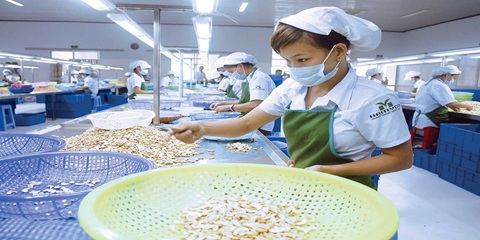
Vietnamese businesses are among the most confident about the outlook for international trade, according to HSBC’s Global Trade Pulse Survey 2026, released on November 16. The survey captures the views of 10,000 senior business leaders across 26 markets on trade, tariffs, supply chains, and technology. Findings show that 94 per cent of Vietnamese businesses expect their international trade to grow over the next two years. Vietnam ranks joint top in the survey with the Philippines, compared with 86 per cent globally.
TECHNOLOGY
VIỆT NAM'S DIGITAL TECHNOLOGY INDUSTRY REVENUE SURGES 53% TO $254.6B
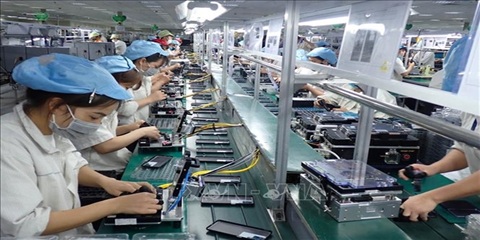
Việt Nam's digital technology industry generated an estimated US$254.6 billion in revenue in the first 10 months of 2026, up 53 per cent from a year earlier, while exports rose 46.2 per cent to $212 billion, the Ministry of Science and Technology said in its latest report. According to the report, hardware and electronics exports reached an estimated $30.681 billion in October, up 108 per cent from the same month last year.
CHARITY / EXHIBITION / OTHER EVENTS
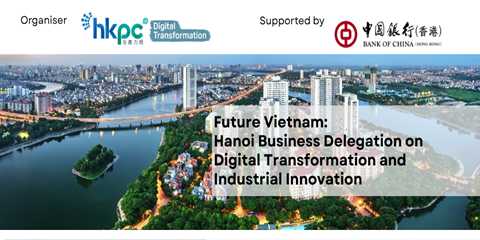
BOCHK ‧ HKPC FUTURE VIETNAM: HANOI BUSINESS DELEGATION ON DIGITAL TRANSFORMATION AND INDUSTRIAL INNOVATION
Interested in exploring Vietnam’s latest developments in digital transformation, technology adoption and industrial innovation? Organised by the Hong Kong Productivity Council (HKPC) and fully supported by Bank of China (Hong Kong) Limited, the "Future Vietnam: Hanoi Business Delegation on Digital Transformation and Industrial Innovation” will feature visits to leading high-tech enterprises across Vietnam and engage with local chambers of commerce, industry organisations and associations. Join us to expand your high-value business network and seize emerging opportunities in the ASEAN market!
GARMENT / TEXTILE
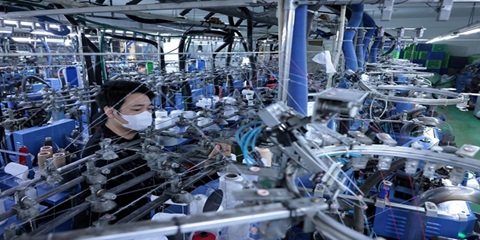
TEXTILE, GARMENT FIRMS REFORM TO MEET CPTPP ORIGIN RULES
Vietnamese textile and garment manufacturers are aggressively restructuring their supply chains and diversifying material sources to unlock untapped tariff benefits. To capitalise on the Comprehensive and Progressive Agreement for Trans-Pacific Partnership (CPTPP), companies are racing to align with the pact's strict "yarn-forward" rules — a task made difficult by a shortage of raw materials within the trade bloc.
TECHNOLOGY
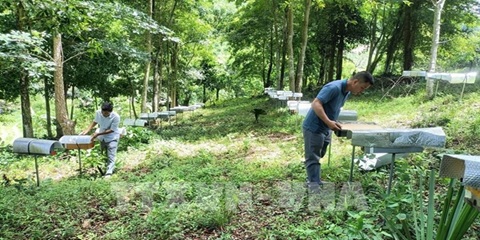
ĐÀ NẴNG SEEKS TO BUILD HIGH-TECH AGRICULTURE, INTEGRATED VALUE CHAINS
Đà Nẵng is seeking to transform its agricultural sector from a supplier of raw materials into a technology-driven, market-oriented economy, with investment opportunities spanning concentrated production areas, deep processing, logistics and agricultural product distribution. The city aims to shift from traditional agricultural production towards agricultural economic development, organising value chains and increasing the technological content and added value of products through closer links between production and processing.
INFRASTRUCTURE / CONSTRUCTION / LOGISTIC / PORT
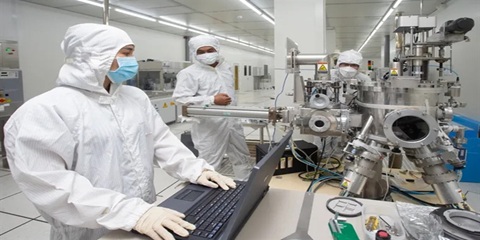
HCM CITY ACCELERATES POWER INFRASTRUCTURE INVESTMENT TO ATTRACT HIGH-TECH CAPITAL
High-tech projects, particularly data centres, are not confined to SHTP but are also expanding into export processing zones and industrial parks across HCM City, driving up electricity demand. Proactively developing power infrastructure, diversifying energy supplies and expanding access to green energy are becoming essential for HCM City to maintain its competitive edge in attracting high-tech foreign direct investment (FDI).
Events Sponsors