Want to be in the loop?
subscribe to
our notification
Business News
EVFTA STRENGTHENS VIET NAM’S POSITION AS AN ATTRACTIVE DESTINATION FOR EUROPEAN INVESTMENT
The EU-Viet Nam Free Trade Agreement (EVFTA) has strengthened Viet Nam's position as an attractive destination for European investment, Chairman of EuroCham Viet Nam Dominik Meichle told VGP at a recent interview.
The EVFTA which entered into force in August 2020, has been significant. It has made Viet Nam one of only two ASEAN countries, along with Singapore, to have a free trade agreement with the EU. This has given the country a competitive edge over other ASEAN nations still in negotiations with Europe.
The greatest impact can be found in Viet Nam's exports to Europe, which grew from about € 35 billion in 2019 to more than €48 billion in 2023. Sectors like electronics, textiles, footwear, agriculture, and seafood have seen strong growth.
As the 6th largest foreign direct investor, the EU has already invested €28 billion in 2,450 projects across Viet Nam.
During the same period, EU exports to Viet Nam have only grown from €11 billion in 2019 to €11.4 billion in 2023. This has contributed to a trade imbalance, with Viet Nam exporting over four times more to Europe than it imports.
On top of this, according to EuroCham's Business Confidence Index, a quarter of EuroCham Viet Nam members said they are benefitting from the EVFTA.
This is primarily through reduced tariffs, greater market access, and increased competitiveness. Though this is a good start, we would definitely like to see this positive impact felt by an even larger proportion of European businesses.
EuroCham acknowledges the complexities that certain policy adjustments in Viet Nam have created for European businesses, such as the introduction of new taxes and technical barriers to entry that are undermining the spirit, if not the letter, of the agreement.
Optimizing EVFTA
"To maximize the benefits of the EVFTA for both sides, we are committed to open and constructive dialogue with the Vietnamese government to address these concerns and explore potential adjustments," Meichle said.
"Our goal is to ensure that the EVFTA is implemented in a way that fosters a predictable and transparent business environment, thereby facilitating win-win outcomes for both the EU and Viet Nam," he added.
The Chairman stressed that to fully unlock the EVFTA's potentials for attracting even more FDI, the EVIPA needs to be fully ratified. EU institutions, for their part, have already ratified the agreement.
The EVIPA also requires approval from each EU Member State individually. This is a complex and time-consuming process. While 16 Member States have already ratified the EVIPA since the EVFTA's implementation four years ago, the remaining approvals are essential. We continue to actively advocate for the EVIPA's ratification among European stakeholders, as it will greatly improve investor confidence and open the door for increased European investment in Viet Nam.
Meichle also underlined the importance of frequent revisions and ambiguous implementation for businesses. While this is a common challenge in rapidly growing economies, clearer and more consistent regulations would provide a more stable foundation for business operations and investments.
He assessed that while Viet Nam has made progress in administrative efficiency, particularly through digitalization, significant simplification is still needed. Streamlining the process for obtaining approvals, such as Investment Registration Certificates and Enterprise Registration Certificates, and reducing documentation requirements would speed up project timelines and enable businesses to respond more effectively to market dynamics.
To this end, EuroCham actively contributes to improvements through our involvement in the Prime Minister's Advisory Council for Administrative Procedure Reform. This council serves as a direct and effective channel to raise concerns directly with the government. It is a valuable platform where EuroCham can collaborate with policymakers and business stakeholders to streamline processes, improve public services, and create a more efficient and business environment for all.
Meichle added that simplifying the process for obtaining work permits and visas for foreign workers remains a challenge. While Decree 70 on foreign workers in Viet Nam helped overcome a significant obstacle that was deterring a great deal of investment, thanks to the involvement of high-level authorities, further streamlining is a key priority.
Simplifying these procedures would both reduce administrative burdens for businesses and also attract skilled professionals from around the world who can contribute to capacity building within Viet Nam's growing economy through knowledge and technology transfer.
To fully harvest the potential of the EVFTA, both Vietnamese and European businesses need ongoing support and resources to navigate the complexities of this agreement.
EuroCham recognizes this need and is committed to expanding our collaborative efforts with the European Union Delegation to Viet Nam to provide training programs and practical tools. By empowering businesses with the knowledge and skills they need to understand and leverage the EVFTA's provisions, this agreement will deliver on its promise of increased trade and economic growth for both Viet Nam and the EU.
EuroCham's latest Whitebook, a comprehensive resource published earlier this year, offers policymakers a wealth of actionable insights and recommendations to drive economic growth and maximize the benefits of the EVFTA for Viet Nam.
This Whitebook, freely accessible on our website, provides targeted policy recommendations designed to increase trade and FDI between Viet Nam and Europe.
The Chairman strongly encourages policymakers to use this resource to inform their decision-making processes and welcomes the opportunity for further dialogue and discussion with policymakers on any aspect of the Whitebook's findings and recommendations.
Green requirements – motivation for strategic investment
EuroCham President Dominik Meichle said that the European market holds great potential for Vietnamese businesses, but to unlock this opportunity, they must navigate the European Green Deal's sustainability regulations. These regulations, covering areas like carbon emissions, deforestation, and due diligence, require substantial investments in skilled labor, technology, and resources.
However, rather than viewing these requirements as barriers to entry, Vietnamese businesses should see them as a motivation for strategic investment in their workforce and operations.
By equipping employees with the knowledge and skills in sustainable practices, compliance, and green technologies, businesses can stimulate innovation and drive long-term growth. In addition, adopting green technologies and practices—such as energy-efficient equipment, renewable energy sources, water recycling, and waste minimization techniques—can not only help meet EU standards but also significantly reduce costs and increase operational efficiency, turning compliance into a competitive advantage.
To support businesses in this transition, EuroCham Viet Nam is committed to providing more and more training opportunities and resources focused on understanding and implementing these green regulations. These initiatives will equip businesses with the tools and knowledge they need to adapt to the evolving sustainability landscape and thrive in the European market.
Collaborations with European companies, often pioneers of green innovation, can accelerate this transition by facilitating knowledge sharing, tech transfers, and access to sustainable solutions. To foster these collaborations and drive concrete action towards a greener future, we are proud to present the Green Economy Forum and Exhibition (GEFE) 2024.
Building on the success of previous events, which were attended by Prime Minister Pham Minh Chinh, GEFE 2024 returns to HCM City from October 21 to 23. Over the course of three days, GEFE 2024 will feature many insightful conference sessions, an exhibition showcasing green innovations from hundreds of companies, and a high-level policy dialogue with VIPs from Viet Nam and Europe.
Source: VCCI
Related News

CHARITY / EXHIBITION / OTHER EVENTS
INVESTMENT OPPORTUNITIES IN CA MAU PROVINCE: 96 PROJECTS AND 20 STRATEGIC PROJECTS
We are pleased to share with you information on investment projects currently seeking investors in Ca Mau Province. Should your esteemed company or association be interested, we kindly invite you to review the project information and complete the registration form via the links provided. The Ho Chi Minh City Investment and Trade Promotion Centre (ITPC) will consolidate the expressions of interest and facilitate connections with the leadership of Ca Mau Province at a meeting tentatively scheduled for 13 November 2026 in Ho Chi Minh City.
MEMBER CORNER / PROMOTIONS
BẰNG KIỀU LIVESHOW - A SYMPHONY OF LOVE UNDER THE GOLDEN GLOW
A masterclass in live music that takes the audience on a soulful journey through immortal love songs, guided by the peerless artistry and emotive storytelling of renowned singer Bằng Kiều. The highlight of the night is his seamless musical chemistry with special guest Triệu Hồng Ngọc, promising passionate and deeply resonant duets inside the magnificent Grand Ballroom.
INFRASTRUCTURE / CONSTRUCTION / LOGISTIC / PORT
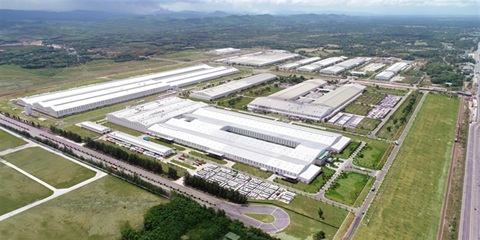
ĐÀ NẴNG GREEN-LIGHTS US$105 MILLION THAI DEVELOPMENT DEAL
The central city has approved an investment proposal by Thailand’s WHA Group to develop infrastructure for the 400ha WHA Đà Nẵng Industrial Park project on two communes of Thăng Bình and Đồng Dương, with an investment of more than VNĐ2.7 trillion (US$105 million). The city said it approved WHA Industrial Development International's status as an investor in the project, which is expected to take place between 2027 and 2034.
VIETNAM ECONOMY INVESTMENT
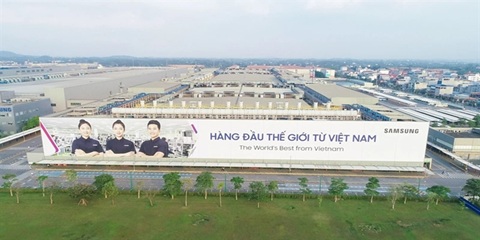
MOBILE PHONE EXPORTS RISE 20% TO $51.8 BILLION IN FIRST NINE MONTHS
Exports of mobile phones and components rose 20 per cent year-on-year to nearly US$51.8 billion in the first nine months of 2026, with China, the US and Republic of Korea accounting for more than half of the total. Shipments to the three markets reached a combined $26.18 billion, or 50.6 per cent of total exports of the product group during the period, according to data from the Vietnam Department of Customs under the Ministry of Finance.
INFRASTRUCTURE / CONSTRUCTION / LOGISTIC / PORT
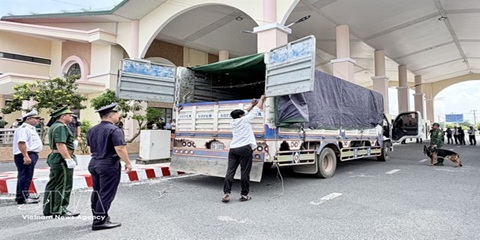
VIỆT NAM-CAMBODIA TRADE GATHERS PACE TOWARDS $20 BILLION TARGET
Trade between Việt Nam and Cambodia continues to grow, remaining a bright spot and a key pillar of bilateral cooperation as the two countries aim to raise two-way trade to US$20 billion in the coming years. After setting a record of more than $11.3 billion last year, bilateral trade reached about $8.7 billion in the first eight months of this year, up 8.3 per cent year on year.
VIETNAM ECONOMY INVESTMENT
FRUIT AND VEGETABLE EXPORTS POISED TO HIT $10 BILLION IN 2026
Fruit and vegetable exports are on track to reach nearly US$10 billion in 2026, after rising 19.9 per cent year on year to nearly US$7.4 billion in the first nine months, driven by strong seasonal demand and abundant tropical fruit supplies. The Ministry of Agriculture and Environment said the growth reflected stronger international demand for fresh produce and processed agricultural products.
Events Sponsors






















