Want to be in the loop?
subscribe to
our notification
Business News
EXPORT BREAKTHROUGH EXPECTED IN 2025
In 2024, Vietnam's export turnover reached US$405.53 billion, up 14.3% from the previous year. The domestic sector contributed US$114.59 billion, up 19.8%, making up 28.3% of total exports, while the foreign-invested sector (including crude oil) reached US$290.94 billion, up 12.3%, accounting for 71.7%. This solid performance sets the stage for a breakthrough in exports in 2025.
Plenty of room for export acceleration
Dr. Nguyen Thuong Lang, a lecturer at the National Economics University, said that the export foundation established in 2024, particularly through the signing and implementation of many free trade agreements (FTAs), will serve as a strong driving force for 2025.
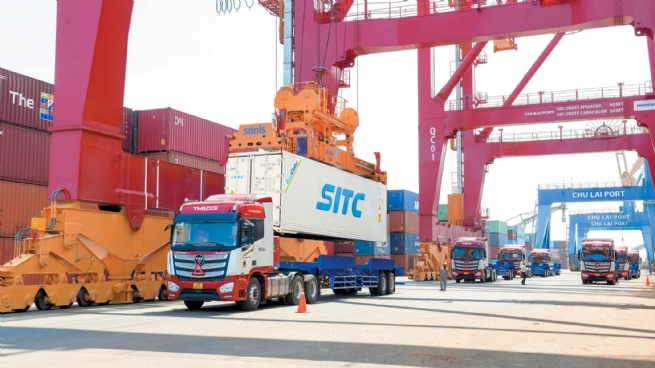
In 2024, 37 items surpassed US$1 billion in export turnover, accounting for 94.3% of total exports, with 8 items exceeding US$10 billion (69.0%). Key markets, including ASEAN, the EU, South Korea, and the US, experienced growth, particularly FTA markets. The US remained Vietnam's largest trading partner, with US$119.6 billion in turnover. The trade balance posted a surplus of US$24.77 billion, marking the ninth consecutive year of surplus.
Mr. Vu Duc Giang, Chairman of the Vietnam Textile and Apparel Association (VITAS), said that the export turnover of textiles and garments in 2024 reached USUS$44 billion, up 11.26% compared to the previous year. With positive signals from the market, the textile industry aims for exports of US$47-48 billion in 2025. Many enterprises have secured orders for the first quarter and are negotiating for the second quarter of 2025.
Participation in FTAs has provided significant opportunities for Vietnam's textile and garment industry. Giang said that Vietnam is one of the few countries with numerous FTAs, providing businesses with a competitive edge to expand into global markets. Notably, the Comprehensive and Progressive Agreement for Trans-Pacific Partnership (CPTPP), despite its stringent requirements on rules of origin, was quickly adapted to and effectively leveraged by Vietnamese enterprises.
A representative from the Vietnam Textile and Garment Group mentioned that Vietnamese textiles currently hold nearly 20% of the market share in the US, while China accounts for over 20%. However, with the new US tariff policy, Chinese textile products could face tariffs and fees of up to 60%, reducing China's competitive edge. This presents an opportunity for Vietnam's textile industry to gain market share, provided it adheres to origin and supply chain traceability regulations.
According to Ms. Nguyen Thi Thu Sac, Chairwoman of the Vietnam Association of Seafood Exporters and Producers (VASEP), Vietnam's seafood industry saw impressive growth in 2024, with export value reaching approximately US$10.07 billion, up 12.1% from US$8.98 billion in 2023. Key products showed positive growth, including shrimp at US$4 billion (up 16.7%), tuna nearing US$1 billion (up 17%), and pangasius at US$2 billion (up 9.6%).
In 2025, the seafood industry will face challenges like the Unreported and Unregulated (IUU) yellow card, climate change, pollution, and market barriers. However, the industry has set a goal of reaching US$11 billion in export turnover, focusing on improving product quality to enhance the reputation of local enterprises and increase the global market share of Vietnamese seafood.
In the context of positive signals from export markets, Vietnam's footwear industry sustained strong growth, achieving an export turnover of US$27 billion, up US$3 billion from 2023. With over 1,000 footwear manufacturing plants, the industry provided 1.5 million jobs and contributed 8% of the national GDP. Vietnam currently ranks third in the world in footwear production (behind China and India), producing 1.3 billion pairs annually, accounting for 5.4% of the global market share, and is the second-largest footwear exporter, just behind China, with 1.276 billion pairs per year, capturing 7.3% of the market share.
According to Ms. Phan Thi Thanh Xuan, Vice President of the Vietnam Leather, Footwear and Handbag Association (LEFASO), some enterprises have already signed export contracts until mid-2025. The industry targets an export turnover of US$38–40 billion for footwear and handbags by 2030 and plans to adopt a circular economy model by 2035, building a complete domestic production value chain and enhancing its role in the global value chain.
Dr. Nguyen Thuong Lang emphasized that Vietnamese businesses are becoming increasingly flexible and proactive in adapting to international market demands, as shown by their impressive export results. Additionally, expanding export markets for OCOP (One Commune One Product) goods and the strong growth of e-commerce will create new opportunities, enabling Vietnamese products and brands to more easily reach the global market. Therefore, the import-export outlook for 2025 is expected to surpass that of 2024.
Challenges and solutions
Despite numerous opportunities, Mr. Tran Thanh Hai, Deputy Director General of the Department of Import-Export, Ministry of Industry and Trade (MoIT), predicted that Vietnam's exports in 2025 will face several challenges. The rising trend of trade protectionism, along with domestic investment incentives and new trade barriers, will significantly impact exportation. Major markets like the EU are increasingly focusing on sustainable development with new regulations such as the Carbon Adjustment Mechanism and the Anti-Deforestation Law, which will directly affect key Vietnamese export products. The complex geopolitics, strict environmental and labor rules, and potential US trade protectionism will keep adding unpredictability.
In order to achieve the export targets for 2025, MoIT will take key measures, including speeding up legal document issuance, monitoring law enforcement, and meeting international tariff quota commitments. It will also strengthen market research and forecasting while helping businesses tackle trade barriers and origin fraud.
Enterprises will be supported in developing competitive products, expanding markets and maintaining the growth of traditional markets. Programs to transition to official exports, build brands and promote sustainable development will continue to be implemented. In particular, the quality of exported products and competitiveness will be enhanced through training programs, trade promotion and the development of digital platforms and e-commerce.
In addition, the export structure will be improved by increasing the share of processed and industrial products, creating opportunities for Vietnamese goods to engage more deeply in global supply chains. Businesses will also receive support in finding orders, accessing market information and developing logistics services.
Besides maintaining and developing traditional markets, MoIT is focusing on expanding export markets by leveraging opportunities from free trade agreements such as EVFTA, CPTPP, RCEP, and especially the CEPA between Vietnam and the United Arab Emirates. The recently signed CEPA opens up significant opportunities for Vietnamese goods to penetrate the Middle Eastern and African markets, which have high demand for agricultural products, seafood, textiles, footwear and consumer goods.
To help businesses tap into these markets, MoIT is launching a series of trade promotion programs and connecting enterprises with international partners through fairs, exhibitions and online trade events. It is also focused on providing support regarding market information, export standards and the regulations of trade agreements, helping Vietnamese businesses not only meet the requirements of partners but also fully take advantage of tariff preferences, facilitating increased exports to new markets and enabling Vietnamese enterprises to solidify their position in global supply chains.
Source: VCCI
Related News

MEMBER CORNER / PROMOTIONS
HCMC | CERTIFIED SUSTAINABILITY PROFESSIONAL (CSP) TRAINING | REGISTRATION OPEN
As sustainability becomes deeply embedded in corporate strategy and supply-chain operations across Vietnam, Hong Kong Business Association Vietnam is pleased to endorse the upcoming Certified Sustainability Professional (CSP) training program by the Asia Institute for Sustainability (AIS) - a premier internationally recognized ESG credential in Vietnam.
VIETNAM ECONOMY INVESTMENT
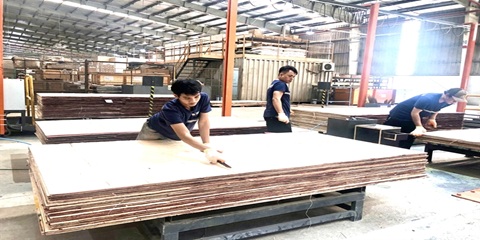
HCM CITY SAYS HOW IT PLANS TO ACHIEVE 10-11% ANNUAL EXPORT GROWTH FOR REST OF DECADE
The southern economic hub aims to strengthen its role as the country’s largest import-export centre while developing into a regional transhipment centre in Southeast Asia, supported by green and digital transformation and a circular economy. HCM City has outlined measures to expand production capacity, cut logistics costs, diversify export markets, and help businesses meet increasingly stringent international standards as it targets average annual export growth of 10-11 per cent through 2030.
VIETNAM ECONOMY INVESTMENT
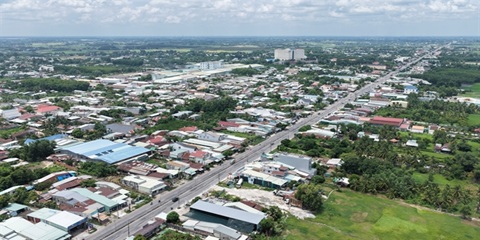
HCM CITY LEADS ECONOMIC RESTRUCTURING IN SOUTHEAST REGION
According to Associate Professor, Dr Vũ Tuấn Hưng, director of the Institute of Social Sciences of the Southern Region, the Southeast is a strategically important socio-economic space in Việt Nam’s development given its advantages in location, industry, trade, services, logistics, science and technology, urbanisation and human resources.
TECHNOLOGY
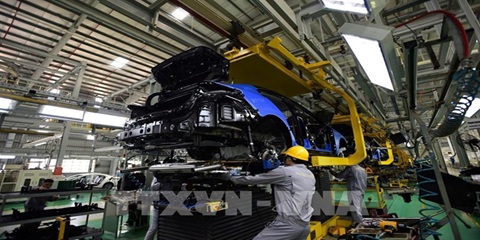
DIGITAL TRANSFORMATION TURNED INTO PRACTICAL TOOLS FOR PEOPLE, BUSINESSES
Việt Nam is moving its digital transformation agenda beyond policy frameworks and individual technology platforms towards practical applications that address everyday needs, as authorities seek measurable outcomes from science, technology and innovation. Under Politburo Resolution No. 57-NQ/TW issued on December 22, 2024, the implementation is increasingly shifting from simply completing assigned tasks towards developing concrete products and services for citizens and businesses.

TECHNOLOGY
APPLYING TECHNOLOGY FOR ECONOMIC TRANSFORMATION
Having completed its new rural development program, Hanoi is shifting its focus toward improving development quality and building smart, sustainable rural areas. The transformation of Dong La orchid-growing village in An Khanh, a western commune of Hanoi, shows how digital technology is becoming a driver of production, market expansion, and higher incomes for local residents.

MEMBER CORNER / PROMOTIONS
VIGLACERA HONORED AS THE "LEADING GREEN INDUSTRIAL REAL ESTATE DEVELOPER 2026"
Organized by the Vietnam Investment Review, this prestigious awards program recognizes industry pioneers advancing eco-industrial parks, clean energy transition, and rigorous ESG standards. Outperforming competitors through a rigorous evaluation, Viglacera Corporation – JSC proudly ranked among the Top 5 highest-positioned enterprises in the Leading Green Industrial Real Estate Developers 2026 category, reinforcing its premier position in Vietnam’s industrial real estate sector.
Events Sponsors






















