Want to be in the loop?
subscribe to
our notification
Business News
FABRIC PRODUCTION AN ISSUE FOR TEXTILE INDUSTRY
Fabric production is a challenge for Việt Nam's textile and garment industry when it comes to free trade agreements (FTAs) requirements on product origin.
The import value of fabric and sub-material for the textile and garment industry accounts for 40 per cent of garment export revenue. Of which, 70 per cent of imported fabric was for manufacturing export garments.
Trương Văn Cẩm, deputy chairman of the Việt Nam Textile and Apparel Association (Vitas), said stronger links in the industry are needed.
“To take those advantages, the local textile and apparel enterprises must strengthen links among them to focus all sources on manufacturing materials meeting requirements on product origin in FTAs like the EU-Việt Nam Free Trade Agreement (EVFTA), especially fabric for producing export garment products," he told Việt Nam News.
Enterprises will have to solve difficulties in the development of the production chain, such as differences in terms of quantity, quality and price of products, for long-term co-operation, Cẩm said.
The association also proposed the Ministry of Industry and Trade (MoIT) complete a development strategy for Việt Nam's textile and garment industry to submit to the Government for approval, he said.
“The strategy needs to focus on the planning of large-scale textile industry. It must have industrial zones with advanced wastewater treatment systems to attract textile and dyeing projects,” Cẩm said.
"Meanwhile, local authorities should grant investment licences for dyeing and textile projects because current textile and dyeing technologies are not as polluting as they used to be."
In the past, many localities did not give investment licences for dyeing and textile projects due to fears they would cause environmental pollution but now, the global textile industry has dyeing technology to lessen pollution.
"Therefore, localities need to change the view of textile and dyeing projects to give investment licences for more textile and dyeing projects, supporting the development of the domestic apparel industry," Cẩm said.
The Government should direct localities to focus on solving difficulties of the textile and garment enterprises so Việt Nam could have enough supply of raw materials meeting origin requirements to enjoy tariff preferences in FTAs.
In addition, the research and development (R&D) activities of textile and apparel industry are limited. Therefore, the State needs more investment in R&D activities to create good conditions for domestic research institutes to develop new products and equipment, he added.
The Mekong-China Strategic Studies Programme (MCSS) report released in Hà Nội early this week also pointed out that the domestic textile and garment industry lacks sufficient domestic supply of materials, especially fabric, so it will be difficult to take advantage of tariff cuts in FTAs.
Việt Nam has signed 13 FTAs, including 12 FTAs that are effective and one FTA waiting for approval. The nation is negotiating three other FTAs.
The deals bring many advantages in competitiveness for the textile and apparel industry. For instance, tariff rates are between zero and 5 per cent for textile, garment and raw materials. Meanwhile, according to World Trade Organisation (WTO) regulations, the tariffs are 12 per cent for textile and raw materials and 25 per cent for garment products.
However, Việt Nam has only taken a third of the advantages of the FTAs, according to the report. Việt Nam has not yet exploited potential markets that are members of the Comprehensive and Progressive Agreement for Trans-Pacific Partnership (CPTPP) such as Mexico, New Zealand, Canada and Australia.
Of which, Australia and Canada are two large textile and garment markets with total value of about $10 billion per year, while the market share of Vietnamese textile and garments products in the two markets is worth only about $500 million per year.
The report said Canada is a high potential export market for Việt Nam’s garment products.
According to the CPTPP, 42.9 per cent of Việt Nam’s garment exports to Canada will enjoy tariffs of zero in the first year and tariffs on the remaining 57.1 per cent will be removed in fourth year if Vietnamese products meet regulations on the origin of yarn.
Source: VNS
Related News

INFRASTRUCTURE / CONSTRUCTION / LOGISTIC / PORT
VIỆT NAM-CAMBODIA TRADE GATHERS PACE TOWARDS $20 BILLION TARGET
Trade between Việt Nam and Cambodia continues to grow, remaining a bright spot and a key pillar of bilateral cooperation as the two countries aim to raise two-way trade to US$20 billion in the coming years. After setting a record of more than $11.3 billion last year, bilateral trade reached about $8.7 billion in the first eight months of this year, up 8.3 per cent year on year.
TECHNOLOGY
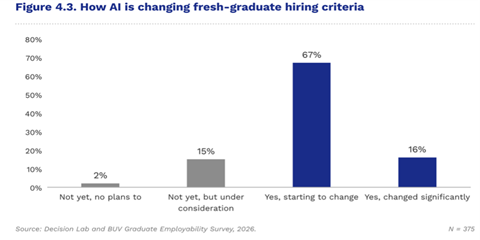
AI BEGINNING TO RESHAPE RECRUITMENT CRITERIA
Digital literacy is the only capability area in which fresh graduates meet employers’ expectations, according to a new report. Yet, it is also the standard rising fastest, as businesses increasingly expect new hires to use AI effectively in the workplace. Some 83 per cent of employers say AI has changed, or is beginning to change, their hiring criteria, while 94 per cent report higher expectations for digital and AI capabilities than they had two to three years ago.

INFRASTRUCTURE / CONSTRUCTION / LOGISTIC / PORT
ĐÀ NẴNG GREEN-LIGHTS US$105 MILLION THAI DEVELOPMENT DEAL
The central city has approved an investment proposal by Thailand’s WHA Group to develop infrastructure for the 400ha WHA Đà Nẵng Industrial Park project on two communes of Thăng Bình and Đồng Dương, with an investment of more than VNĐ2.7 trillion (US$105 million). The city said it approved WHA Industrial Development International's status as an investor in the project, which is expected to take place between 2027 and 2034.

VIETNAM ECONOMY INVESTMENT
MOBILE PHONE EXPORTS RISE 20% TO $51.8 BILLION IN FIRST NINE MONTHS
Exports of mobile phones and components rose 20 per cent year-on-year to nearly US$51.8 billion in the first nine months of 2026, with China, the US and Republic of Korea accounting for more than half of the total. Shipments to the three markets reached a combined $26.18 billion, or 50.6 per cent of total exports of the product group during the period, according to data from the Vietnam Department of Customs under the Ministry of Finance.

VIETNAM ECONOMY INVESTMENT
FRUIT AND VEGETABLE EXPORTS POISED TO HIT $10 BILLION IN 2026
Fruit and vegetable exports are on track to reach nearly US$10 billion in 2026, after rising 19.9 per cent year on year to nearly US$7.4 billion in the first nine months, driven by strong seasonal demand and abundant tropical fruit supplies. The Ministry of Agriculture and Environment said the growth reflected stronger international demand for fresh produce and processed agricultural products.
GARMENT / TEXTILE
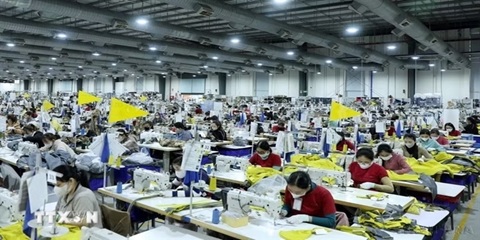
TEXTILE EXPORTS FACE DUAL CHALLENGES OF SUSTAINING ORDERS AND BOOSTING EFFICIENCY AMID GROWING COMPETITION
Data shows that the textile and garment sector maintained its growth momentum in the first nine months of this year. The industry's total export turnover reached an estimated US$35.721 billion in the first nine months of this year, up 3.3 per cent year-on-year. Despite posting encouraging export figures, Vietnamese textile and garment enterprises continue to navigate unpredictable market variables.
Events Sponsors






















