Want to be in the loop?
subscribe to
our notification
Business News
FDI FIRMS CONTINUE TO RECOVER AND SHIFT INTO HIGH-TECH INDUSTRIES
According to the report on Provincial Competitiveness Index 2022 (PCI 2022) released by the Vietnam Chamber of Commerce and Industry (VCCI), the majority of foreign-invested enterprises (FIEs) in Vietnam can be classified as small- and medium-sized enterprises in terms of capital, employment, and revenue. Nearly 83% of firms have VND100 billion or less in capital. One quarter of PCI-FDI respondents employ under 10 people, and 57.4% have fewer than 50 workers. In terms of revenue, almost one fourth earned less than VND3 billion in 2022. The share of FIEs with revenue below VND100 billion is 77.8%.
Shifting away from the apparel industry
The PCI 2022 report showed a remarkable finding: FDI firms are shifting to high-tech industries. Almost half the PCI-FDI respondents are manufacturers (49.5%), followed by businesses in the service/commerce sector (39%) and construction (7%). At the subsector level, the largest category of FIEs in Vietnam operate in wholesale/retail (12.6% of the PCI-FDI respondents). Other categories with large numbers of FIEs are manufacturers of fabricated metals, rubber/plastics, and computer/electronics.
There is an obvious trend that FDI companies are moving away from the apparel industry. Garments and textiles accounted for a large share of Vietnam’s manufacturing sector in 2010, but their role had been significantly reduced by 2022. In contrast, sub-sectors such as computers/electronics and information/communication have taken on a growing share of industrial production.
In another development, while the role of SOEs as suppliers seems somewhat diminished, the share of PCI-FDI respondents buying from Vietnamese household businesses increased from 9.9% in 2021 to 13.4% in 2022.
On the surface, these numbers could simply be seen as the result of economic recovery to pre-COVID-19 levels. However, the narrowing of the supplier role in the country of origin and in third countries observed over the years showed that domestic suppliers had really strengthened their position as intermediary suppliers of goods and services for FDI firms.
In 2022, only 30.5% of PCI-FDI respondents imported from home-country businesses, an unprecedentedly low level and a dramatic decline from a peak of 58.7% in 2016. South Korean, Chinese, and Japanese FIEs are particularly likely to import inputs from their home countries, at 42.4%, 38.3%, and 32.6%, respectively. Similarly, the share of FIEs that turn to third-party upstream suppliers declined from 22.6% in 2021 to 16% in 2022. The deepening role of domestic firms as suppliers, especially in the electronics and logistics sectors, could be attributed to two factors: the EU-Vietnam Free Trade Agreement (EVFTA) which went into effect in August 2020; and investors’ diversification away from China into neighboring countries.
The composition of FIEs’ country of origin was relatively stable in recent years. In 2022, South Korea continued to be the largest foreign investor in Vietnam by the number of enterprises (28.8% of PCI-FDI respondents). Next in line were Japanese investors who accounted for 23.2% of FIEs. The 2020 PCI report suggested that the share of Chinese-invested firms will continue to increase. In 2022, Chinese FIEs accounted for 12.7% of PCI-FDI respondents, up from 10.6% in 2021 and 6.9% in 2020. Among Chinese FIEs that export, 41.9% send their products to the United States.
FIEs continued their recovery from the ramifications of COVID-19. In contrast to the state of domestic firms, the share of firms reporting profits increased from 38.7% in 2021 to 42.8% in 2022. The share of firms reporting losses also dropped to 44.9% in 2022. 56% of FIEs added new employees compared to 50.6% in 2021.
Regulatory burden significantly reduced
Notably, FDI firms continued to speak highly of the quality of the business environment in Vietnam, with regulatory enforcement burdens eased significantly from previous years.
The share of firms spending upward of 5% on bureaucratic procedures rocketed from 32.9% in 2020 to an eye-watering 60.6%. This somewhat reverted in 2022 when the figure dropped back to 49.3%. The payment for unofficial charges continued to decline although this needed to be further improved. In 2022, only 17.4% of FDI firms had to pay informal fees for inspectors, dramatically down from 25.4% in 2021. A higher percentage of companies reportedly paid below 1% of revenue for unofficial charges. However, up to 38.5% and 19.2% of respondents said to pay unofficial charges for customs and land procedures, respectively.
Remarkably, FDI firms have found it hard to recruit and retain workers. While they still faced difficulty in recruiting local workers for management and supervisory positions as before, in 2022, the share of FIEs finding it “easy” or “very easy” to recruit such workers dropped precipitously to 49% last year from 62% in 2021.
FDI companies also faced obstacles in retaining trained workers. The proportion of trained workers who worked for one year or more decreased considerably in the past two years, from 66% in 2020 to 60% in 2021 and 55.9% in 2022. Employers of migrant workers from other provinces felt the strongest impact of the pandemic and its response policies. The difficulty in recruiting unskilled workers is strongly correlated with the dependence of a province or city on migrant workers. In general, localities with a large proportion of migrant workers such as Binh Duong and Ho Chi Minh City tend to be more affected by labor mobility than other localities.
In particular, according to the PCI 2022 Report, FDI enterprises tended to be cautious with investment expansions. Global economic instability has made FDI firms in Vietnam hesitant with investment expansions. Only 33% of respondents planned to scale up their operations next year, compared to 47.7% in 2021. 6.2% of FDI firms expanded their investment scale in 2022, compared to 8.4% and 7.8% in 2020 and 2021, respectively.
Source: VCCI
Related News
MEMBER CORNER / PROMOTIONS
KNIC ENGAGES WITH GOVERNMENT AND HIGH-TECH BUSINESS COMMUNITIES IN CHINA
From Beijing to Shandong, KN Holdings and KN Industrial City are continuing to expand their engagement with government authorities, trade promotion organizations, and high-tech business communities in China. In Beijing, the delegation met with the Center for International Economic and Technological Cooperation under the Ministry of Industry and Information Technology (MIIT), exchanging perspectives on industrial and technology cooperation between the two markets.
VIETNAM ECONOMY INVESTMENT
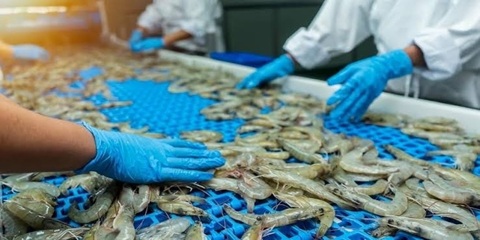
VIETNAM’S TRADE TOPS $825 BILLION BY MID-SEPTEMBER
Figures released on September 21 showed goods trade reached nearly $55 billion in the first 15 days of September alone, bringing cumulative turnover since the beginning of the year to more than $825 billion. The strong growth reflects robust trade flows, with demand for consumer goods and production inputs remaining high.

TECHNOLOGY
VIỆT NAM'S BUSINESSES MOVE TOWARDS AI AGENTS
Việt Nam’s AI landscape is entering a new phase as businesses move beyond generative AI (GenAI) tools designed to assist human users towards autonomous AI, agentic AI and AI agents that can take action with limited supervision, experts have said. The shift comes as Việt Nam seeks to accelerate science and technology, innovation and digital transformation under Politburo Resolution 57-NQ/TW, issued on December 22, 2024.
GARMENT / TEXTILE
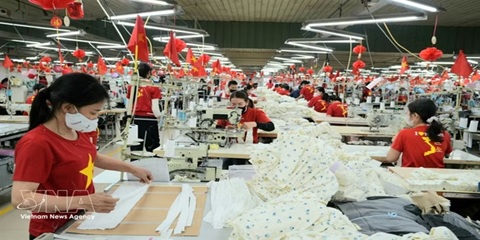
VIỆT NAM TARGETS $48 BILLION IN TEXTILE-GARMENT EXPORTS
Việt Nam’s textile and garment industry is facing both opportunities and challenges amid complex and unpredictable developments in the global market, prompting businesses to improve growth quality, optimise production costs and enhance adaptability in pursuit of an export turnover of about $48 billion this year. The target is considered an important milestone that requires concerted efforts from management agencies and the business community.
INFRASTRUCTURE / CONSTRUCTION / LOGISTIC / PORT
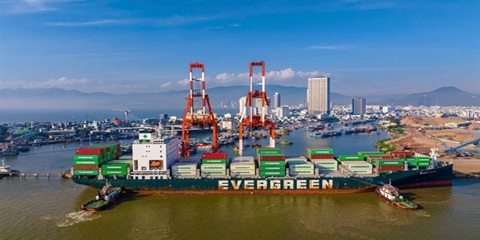
CUTTING LOGISTICS COSTS KEY TO BOOSTING EXPORTS
Reducing costs has become an increasingly urgent priority for import-export activities, particularly logistics costs, a conference in Hà Nội was told on Tuesday. According to Deputy General Director of the Ministry of Industry and Trade's Agency for Foreign Trade, Trần Thanh Hải, import-export activities has remained a bright spot for the economy in recent years, playing an important role and helping drive macroeconomic growth.
LEGAL UPDATE / POLICY
FLEXIBLE FISCAL POLICY HELPS DRIVE ECONOMIC GROWTH
Việt Nam’s fiscal policy has been implemented in a targeted expansionary manner since early 2026, helping maintain macroeconomic stability and supporting the country’s goal of achieving double-digit economic growth. According to the Ministry of Finance, State budget revenue in the first eight months of 2026 was estimated at VNĐ2.02 quadrillion (US$77.7 billion), equivalent to 80 per cent of the annual estimate and up 16 per cent year-on-year.
Events Sponsors






















