Want to be in the loop?
subscribe to
our notification
Business News
FDI FIRMS EXPAND IN LOCAL TEXTILE-GARMENT SECTOR
Vietnam had become increasingly appealing to large foreign investor groups in the textile and garment industry who wanted to seize opportunities when the Comprehensive and Progressive Agreement for Trans-Pacific Partnership (CPTPP) takes effect in January next year, according to analysts.
German-based Amann Group, one of the world’s top three leading producers of high-quality sewing and embroidery thread, is expanding its network to Vietnam with a new factory being constructed in Tam Thang Industrial Park in the central province of Quang Nam.
The new facility will be added to Amann’s existing network of factories in various countries across Asia, including Bangladesh, China, India and Indonesia.
At the new production site, the group will produce around 2,300 tonnes of sewing thread per year, mainly for the manufacture of apparel and shoes.
The first phase of the project is scheduled to commence in late July next year.
Kraig Biocraft Laboratories Inc, the US’ leading developer of spider silk-based yarn, is working with agricultural co-operatives in Quang Nam to expand mulberry production and develop high-quality silk in Vietnam.
The firm plans to set up a centre for research and development (R&D) of silk, as well as grow about 2,500ha of mulberry to support spider silk in the country.
According to Kraig Biocraft Laboratories, Vietnam had been chosen to scale up its spider silk commercialisation efforts as one of the firm’s strategic moves to expand.
The domino effect created by FDI expansion in the textile and garment sector has also led to an increase in the number of foreign suppliers of machinery and equipment for the industry.
In June, ILLIES Vietnam – a member of the German C. ILLIES & Co and also a leading distributor of industrial textiles machinery and equipment – announced it had expanded its portfolio in the spinning sector. It now provides machines and spare parts for short-staple yarn-spinning systems for the Rieter Group and the local textile market.
In the first quarter of 2019, the company will open a repair centre for mechanical and electrical parts of Rieter machines.
So far this year, the Vietnam Textile and Apparel Association (VITAS) had welcomed many foreign textile and garment producers visiting to explore investment opportunities, said VITAS vice chairman Truong Van Cam. More FDI projects would arrive in the country’s textiles sector in the coming years, Cam added.
Once new-generation free trade agreements (FTA), like the CPTPP and the EU-Vietnam FTA (EVFTA), entered into force, investment in the textile and garment industry will increase, offering a great opportunity for machinery suppliers like Rieter, said a representative from ILLIES Vietnam.
Statistics from VITAS showed that a total of nearly US$15.9 billion in FDI had been injected into more than 2,090 textile and garment projects in Vietnam by the end of last year. In the first half of 2018, the industry attracted another $2.8 billion in FDI.
$18 billion trade surplus
The country is now among the leading exporters of textile and garments in Asia. Vietnam’s total textile and garment exports have experienced a 3.6-fold increase over the past decade, from $7.78 billion in 2007 to $31 billion in 2017. Last year’s figure represented 16 per cent of the nation’s total export revenue.
The domestic textile and garment industry is expected to gain a trade surplus of $18 billion this year, according to an official report from VITAS.
VITAS Chairman Vu Duc Giang said the sector was estimated to earn $36 billion from exports this year, a year-on-year increase of about 16 per cent.
Giang said that many enterprises had been working on completing a textile and garment supply chain.
Next year, the textile and garment industry has set a target of $40 billion in export value, a year on year increase of 10.8 per cent, and a trade surplus of $20 billion.
To reach the target of $40 billion, the association has recommended enterprises focus on investment, markets, human resources and the application of scientific and technological advances.
The Government and relevant State agencies needed to continue administrative reforms and inspections while removing difficulties for enterprises in 2019, Giang said.
The association needed to connect enterprises and markets at home and abroad by increasing trade promotions, he said.
The State should only grant investment licences to projects with large investments, advanced technology and wastewater treatment systems to meet the requirements of free trade agreements such as CPTPP and EVFTA.
The association has asked the National Assembly to adopt the Law on Association to allow foreign-owned enterprises to become association members so they can co-ordinate with local enterprises to set up supply chains and exchange experiences in production and business between local and foreign companies.
Source: VIR
Related News

INFRASTRUCTURE / CONSTRUCTION / LOGISTIC / PORT
VIỆT NAM-CAMBODIA TRADE GATHERS PACE TOWARDS $20 BILLION TARGET
Trade between Việt Nam and Cambodia continues to grow, remaining a bright spot and a key pillar of bilateral cooperation as the two countries aim to raise two-way trade to US$20 billion in the coming years. After setting a record of more than $11.3 billion last year, bilateral trade reached about $8.7 billion in the first eight months of this year, up 8.3 per cent year on year.
TECHNOLOGY
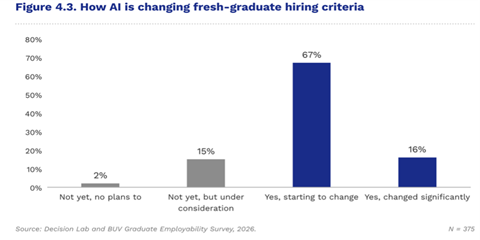
AI BEGINNING TO RESHAPE RECRUITMENT CRITERIA
Digital literacy is the only capability area in which fresh graduates meet employers’ expectations, according to a new report. Yet, it is also the standard rising fastest, as businesses increasingly expect new hires to use AI effectively in the workplace. Some 83 per cent of employers say AI has changed, or is beginning to change, their hiring criteria, while 94 per cent report higher expectations for digital and AI capabilities than they had two to three years ago.

INFRASTRUCTURE / CONSTRUCTION / LOGISTIC / PORT
ĐÀ NẴNG GREEN-LIGHTS US$105 MILLION THAI DEVELOPMENT DEAL
The central city has approved an investment proposal by Thailand’s WHA Group to develop infrastructure for the 400ha WHA Đà Nẵng Industrial Park project on two communes of Thăng Bình and Đồng Dương, with an investment of more than VNĐ2.7 trillion (US$105 million). The city said it approved WHA Industrial Development International's status as an investor in the project, which is expected to take place between 2027 and 2034.

VIETNAM ECONOMY INVESTMENT
MOBILE PHONE EXPORTS RISE 20% TO $51.8 BILLION IN FIRST NINE MONTHS
Exports of mobile phones and components rose 20 per cent year-on-year to nearly US$51.8 billion in the first nine months of 2026, with China, the US and Republic of Korea accounting for more than half of the total. Shipments to the three markets reached a combined $26.18 billion, or 50.6 per cent of total exports of the product group during the period, according to data from the Vietnam Department of Customs under the Ministry of Finance.

VIETNAM ECONOMY INVESTMENT
FRUIT AND VEGETABLE EXPORTS POISED TO HIT $10 BILLION IN 2026
Fruit and vegetable exports are on track to reach nearly US$10 billion in 2026, after rising 19.9 per cent year on year to nearly US$7.4 billion in the first nine months, driven by strong seasonal demand and abundant tropical fruit supplies. The Ministry of Agriculture and Environment said the growth reflected stronger international demand for fresh produce and processed agricultural products.
GARMENT / TEXTILE
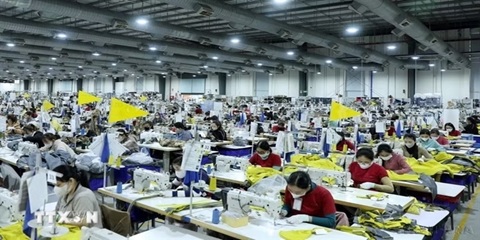
TEXTILE EXPORTS FACE DUAL CHALLENGES OF SUSTAINING ORDERS AND BOOSTING EFFICIENCY AMID GROWING COMPETITION
Data shows that the textile and garment sector maintained its growth momentum in the first nine months of this year. The industry's total export turnover reached an estimated US$35.721 billion in the first nine months of this year, up 3.3 per cent year-on-year. Despite posting encouraging export figures, Vietnamese textile and garment enterprises continue to navigate unpredictable market variables.
Events Sponsors






















