Want to be in the loop?
subscribe to
our notification
Business News
FDI FLOWS REMAIN STRONG IN REAL ESTATE
The Vietnamese real estate sector has been attracting a large proportion of international investment inflows over the past years and the country is expected to remain one of the world’s most attractive markets for foreign developers in the years to come.
According to Minister of Construction Tran Hong Ha, the real estate sector in Vietnam commands special attention among foreign investors. So far, Vietnam has attracted 26,646 projects with the total investment capital of more than $334 billion from 129 countries and territories, with the real estate sector consistently attracting the second-largest portion among the Vietnamese economic sectors.
“The government has been highly appreciative of foreign investment and has been working to create more favourable conditions for them to invest in Vietnam,” Ha said at a recent international conference on real estate investment in Vietnam in Hanoi.
Khanh Nguyen, associate director of the Capital Markets Division of JLL Vietnam, said that over the past 10 years, despite the ups and downs of the Vietnamese economy and the real estate market, foreign direct investment (FDI) inflows remained stable.
According to the Foreign Investment Agency (FIA) under the Ministry of Planning and Investment, between January and September 20 this year, FDI capital in the manufacturing and processing sector jumped to $11.3 billion, representing 44.6 per cent of the country’s total registered FDI. Real estate was the second-most heavily invested sector with $5.8 billion, or 23 per cent of the total registered capital, followed by retail and wholesale with $2.1 billion or 8.3 per cent. Over the years, FDI inflows into the real estate sector consistently ranked second, trailing manufacturing.
According to Khanh, Vietnam’s strong and stable growth performance over the past decade has been attracting foreign investors, especially those from Asia such as Japan, South Korea, Singapore, Hong Kong, Taiwan, and China. Their market share accounted for 73.9 per cent of total FDI, followed by EU member states with 15.2 per cent.
“Most investors from the EU invest in fields like design, electronics, home appliances, and furniture. However, with the need to expand their footprint in Vietnam, these European companies have also been looking to ramp up investment in commercial real estate through acquiring buildings for their headquarters or showrooms in non-central business district areas. US investors are also key players in Vietnam as they ranked third in FDI capital. Although there is no country-based breakdown of real estate FDI, it can be seen that there has been increasing interest from private equity firms,” Khanh said.
One of the most notable US investors is New York-based private equity Warburg Pincus, which has committed over $1 billion in Vietnam, the majority of which was allocated to set up real estate platforms including retail, hotel, industrial, and logistics properties.
Matthew Powell, director of Savills Hanoi, said that the real estate sector has always been attracting foreign investment flows. “In the first half of this year, we saw strong investment from foreigners in residential areas, while another strong wave of investment will also reach the industrial real estate segment, which is now at its peak in Vietnam. Other attractive segments should be offices for lease, hotels and hospitality, and retail properties,” Powell said.
“The Vietnamese real estate market has been more attractive than neighbouring markets like Japan, South Korea, Singapore, Hong Kong, and China both in potential and yield, and leads us to believe foreign investment flows will remain high in the coming time, with expanded types of asset and segments,” he added.
According to Dexter See, ASEAN managing director of the Royal Institution of Chartered Surveyors, the Vietnamese real estate market is one of the hottest markets in the region. “Along with Singapore, Malaysia, and Indonesia, Vietnam is one of the top priorities for foreign investors in infrastructure and real estate development, due to the high demand and the potential for higher yields compared to other countries,” See told VIR.
Vietnam, according to See, is now a destination for many developers and investors from Singapore, Hong Kong, Taiwan, South Korea, and especially Japan and China, which have recently emerged as top developers on the Vietnamese real estate market.
A highlight was Japan-based Sumitomo Corporation, along with other local partners such as BRG Group, which received approval from the Hanoi People’s Committee to develop a $4 billion smart city project in the capital’s Dong Anh district.
Lotte also pledged to invest $600 million in a high-end, international-standard complex in Hanoi, including shopping centres, offices, and hotels.
Foreign investment flows into the Vietnamese real estate market are also becoming increasingly diversified, with different types of transactions, such as joint ventures, and mergers and acquisitions transactions. Among the most prominent cases was the Singaporean sovereign wealth fund GIC announcing its investment of about $1.3 billion into leading Vietnamese property developer Vingroup and the related entities for its real estate arm.
Similarly, Warburg Pincus and Becamex IDC Corporation, one of the largest industrial real estate developers in Vietnam, announced the launch of their joint venture BW Industrial Development JSC.
As billions of dollars of foreign capital are poised to enter the Vietnamese real estate market, the sector is expected to continue stabilising and growing in the coming time.
Source: VIR
Related News
INFRASTRUCTURE / CONSTRUCTION / LOGISTIC / PORT
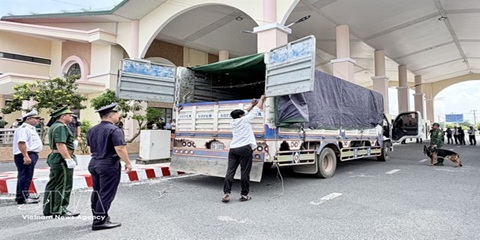
VIỆT NAM-CAMBODIA TRADE GATHERS PACE TOWARDS $20 BILLION TARGET
Trade between Việt Nam and Cambodia continues to grow, remaining a bright spot and a key pillar of bilateral cooperation as the two countries aim to raise two-way trade to US$20 billion in the coming years. After setting a record of more than $11.3 billion last year, bilateral trade reached about $8.7 billion in the first eight months of this year, up 8.3 per cent year on year.
TECHNOLOGY
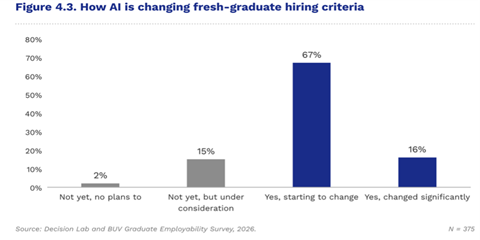
AI BEGINNING TO RESHAPE RECRUITMENT CRITERIA
Digital literacy is the only capability area in which fresh graduates meet employers’ expectations, according to a new report. Yet, it is also the standard rising fastest, as businesses increasingly expect new hires to use AI effectively in the workplace. Some 83 per cent of employers say AI has changed, or is beginning to change, their hiring criteria, while 94 per cent report higher expectations for digital and AI capabilities than they had two to three years ago.
INFRASTRUCTURE / CONSTRUCTION / LOGISTIC / PORT
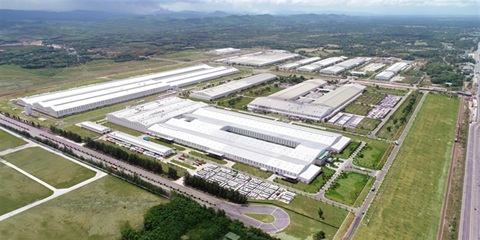
ĐÀ NẴNG GREEN-LIGHTS US$105 MILLION THAI DEVELOPMENT DEAL
The central city has approved an investment proposal by Thailand’s WHA Group to develop infrastructure for the 400ha WHA Đà Nẵng Industrial Park project on two communes of Thăng Bình and Đồng Dương, with an investment of more than VNĐ2.7 trillion (US$105 million). The city said it approved WHA Industrial Development International's status as an investor in the project, which is expected to take place between 2027 and 2034.
VIETNAM ECONOMY INVESTMENT
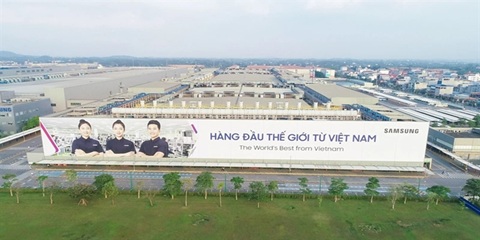
MOBILE PHONE EXPORTS RISE 20% TO $51.8 BILLION IN FIRST NINE MONTHS
Exports of mobile phones and components rose 20 per cent year-on-year to nearly US$51.8 billion in the first nine months of 2026, with China, the US and Republic of Korea accounting for more than half of the total. Shipments to the three markets reached a combined $26.18 billion, or 50.6 per cent of total exports of the product group during the period, according to data from the Vietnam Department of Customs under the Ministry of Finance.
VIETNAM ECONOMY INVESTMENT
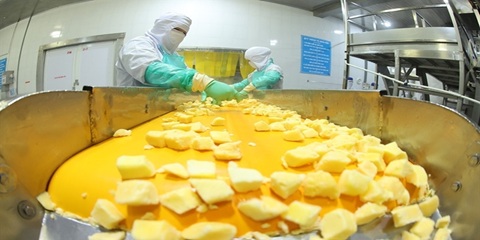
FRUIT AND VEGETABLE EXPORTS POISED TO HIT $10 BILLION IN 2026
Fruit and vegetable exports are on track to reach nearly US$10 billion in 2026, after rising 19.9 per cent year on year to nearly US$7.4 billion in the first nine months, driven by strong seasonal demand and abundant tropical fruit supplies. The Ministry of Agriculture and Environment said the growth reflected stronger international demand for fresh produce and processed agricultural products.
GARMENT / TEXTILE
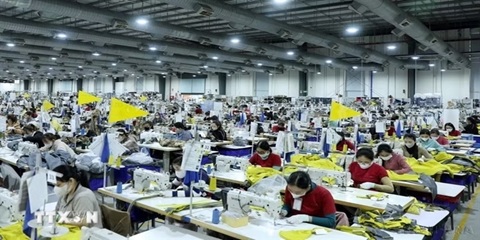
TEXTILE EXPORTS FACE DUAL CHALLENGES OF SUSTAINING ORDERS AND BOOSTING EFFICIENCY AMID GROWING COMPETITION
Data shows that the textile and garment sector maintained its growth momentum in the first nine months of this year. The industry's total export turnover reached an estimated US$35.721 billion in the first nine months of this year, up 3.3 per cent year-on-year. Despite posting encouraging export figures, Vietnamese textile and garment enterprises continue to navigate unpredictable market variables.
Events Sponsors






















