Want to be in the loop?
subscribe to
our notification
Business News
FDI IN REAL ESTATE EXPECTS BREAKTHROUGHS
According to statistics of the Foreign Investment Agency (FIA), Ministry of Planning and Investment of Vietnam, in January 2017, the country attracted US$1.4 billion of foreign direct investment (FDI), of which the real estate industry attracted US$297 million (21.2 per cent of the total FDI), ranking 2nd only to the processing and manufacturing industry.
Real estate attractive to foreign investors
According to economic experts, FDI inflow into real estate is becoming more substantial, signalling a viral competition among giants in the sector. Currently, Singapore, South Korea and China are major investors in Vietnam, accounting for more than 80 per cent of the total FDI. In 2016, the FDI inflow into real estate was estimated at US$1.3 billion. Thus, only in January 2017, the capital invested in the real estate sector accounted for almost a quarter that of 2016. This impressive figure proves the influence of some projects like Midtown project with a total investment of over US$225.6 million in Ho Chi Minh City and the Amata Long Thanh project (Dong Nai) with a total registered capital of US$309.3 million.
The high return of real estate investment in Vietnam is attracting foreign investors. The impressive numbers in attracting FDI inflows in the first months of 2017 predicts an exciting year in this area. According to Prof Nguyen Mai, Chairman of the Vietnam Association of Foreign Investment Enterprises, the FDI inflow of about VND1.3 billion in the real estate field in 2016 is 44 per cent less than that of 2015 and this is a setback. The FDI inflows in the real estate sector accounted for about 10 per cent of the total FDI registered in 2016, down 11.5 per cent from the same period in 2015.
Given in its development stage, declining FDI inflow is not a optimistic signal for real estate industry. However, according to Prof Nguyen Mai, the ratio of the FDI of the higher quality projects is bigger. This positive trend attracted more FDI in general and the FDI in the real estate in particular.
From 2007 to 2010, the market received bigger FDI inflows, but the reimbursement was relatively low, about 25 per cent, even some projects were not licensed for implementation. Starting from 2011 to the present, the difference between the registered capital and the implemented capital has been narrowed because the construction time of many FDI projects has been reduced; for example, one project with the investment of US$3 billion took only about one year of implementation after the investment certificate was issued.
According to Phan Huu Thang, Former Director of Foreign Investment Agency and Vice President of Vietnam Real Estate Association, the property market of Vietnam is still taking its own advantages. Currently, Vietnam has nearly 100 million people with high demand for big houses and the country has a fast pace of urbanisation, high industrial development, and growing number of industrial parks On the other hand, in recent years, Vietnam has emerged as an attractive tourism destination. Along with increasing foreign investment in the tourism real estate, Vietnam has fully integrated in the global market and become a member of numerous trade organisations. This proves the great potential of the real estate of Vietnam.
Troubleshooting for investors
To realise FDI registration numbers on paper, according to Dr Phan Huu Thang, enterprises should closely follow market demand, while the government should create favourable conditions for administrative procedures. On the Government side, the license needs to be done accurately and quickly. The administrative procedures should be completed within only 3 months.
Currently, FDI poured in the resort real estate accounts for a high proportion (about 40 per cent of the total FDI) because there are more policy incentives for the tourism sector. However, more importantly, other determinants including better services, good environment, housing and transportation to serve the tourist market will help investors make final investment decisions.
Not only foreign investors but also domestic investors feel confused with administration procedures, mechanisms and policies. Many noticed that investors are facing major resistance from the legal system and policies, resulting in waste of a lot of business opportunities. Besides, difficulties in the site clearance and self-interaction between domestic and international partners affect FDI implementation. If the problems mentioned above are solved, the future of FDI implementation will be better.
Source: VCCI
Related News

INFRASTRUCTURE / CONSTRUCTION / LOGISTIC / PORT
VIỆT NAM-CAMBODIA TRADE GATHERS PACE TOWARDS $20 BILLION TARGET
Trade between Việt Nam and Cambodia continues to grow, remaining a bright spot and a key pillar of bilateral cooperation as the two countries aim to raise two-way trade to US$20 billion in the coming years. After setting a record of more than $11.3 billion last year, bilateral trade reached about $8.7 billion in the first eight months of this year, up 8.3 per cent year on year.
TECHNOLOGY
AI BEGINNING TO RESHAPE RECRUITMENT CRITERIA
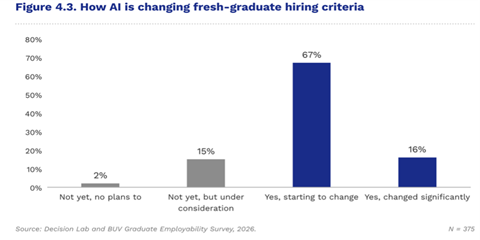
Digital literacy is the only capability area in which fresh graduates meet employers’ expectations, according to a new report. Yet, it is also the standard rising fastest, as businesses increasingly expect new hires to use AI effectively in the workplace. Some 83 per cent of employers say AI has changed, or is beginning to change, their hiring criteria, while 94 per cent report higher expectations for digital and AI capabilities than they had two to three years ago.

INFRASTRUCTURE / CONSTRUCTION / LOGISTIC / PORT
ĐÀ NẴNG GREEN-LIGHTS US$105 MILLION THAI DEVELOPMENT DEAL
The central city has approved an investment proposal by Thailand’s WHA Group to develop infrastructure for the 400ha WHA Đà Nẵng Industrial Park project on two communes of Thăng Bình and Đồng Dương, with an investment of more than VNĐ2.7 trillion (US$105 million). The city said it approved WHA Industrial Development International's status as an investor in the project, which is expected to take place between 2027 and 2034.

VIETNAM ECONOMY INVESTMENT
MOBILE PHONE EXPORTS RISE 20% TO $51.8 BILLION IN FIRST NINE MONTHS
Exports of mobile phones and components rose 20 per cent year-on-year to nearly US$51.8 billion in the first nine months of 2026, with China, the US and Republic of Korea accounting for more than half of the total. Shipments to the three markets reached a combined $26.18 billion, or 50.6 per cent of total exports of the product group during the period, according to data from the Vietnam Department of Customs under the Ministry of Finance.

VIETNAM ECONOMY INVESTMENT
FRUIT AND VEGETABLE EXPORTS POISED TO HIT $10 BILLION IN 2026
Fruit and vegetable exports are on track to reach nearly US$10 billion in 2026, after rising 19.9 per cent year on year to nearly US$7.4 billion in the first nine months, driven by strong seasonal demand and abundant tropical fruit supplies. The Ministry of Agriculture and Environment said the growth reflected stronger international demand for fresh produce and processed agricultural products.
GARMENT / TEXTILE
TEXTILE EXPORTS FACE DUAL CHALLENGES OF SUSTAINING ORDERS AND BOOSTING EFFICIENCY AMID GROWING COMPETITION
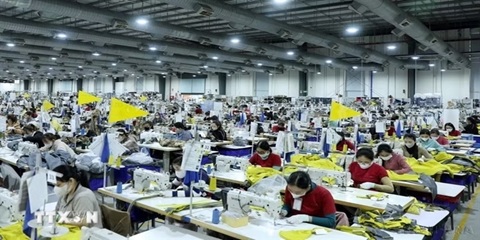
Data shows that the textile and garment sector maintained its growth momentum in the first nine months of this year. The industry's total export turnover reached an estimated US$35.721 billion in the first nine months of this year, up 3.3 per cent year-on-year. Despite posting encouraging export figures, Vietnamese textile and garment enterprises continue to navigate unpredictable market variables.
Events Sponsors






















