Want to be in the loop?
subscribe to
our notification
Business News
FOCUSING ON HIGH-QUALITY HUMAN RESOURCES DEVELOPMENT
Quality issues
In ASEAN, Vietnam is on the lower half of the human resources development ranking. One of the hardest issues in business in Vietnam is that the labour force is not fully trained.
Vice Chairman of the European Chamber of Commerce in Vietnam (EuroCham), Tomaso Andreatta, said, at the Vietnam Business Forum (VBF) 2015, "Vietnam has a potential labour force but if it wants to target high value-added economic and service sectors, it must have a properly trained workforce.”
According to a report by the World Economic Forum (WEF) 2014-2015, more than 10 percent of people surveyed to pick up five toughest issues in doing business in Vietnam agreed that the labour force not being fully trained is one of major issues.
According to the census, Vietnam had nearly 90 million people as of February 2014. This shows that the human resources of Vietnam are growing abundant.
Particularly, the farmer force has nearly 63 million people, accounting for over 70 percent of the population; industrial force has 9.5 million people, making up nearly 10 percent; the intellect force - graduated from university, college or higher - has more than 2.5 million people, accounting for 2.15 percent; and business force has some 2 million people, of which centrally-run enterprises have nearly 1 million people.
Currently, Vietnam has two types of human resources: manual workers and high-quality workers. The manual worker force still forms the majority while the high-quality labour force makes up a tiny proportion. Vietnam does not lack manual workers but high-quality workers. According to statistics in 2010, among 20.1 million trained labourers out of 48.8 million people in the workforce, only 8.4 million had diplomas and certificates granted by domestic and international training facilities. Some 40 percent of people aged 15 upwards have vocational and professional training. The training structure was still unreasonable, expressed by university or higher training - professional high school training - navvy ratios at 1 - 1.3 - 0.92 while the world’s ratio was 1 - 4 - 10. According to the World Bank (WB), Vietnam now falls short of skilled workers and high level technical workers while the quality of human resources of Vietnam is also lower than in many other countries. Based on a 10-point scale, Vietnam’s human resources quality is only 3.79 points, ranking No. 11 out of 12 Asian countries surveyed by World Bank in 2010, while South Korea’s score is 6.91; India’s is 5.76; Malaysia’s is 5.59, and Thailand’s is 4.94.
Industry-based labour distribution structure is imbalanced. Engineering, technological, agricultural, forestry and fishery sectors account for low ratios, while law, economic and foreign language sectors have excessively high rates. Many industries and sectors have both redundant and insufficient manpower.
Labour-short industries include financial business, banking, auditing, information technology, electronics, telecommunications and mechanical engineering.
Human resources development in Vietnam is facing requirements for changing the growth paradigm from primarily extensive development to rationally combined extensive and intensive development; enhancing scientific and technological application; transforming and restructuring the economy; rapidly increasing localisation content, added value and competitiveness of products, businesses and the economy; improving labour productivity; and economising all resources.
Occupational training needs of workers increase in both quantity and quality thanks to higher incomes, economic restructuring, rapid urbanisation, and presence of new industries and careers. The development of human resources must meet requirements of more balanced development from region to region so as to ensure political stability, security and defence.
Urgent requirements for human resources development
According to the Prime Minister’s Decision 1216/QD dated July 22, 2011 approving Vietnam human resources development plan in 2011-2020, the country needs to strongly increase the ratio of trained labourers in the economy to a rational structure in 10 years. In 2015, trained workers were to reach 30.5 million, accounting for 55 percent of the total workforce of 55 million people, and in 2020, the number will be nearly 44 million, accounting about 70 percent of the labour force of nearly 63 million people.
In training level structure, in 2015, primary-trained workers will reach 18 million people, or 59 percent of trained workers in the economy; intermediate-level workers will be 7 million people, or 23 percent; college-level workers will account for 2 million, or 6 percent; university-level workers will arrive at 3.3 million people, about 11 percent; postgraduate-level workers will hit 200,000, or 0.7 percent. In 2020, primary-trained workers will reach nearly 24 million, or about 54 percent of trained workers in the economy; intermediate-trained will arrive at 12 million, or 27 percent; college-level workers will account for over 3 million, or 7 percent; university-level workers will reach 5 million, or 11 percent; and post-graduate workers will climb to 300,000, or 0.7 percent.
Decision 1216 specifies human resources development plans to 2020 for such industries as industry, construction, service, agriculture, forestry, fishery, transportation, natural resources and environment, tourism, banking, finance, information technology, nuclear energy and personnel training.
In 2015, Vietnam will have 1.5 - 2 million entrepreneurs, 78 percent of whom will hold bachelor, engineer, master and doctor degrees. In 2020, it will have 2.5 - 3 million entrepreneurs, of which 80 percent will have bachelor, engineer, master and doctor degrees.
To serve accelerating industrialisation, modernisation and international integration, based on domestic conditions, human resources development is facing the following requirements: Ensuring human resources are one of three breakthrough stages for industrialisation and modernisation. In the context of deeper international integration, Vietnam must have sufficient manpower to integrate in the operation of global value chains amidst growing effects of transnational corporations.
Human resources must be adaptable to the growing scarcity of natural resources and the decline of financial investments; seek out solutions to increase development opportunities in the context of quick-changing technological generations and regional economic strength correlations.
Vietnamese human resources must be trained to be workable in foreign countries to fill up labour shortages in many developed countries to promote golden demographic advantages and work with the international community to address global and regional issues.
Source: VCCI
Related News

INFRASTRUCTURE / CONSTRUCTION / LOGISTIC / PORT
VIỆT NAM-CAMBODIA TRADE GATHERS PACE TOWARDS $20 BILLION TARGET
Trade between Việt Nam and Cambodia continues to grow, remaining a bright spot and a key pillar of bilateral cooperation as the two countries aim to raise two-way trade to US$20 billion in the coming years. After setting a record of more than $11.3 billion last year, bilateral trade reached about $8.7 billion in the first eight months of this year, up 8.3 per cent year on year.
TECHNOLOGY
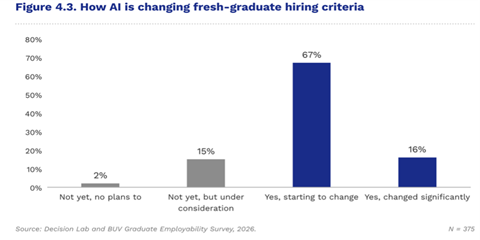
AI BEGINNING TO RESHAPE RECRUITMENT CRITERIA
Digital literacy is the only capability area in which fresh graduates meet employers’ expectations, according to a new report. Yet, it is also the standard rising fastest, as businesses increasingly expect new hires to use AI effectively in the workplace. Some 83 per cent of employers say AI has changed, or is beginning to change, their hiring criteria, while 94 per cent report higher expectations for digital and AI capabilities than they had two to three years ago.

INFRASTRUCTURE / CONSTRUCTION / LOGISTIC / PORT
ĐÀ NẴNG GREEN-LIGHTS US$105 MILLION THAI DEVELOPMENT DEAL
The central city has approved an investment proposal by Thailand’s WHA Group to develop infrastructure for the 400ha WHA Đà Nẵng Industrial Park project on two communes of Thăng Bình and Đồng Dương, with an investment of more than VNĐ2.7 trillion (US$105 million). The city said it approved WHA Industrial Development International's status as an investor in the project, which is expected to take place between 2027 and 2034.

VIETNAM ECONOMY INVESTMENT
MOBILE PHONE EXPORTS RISE 20% TO $51.8 BILLION IN FIRST NINE MONTHS
Exports of mobile phones and components rose 20 per cent year-on-year to nearly US$51.8 billion in the first nine months of 2026, with China, the US and Republic of Korea accounting for more than half of the total. Shipments to the three markets reached a combined $26.18 billion, or 50.6 per cent of total exports of the product group during the period, according to data from the Vietnam Department of Customs under the Ministry of Finance.

VIETNAM ECONOMY INVESTMENT
FRUIT AND VEGETABLE EXPORTS POISED TO HIT $10 BILLION IN 2026
Fruit and vegetable exports are on track to reach nearly US$10 billion in 2026, after rising 19.9 per cent year on year to nearly US$7.4 billion in the first nine months, driven by strong seasonal demand and abundant tropical fruit supplies. The Ministry of Agriculture and Environment said the growth reflected stronger international demand for fresh produce and processed agricultural products.
GARMENT / TEXTILE
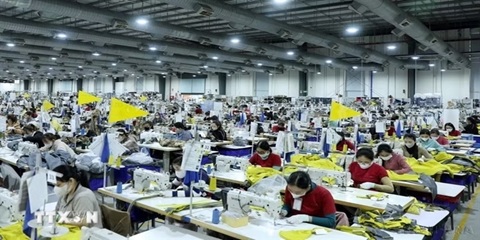
TEXTILE EXPORTS FACE DUAL CHALLENGES OF SUSTAINING ORDERS AND BOOSTING EFFICIENCY AMID GROWING COMPETITION
Data shows that the textile and garment sector maintained its growth momentum in the first nine months of this year. The industry's total export turnover reached an estimated US$35.721 billion in the first nine months of this year, up 3.3 per cent year-on-year. Despite posting encouraging export figures, Vietnamese textile and garment enterprises continue to navigate unpredictable market variables.
Events Sponsors






















