Want to be in the loop?
subscribe to
our notification
Business News
FOOTWEAR GIANTS A STEP AHEAD IN PRODUCTION RESTART
Foreign footwear producers are maintaining their commitment to sourcing products from Vietnam as factories enjoy resumption of production following heavy delays and restrictions.
Around 200 Nike subcontractors in Vietnam have finally resumed production after the Delta variant caused temporary factory closures this summer. The sportswear giant intends to ramp up its production even further in Vietnam, according to chief sustainability officer Noel Kinder.
Nguyen Chi Trung, vice chairman of the Vietnam Leather and Footwear Association (LEFASO), said that groups like Nike continue to believe in Vietnam as one of the best places to provide quality footwear products to meet the needs of their customers. Having placed trust in Vietnam’s strategy to fight against the pandemic, according to Trung, major footwear groups are signing contracts with Vietnamese partners rather than moving orders out of the country.
Trung added that about 70-80 per cent of workers have returned to work at factories in Vietnam’s southern industrial zones in provinces such as Binh Duong, Dong Nai, and Long An. However, the lack of human resources will hinder factories from achieving full capacity. “There is also the risk of potential outbreaks as factories revive operations, and anxiety among workers about the pandemic will likely affect the quality of products,” Trung warned.
Vietnam’s footwear industry is labour-intensive, so many companies were forced to temporarily halt operations because they failed to accommodate large amounts of workers under stay-at-work models. The supply chain was disrupted for four months during social distancing measures, ultimately causing delays in product delivery and dampening buyers’ trust in Vietnamese market.
Le Quoc Thanh is general director of Feng Tay Group, which boasts five factories in Dong Nai with over 64,000 workers. After one month of resuming production in October, after all its factories were forced to close, Thanh noted that 80 per cent of workers had returned. “We don’t lack year-end orders from foreign brands but our challenge now is to recruit enough workforce to achieve 100 per cent capacity,” Thanh said.
In the same vein, a representative of Gia Dinh Footwear said that the company has reopened five factories in southern Vietnam to supply products to overseas buyers like Mango, Clarks, and Polo. The company, which employs 5,000 people, was able to produce up to half a million pairs of shoes per month for export before the pandemic emerged. However, it can only currently fulfil 70 per cent of its orders.
Meanwhile, 70 per cent of the workforce has so far returned to Pou Chen Corporation, a major Nike manufacturing partner. Pou Chen closed its factory in Ho Chi Minh City in July because of rising infections among its workers, and the company could not comply with stay-at-work methods due to the huge number of workers at its disposal.
Many factory owners have said they only expect to fully resume operations from the second half of 2022. At the moment, they are striving to fulfil a moderate number of orders for the Christmas and New Year seasons in overseas markets.
Trung from LEFASO stated that the main challenges for Vietnam’s footwear industry when reopening is to maintain orders and retain foreign buyers. “The country must keep the supply chain undisrupted in upcoming outbreaks,” he said. “If Vietnam can contain the pandemic and ensure safe living with COVID-19, foreign brands will be here to stay with Vietnam rather than moving orders to China, India, or Bangladesh.”
Trung noted that, for example, Ho Chi Minh City Department of Health announced guidance to separate F0 coronavirus cases at factories so that production activities can be continued – which reflects the efforts of the government and health ministry to avoid further supply chain disruption and offers up a positive outlook. “Indeed, we have seen positive signs for Vietnam’s footwear industry. Exports should recover by year-end thanks to rising orders. In 2022, the industry is expected to rebound strongly from the pandemic brought by a wide range of free trade agreements Vietnam has signed,” Trung added.
Source: VIR
Related News

INFRASTRUCTURE / CONSTRUCTION / LOGISTIC / PORT
VIỆT NAM-CAMBODIA TRADE GATHERS PACE TOWARDS $20 BILLION TARGET
Trade between Việt Nam and Cambodia continues to grow, remaining a bright spot and a key pillar of bilateral cooperation as the two countries aim to raise two-way trade to US$20 billion in the coming years. After setting a record of more than $11.3 billion last year, bilateral trade reached about $8.7 billion in the first eight months of this year, up 8.3 per cent year on year.
TECHNOLOGY
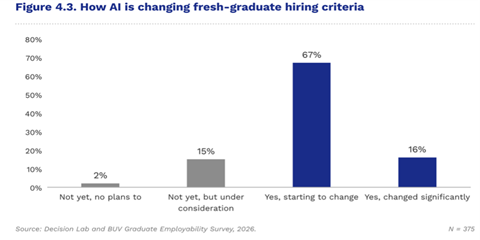
AI BEGINNING TO RESHAPE RECRUITMENT CRITERIA
Digital literacy is the only capability area in which fresh graduates meet employers’ expectations, according to a new report. Yet, it is also the standard rising fastest, as businesses increasingly expect new hires to use AI effectively in the workplace. Some 83 per cent of employers say AI has changed, or is beginning to change, their hiring criteria, while 94 per cent report higher expectations for digital and AI capabilities than they had two to three years ago.

INFRASTRUCTURE / CONSTRUCTION / LOGISTIC / PORT
ĐÀ NẴNG GREEN-LIGHTS US$105 MILLION THAI DEVELOPMENT DEAL
The central city has approved an investment proposal by Thailand’s WHA Group to develop infrastructure for the 400ha WHA Đà Nẵng Industrial Park project on two communes of Thăng Bình and Đồng Dương, with an investment of more than VNĐ2.7 trillion (US$105 million). The city said it approved WHA Industrial Development International's status as an investor in the project, which is expected to take place between 2027 and 2034.

VIETNAM ECONOMY INVESTMENT
MOBILE PHONE EXPORTS RISE 20% TO $51.8 BILLION IN FIRST NINE MONTHS
Exports of mobile phones and components rose 20 per cent year-on-year to nearly US$51.8 billion in the first nine months of 2026, with China, the US and Republic of Korea accounting for more than half of the total. Shipments to the three markets reached a combined $26.18 billion, or 50.6 per cent of total exports of the product group during the period, according to data from the Vietnam Department of Customs under the Ministry of Finance.

VIETNAM ECONOMY INVESTMENT
FRUIT AND VEGETABLE EXPORTS POISED TO HIT $10 BILLION IN 2026
Fruit and vegetable exports are on track to reach nearly US$10 billion in 2026, after rising 19.9 per cent year on year to nearly US$7.4 billion in the first nine months, driven by strong seasonal demand and abundant tropical fruit supplies. The Ministry of Agriculture and Environment said the growth reflected stronger international demand for fresh produce and processed agricultural products.
GARMENT / TEXTILE
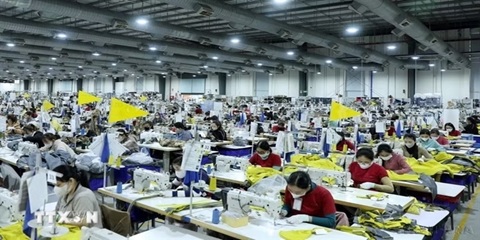
TEXTILE EXPORTS FACE DUAL CHALLENGES OF SUSTAINING ORDERS AND BOOSTING EFFICIENCY AMID GROWING COMPETITION
Data shows that the textile and garment sector maintained its growth momentum in the first nine months of this year. The industry's total export turnover reached an estimated US$35.721 billion in the first nine months of this year, up 3.3 per cent year-on-year. Despite posting encouraging export figures, Vietnamese textile and garment enterprises continue to navigate unpredictable market variables.
Events Sponsors






















