Want to be in the loop?
subscribe to
our notification
Business News
FOREIGN CAPITAL FLOWS INTO REAL ESTATE
In the first quarter of 2017, foreign direct investment (FDI) flows kept moving strongly into the real estate market, showing the rising heat and appeal of the Vietnamese property sector. According to Professor Dang Hung Vo, to avoid being sent to a disadvantage in the current context and trend, real estate investors must raise their professional capacity and management capacity, and grasp customer psychology and tastes.
US$7.7 billion of FDI in Q1, 2017
According to Jones Lang Lasalle (JLL) Vietnam, a research firm, FDI into Vietnam in the first quarter of 2017 reached US$7.7 billion, a jump of 77.6 per cent compared with the same period in 2016. The disbursed capital stood at US$3.62 billion, an increase of 3.4 per cent year on year. To date, there has been around US$2.9 billion from 493 newly registered projects and US$3.9 billion from 223 added FDI projects.
Among 71 countries and territories investing in Vietnam, South Korea retained its ranking as the largest foreign investor in Vietnam, with US$3.75 billion in newly registered capital, accounting for 48.6 per cent of the total, followed by Singapore with US$910.9 million. By industry, foreign investments mostly poured into the manufacturing and processing sectors with US$6.5 billion, and real estate with US$344 million, accounting for 84.9 per cent and 4.5 per cent of total FDI, respectively.
Professor Dang Hung Vo said FDI flows into the real estate sector are a good signal and a good way to go. The advent of more foreign investors will not necessarily cause domestic enterprises to slide into a disadvantage. It is actually an opportunity for domestic property firms to become more mature and gain experience and advanced technology from the world.
“For big corporations in the world, they usually have very strong capacity and potential when investing overseas. Thus, they only meet product quality requirements but also make their products even cheaper. This is indeed good to the State and people. To avoid being left behind in such a fierce competitive environment, property investors must raise their professional capacity and management capacity, and grasp customer psychology and tastes,” he said.
Necessarily strengthening policy framework
Mr Dang Van Quang, Director of Assets and Property Management at JLL Vietnam, said, in current industrial zones, despite the fact that the land fund is still quite large, many shortcomings remain unresolved, for example, infrastructure and supporting industries are poorly developed, administrative procedures drag on investment, while the property market lacks transparency, in addition to rampant corruption. Another impediment to FDI inflows in the past year was the failure of the Trans-Pacific Partnership (TPP).
Quang added that, in 2016, industrial property lost a big investor with US$1 billion of investment capital, that is, the US-based Apple Inc. Earlier, Apple had surveyed and planned to build a factory in Vietnam, but it could not agree with the incentive mechanism and some other causes. So, they moved the plant to India. Although Apple's US$1 billion is not as big as Samsung’s investment value, it is also a big regret for industrial real estate.
However, the real estate market in general and the industrial property in particular is still potentially attractive to foreign investors, with cheap labour, cheap land and cheap construction costs. In addition, it has the advantage of young population and high level of culture, notwithstanding low skills and workmanship. In the past time, the Government has also made pro-business policies which work effectively in practice. Political and economic stability also assure investors.
Remarkably, big foreign investors tend to move their facilities out of China due to various reasons. This will also be an opportunity for Vietnam and other countries in the region. However, the new destination of FDI flows out of China depends on many factors.
Source: VNS
Related News

INFRASTRUCTURE / CONSTRUCTION / LOGISTIC / PORT
VIỆT NAM-CAMBODIA TRADE GATHERS PACE TOWARDS $20 BILLION TARGET
Trade between Việt Nam and Cambodia continues to grow, remaining a bright spot and a key pillar of bilateral cooperation as the two countries aim to raise two-way trade to US$20 billion in the coming years. After setting a record of more than $11.3 billion last year, bilateral trade reached about $8.7 billion in the first eight months of this year, up 8.3 per cent year on year.
TECHNOLOGY
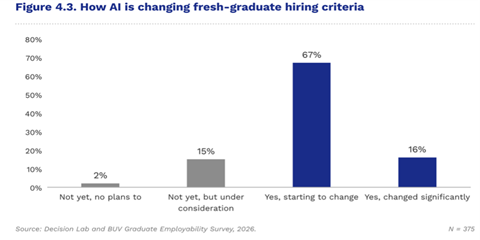
AI BEGINNING TO RESHAPE RECRUITMENT CRITERIA
Digital literacy is the only capability area in which fresh graduates meet employers’ expectations, according to a new report. Yet, it is also the standard rising fastest, as businesses increasingly expect new hires to use AI effectively in the workplace. Some 83 per cent of employers say AI has changed, or is beginning to change, their hiring criteria, while 94 per cent report higher expectations for digital and AI capabilities than they had two to three years ago.

INFRASTRUCTURE / CONSTRUCTION / LOGISTIC / PORT
ĐÀ NẴNG GREEN-LIGHTS US$105 MILLION THAI DEVELOPMENT DEAL
The central city has approved an investment proposal by Thailand’s WHA Group to develop infrastructure for the 400ha WHA Đà Nẵng Industrial Park project on two communes of Thăng Bình and Đồng Dương, with an investment of more than VNĐ2.7 trillion (US$105 million). The city said it approved WHA Industrial Development International's status as an investor in the project, which is expected to take place between 2027 and 2034.

VIETNAM ECONOMY INVESTMENT
MOBILE PHONE EXPORTS RISE 20% TO $51.8 BILLION IN FIRST NINE MONTHS
Exports of mobile phones and components rose 20 per cent year-on-year to nearly US$51.8 billion in the first nine months of 2026, with China, the US and Republic of Korea accounting for more than half of the total. Shipments to the three markets reached a combined $26.18 billion, or 50.6 per cent of total exports of the product group during the period, according to data from the Vietnam Department of Customs under the Ministry of Finance.

VIETNAM ECONOMY INVESTMENT
FRUIT AND VEGETABLE EXPORTS POISED TO HIT $10 BILLION IN 2026
Fruit and vegetable exports are on track to reach nearly US$10 billion in 2026, after rising 19.9 per cent year on year to nearly US$7.4 billion in the first nine months, driven by strong seasonal demand and abundant tropical fruit supplies. The Ministry of Agriculture and Environment said the growth reflected stronger international demand for fresh produce and processed agricultural products.
GARMENT / TEXTILE
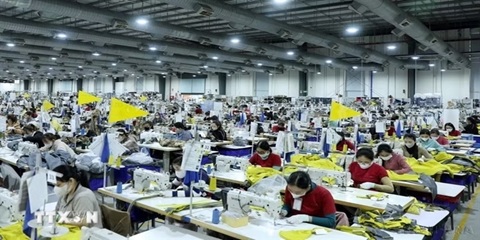
TEXTILE EXPORTS FACE DUAL CHALLENGES OF SUSTAINING ORDERS AND BOOSTING EFFICIENCY AMID GROWING COMPETITION
Data shows that the textile and garment sector maintained its growth momentum in the first nine months of this year. The industry's total export turnover reached an estimated US$35.721 billion in the first nine months of this year, up 3.3 per cent year-on-year. Despite posting encouraging export figures, Vietnamese textile and garment enterprises continue to navigate unpredictable market variables.
Events Sponsors






















