Want to be in the loop?
subscribe to
our notification
Business News
FOREIGN INVESTMENT ROOM DELIVERS MIXED PICTURE AT BANKS
While the foreign ownership limit at several top-tier banks has almost reached its cap with a desire for further expansion, other banks have significant room for international investment.
Among the 27 listed commercial banks, 14 have foreign ownership rates exceeding 15 per cent of their charter capital.
Many banks have already maxed out or are close to maxing out their foreign investment room, including ACB, TPBank, ABBank, MBBank, Techcombank, VIB, and VPBank.
In contrast to banks that have reached the maximum foreign ownership cap of 30 per cent, some have opted to reserve capacity for future capital raising.
For instance, in early July, VIB locked its foreign room at 4.99 per cent. Previously, the bank capped foreign ownership at 20.5 per cent, which was consistently fully utilised.
Southern lender OCB also locked its foreign room at 22 per cent. In mid-2021, OCB sold 15 per cent of its shares to its Japanese partner, Aozora Bank.
Meanwhile, HDBank unveiled that it has reserved about 10 per cent of its foreign room for potential capital-raising initiatives, including selling shares to strategic investors amid favourable market conditions and when suitable partners are found.
At present, the Ho Chi Minh City-based lender has garnered interest from diverse potential partners in South Korea, Europe, and the US.
Selecting suitable partners for capital issuance and attracting strategic shareholders aligns with the bank’s objective of enhancing its financial capacity to support growth, ensuring capital safety, and maintaining liquidity targets.
In contrast to top-tier banks, many other banks have very low foreign investor ownership rates or even fully available foreign room. These include NCB, Eximbank, SHB, LienVietPostBank, SeABank, VietCapital Bank, Nam A Bank, and SaigonBank.
For Eximbank, after strategic shareholder Sumitomo Mitsui Banking Corporation (SMBC) fully divested its stake, foreign ownership in the bank dropped to less than 10 per cent of its charter capital. Eximbank currently has no plans to sell additional shares to foreign investors.
Nam A Bank is in the process of negotiating with foreign partners to find suitable investors. The bank plans to utilise its foreign room cap of up to 20 per cent to attract additional capital.
Whether banks have reached their maximum foreign caps or still have room, most hope for an increase in the foreign ownership limit to create more space for future capital-raising initiatives, potentially through sales to foreign shareholders.
According to a draft amendment to the law on foreign investors purchasing shares in Vietnamese credit institutions, foreign room for banks involved in mandatory transfers of weak credit institutions may be raised to 49 per cent, instead of the current 30 per cent.
If approved, this would mean that banks participating in restructuring weak credit institutions, including Vietcombank, MBBank, HDBank, and VPBank, may see their foreign ownership limits increased to 49 per cent of their charter capital.
The amendment, however, requires the state to hold at least 65 per cent of the total voting shares in state-owned commercial banks during the 2021-2025 period.
Additionally, under the Vietnam-EU Free Trade Agreement, Vietnam is committed to considering allowing two European credit institutions to own up to 49 per cent of the charter capital in two local banks within five years from the agreement's enforcement on August 1, 2020.
This agreement does not apply to state-owned banks, including BIDV, VietinBank, Vietcombank, and Agribank.
Nguyen Quoc Hung, secretary general of Vietnam Banks Association, stated that increasing the foreign ownership limit at Vietnamese banks would lure in foreign capital, help banks enhance their capital base, improve financial and competitive capacity, accelerate bad debt resolution, and drive socioeconomic development.
Analysts believe that foreign investment in Vietnamese banks is beneficial for the domestic banking sector.
The involvement of foreign investors has brought positive changes in finance, technology, management, and governance, aligning Vietnamese credit institutions more closely with international practices and standards.
Raising the foreign ownership limit in banks may prove necessary. Although the financial health of the local banking system has improved, the system remains undercapitalised overall, with a capital adequacy ratio significantly lower than the regional average.
Source: VIR
Related News

CHARITY / EXHIBITION / OTHER EVENTS
INVESTMENT OPPORTUNITIES IN CA MAU PROVINCE: 96 PROJECTS AND 20 STRATEGIC PROJECTS
We are pleased to share with you information on investment projects currently seeking investors in Ca Mau Province. Should your esteemed company or association be interested, we kindly invite you to review the project information and complete the registration form via the links provided. The Ho Chi Minh City Investment and Trade Promotion Centre (ITPC) will consolidate the expressions of interest and facilitate connections with the leadership of Ca Mau Province at a meeting tentatively scheduled for 13 November 2026 in Ho Chi Minh City.
MEMBER CORNER / PROMOTIONS
BẰNG KIỀU LIVESHOW - A SYMPHONY OF LOVE UNDER THE GOLDEN GLOW
A masterclass in live music that takes the audience on a soulful journey through immortal love songs, guided by the peerless artistry and emotive storytelling of renowned singer Bằng Kiều. The highlight of the night is his seamless musical chemistry with special guest Triệu Hồng Ngọc, promising passionate and deeply resonant duets inside the magnificent Grand Ballroom.
INFRASTRUCTURE / CONSTRUCTION / LOGISTIC / PORT
ĐÀ NẴNG GREEN-LIGHTS US$105 MILLION THAI DEVELOPMENT DEAL
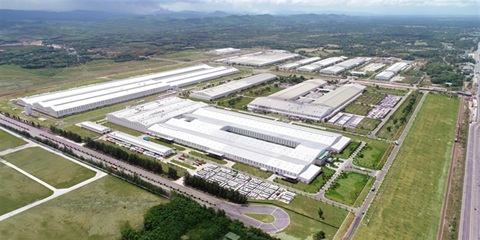
The central city has approved an investment proposal by Thailand’s WHA Group to develop infrastructure for the 400ha WHA Đà Nẵng Industrial Park project on two communes of Thăng Bình and Đồng Dương, with an investment of more than VNĐ2.7 trillion (US$105 million). The city said it approved WHA Industrial Development International's status as an investor in the project, which is expected to take place between 2027 and 2034.
VIETNAM ECONOMY INVESTMENT
MOBILE PHONE EXPORTS RISE 20% TO $51.8 BILLION IN FIRST NINE MONTHS
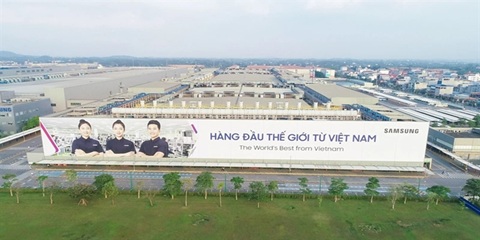
Exports of mobile phones and components rose 20 per cent year-on-year to nearly US$51.8 billion in the first nine months of 2026, with China, the US and Republic of Korea accounting for more than half of the total. Shipments to the three markets reached a combined $26.18 billion, or 50.6 per cent of total exports of the product group during the period, according to data from the Vietnam Department of Customs under the Ministry of Finance.
INFRASTRUCTURE / CONSTRUCTION / LOGISTIC / PORT
VIỆT NAM-CAMBODIA TRADE GATHERS PACE TOWARDS $20 BILLION TARGET
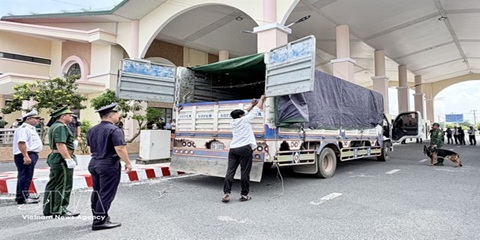
Trade between Việt Nam and Cambodia continues to grow, remaining a bright spot and a key pillar of bilateral cooperation as the two countries aim to raise two-way trade to US$20 billion in the coming years. After setting a record of more than $11.3 billion last year, bilateral trade reached about $8.7 billion in the first eight months of this year, up 8.3 per cent year on year.
VIETNAM ECONOMY INVESTMENT
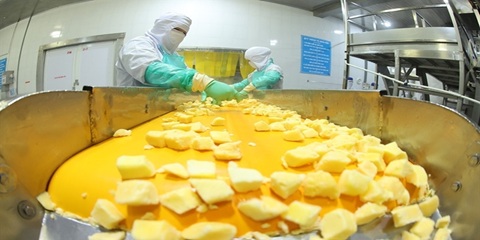
FRUIT AND VEGETABLE EXPORTS POISED TO HIT $10 BILLION IN 2026
Fruit and vegetable exports are on track to reach nearly US$10 billion in 2026, after rising 19.9 per cent year on year to nearly US$7.4 billion in the first nine months, driven by strong seasonal demand and abundant tropical fruit supplies. The Ministry of Agriculture and Environment said the growth reflected stronger international demand for fresh produce and processed agricultural products.
Events Sponsors






















