Want to be in the loop?
subscribe to
our notification
Business News
FOREIGN INVESTORS KEEN ON LNG INFRASTRUCTURE IN VIET NAM
Many foreign investors, particularly from the US, have expressed interest in investment opportunities in Việt Nam’s liquefied natural gas (LNG) infrastructure market to meet the country's energy needs.
New movement
According to a Reuters report in late August, the Cái Mép LNG Terminal is currently seeking cargo to begin commissioning tests, putting it on track to become the country’s second terminal in Việt Nam to come into operation.
CEO of AG&P LNG Karthik Sathyamoorthy said his firm had received an import licence, it was working hard to accelerate the commissioning process, targeting completion within the next three months.
The company planned to finalise the commissioning cargo in October for delivery between late October and mid-November, he told baodautu.vn.
Earlier in March, the company - a subsidiary of Nebula Energy - acquired a 49 per cent stake in Cái Mép LNG Terminal located in Bà Rịa- Vũng Tàu Province. Fully constructed, the Cái Mép LNG Terminal was developed by Hải Linh Company Limited, a prominent petroleum product import terminal and trader in Việt Nam.
Meanwhile, US-based LNG company Excelerate Energy has signed a memorandum of understanding with Việt Nam's ITECO JSC to co-develop a greenfield LNG import terminal in the northern port city of Hải Phòng.
As one of the fastest-growing economies in Asia, Việt Nam remained an attractive emerging market for foreign investors, said Ramon Wangdi, Vice President for Asia Pacific for the gas distribution company Excelerate Energy.
This growth was driven by a rapid increase in energy demand, where LNG would play a key role over the coming decades. As Việt Nam transitioned from carbon-intensive fuels such as coal and oil, to renewables like solar and hydropower, LNG would be crucial in helping Việt Nam achieve net zero by 2050, the vice president told the online newspaper.
He added that as a global company, Excelerate was exploring investment opportunities in related infrastructure across Việt Nam and the Asia Pacific to support this shift in energy strategy.
According to Ramon, Việt Nam had set a goal of expanding its LNG-based power initiative from virtually zero to over 20 GW by 2045. This ambition would position the nation as a key player in the global LNG industry.
Due to Việt Nam’s unique geography, with a long coastline and onshore terrain, the development of a nationwide gas pipeline system and infrastructure for receiving, processing, and distributing LNG would need to be built nationwide. This would connect import terminals to a range of end users, from power generation to industrial and commercial sectors.
Such investments needed to be reliable, cost-effective and quickly deployable, he said, adding that other leading companies would have opportunities to invest in this emerging industry, spanning the entire gas and LNG value chain.
For example, the Sơn Mỹ LNG Terminal - a joint venture between AES Group and PetroVietnam Gas (PV Gas)- has received in-principle approval from the Bình Thuận People's Committee. The project is slated for completion in 2027.
Promising sector
Baodautu.vn cited Adam Sitkoff, executive director of the American Chamber of Commerce in Hà Nội as saying that US businesses were excited about opportunities in Việt Nam, especially in the LNG infrastructure.
However, to turn this interest into real investments, Việt Nam needed to demonstrate to international investors that large-scale infrastructure could be deployed under international banking standards.
It was crucial that LNG terminals and all buyers had to commit to progress along the same development timeline to unlock international funding, he said.
Under Power Plan VIII, 13 LNG power plants have been approved in Việt Nam with a total capacity of 24 GW. Of them, two plants, Nhơn Trạch III & IV and Hiệp Phước, are under construction, while the remaining 11 plants are still in the planning stage, of which three plants are still looking for potential sponsors.
According to FiinGroup, an integrated service provider of financial data, business information, and industry research, LNG would be a promising industry in Việt Nam.
Anh Nguyễn from FiinGroup said experienced foreign investors were showing great interest in the Vietnamese LNG market. She said that foreign giants such as ExxonMobil, Siemens Energy, General Electric and Millennium Energy were eager to implement projects in this sector. Their proven track records in LNG development and robust financial capabilities would position them well to make significant contributions to power plants in the country.
Despite the bright outlook, Việt Nam’s LNG industry still faces significant challenges in the short term. As it is a conditional business requiring numerous licences and certifications, the lengthy approval process often slows down project progress and complicates investment, baodautu.vn reported.
Many domestic investors found it difficult to secure funding and develop financing programmes due to the lack of clear guidance on production guarantees.
Source: VNS
Related News

MEMBER CORNER / PROMOTIONS
HCMC | CERTIFIED SUSTAINABILITY PROFESSIONAL (CSP) TRAINING | REGISTRATION OPEN
As sustainability becomes deeply embedded in corporate strategy and supply-chain operations across Vietnam, Hong Kong Business Association Vietnam is pleased to endorse the upcoming Certified Sustainability Professional (CSP) training program by the Asia Institute for Sustainability (AIS) - a premier internationally recognized ESG credential in Vietnam.
VIETNAM ECONOMY INVESTMENT
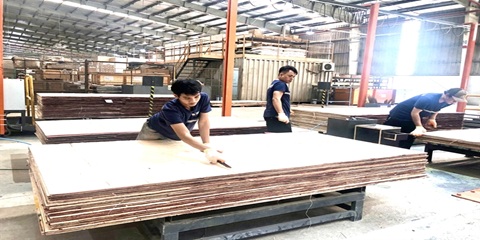
HCM CITY SAYS HOW IT PLANS TO ACHIEVE 10-11% ANNUAL EXPORT GROWTH FOR REST OF DECADE
The southern economic hub aims to strengthen its role as the country’s largest import-export centre while developing into a regional transhipment centre in Southeast Asia, supported by green and digital transformation and a circular economy. HCM City has outlined measures to expand production capacity, cut logistics costs, diversify export markets, and help businesses meet increasingly stringent international standards as it targets average annual export growth of 10-11 per cent through 2030.
VIETNAM ECONOMY INVESTMENT
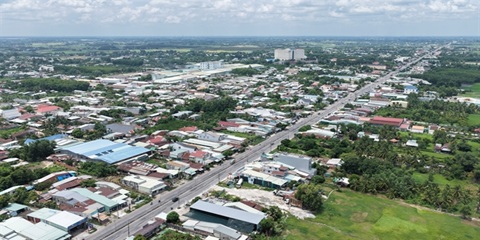
HCM CITY LEADS ECONOMIC RESTRUCTURING IN SOUTHEAST REGION
According to Associate Professor, Dr Vũ Tuấn Hưng, director of the Institute of Social Sciences of the Southern Region, the Southeast is a strategically important socio-economic space in Việt Nam’s development given its advantages in location, industry, trade, services, logistics, science and technology, urbanisation and human resources.
TECHNOLOGY
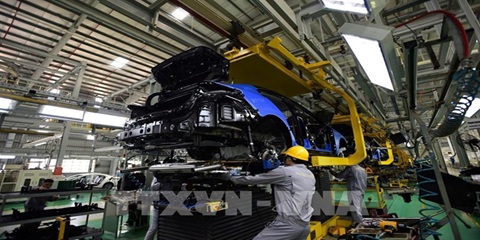
DIGITAL TRANSFORMATION TURNED INTO PRACTICAL TOOLS FOR PEOPLE, BUSINESSES
Việt Nam is moving its digital transformation agenda beyond policy frameworks and individual technology platforms towards practical applications that address everyday needs, as authorities seek measurable outcomes from science, technology and innovation. Under Politburo Resolution No. 57-NQ/TW issued on December 22, 2024, the implementation is increasingly shifting from simply completing assigned tasks towards developing concrete products and services for citizens and businesses.
TECHNOLOGY
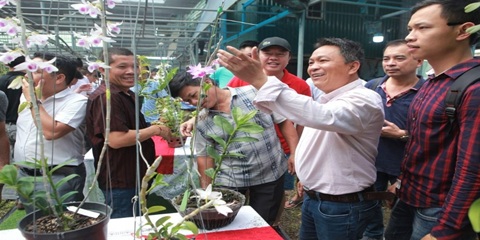
APPLYING TECHNOLOGY FOR ECONOMIC TRANSFORMATION
Having completed its new rural development program, Hanoi is shifting its focus toward improving development quality and building smart, sustainable rural areas. The transformation of Dong La orchid-growing village in An Khanh, a western commune of Hanoi, shows how digital technology is becoming a driver of production, market expansion, and higher incomes for local residents.
MEMBER CORNER / PROMOTIONS
VIGLACERA HONORED AS THE "LEADING GREEN INDUSTRIAL REAL ESTATE DEVELOPER 2026"
Organized by the Vietnam Investment Review, this prestigious awards program recognizes industry pioneers advancing eco-industrial parks, clean energy transition, and rigorous ESG standards. Outperforming competitors through a rigorous evaluation, Viglacera Corporation – JSC proudly ranked among the Top 5 highest-positioned enterprises in the Leading Green Industrial Real Estate Developers 2026 category, reinforcing its premier position in Vietnam’s industrial real estate sector.
Events Sponsors






















