Want to be in the loop?
subscribe to
our notification
Business News
FOREIGN INVESTORS SEEKING A SYNCHRONISED MANUFACTURING ECOSYSTEM
Instead of focusing only on land costs and incentives as usual, foreign investors are seeking a synchronised manufacturing ecosystem, from stable power supply and logistics to shared infrastructure and the convenience of completing residence procedures for experts to serve their long-term investment in the country.
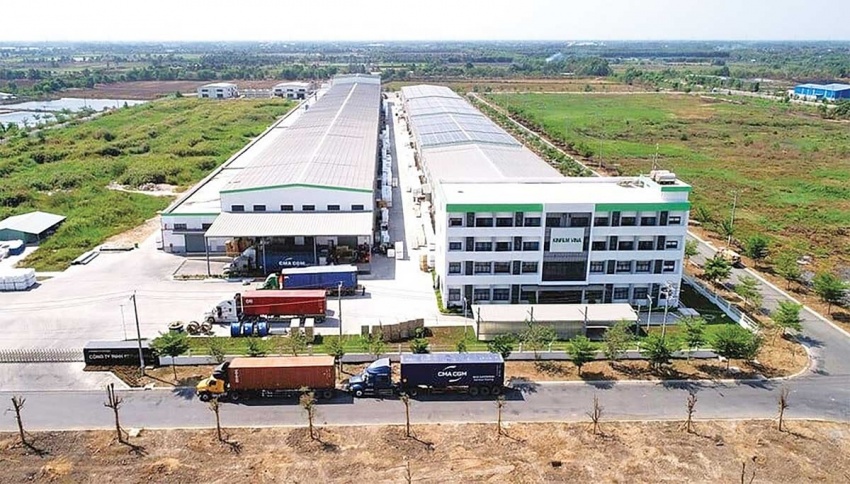
Foreign investors are seeking a synchronised manufacturing ecosystem. Photo: Le Toan
Electronic Tripod Vietnam Co., Ltd. (TVC) proposes several infrastructure recommendations in the industrial park (IP) to ensure smooth factory operation and provide the company with confidence in its long-term investment plans.
“The first demand is a stable power supply. Because the South has frequent thunderstorms, TVC nvested in underground power cables to minimise the risk of lightning strikes on power lines. However, if thunderstorms affect the substation at the power source, the automatic protection system can still trip, causing short-term power outages. Meanwhile, for high-tech component manufacturing, instantaneous power interruptions can also cause equipment to automatically shut down, resulting in product losses and time-consuming restoration," said Lu Cheng Ming, general director of TVC at a seminar organised in Ho Chi Minh City on September 28.
"Therefore, the company hopes that the power company and the IP developer will review the lightning protection system of the substation and the protection equipment at the power source to improve the quality of power supply in a coordinated manner,” he said.
TVC is a company specialising in the production of printed circuit boards – the platform connecting chips and components in AI servers, data centres, electric vehicles, and telecommunications equipment. This group is operating factories in Chau Duc IP in Ho Chi Minh City with a total investment of approximately $450 million in two phases, employing 3,600 workers.
Besides existing businesses, foreign investors, when visiting IPs to explore opportunities, also consider many priority factors, not simply land issues.
“Along with land hiring cost and infrastructure, foreign investors are also interested in the province's investment environment, logistics connectivity (which greatly affects operating costs), and accompanying services such as electricity supply (especially green energy) and wastewater treatment systems that meet green standards. In addition, they pay close attention to living conditions for workers and experts, such as dormitories and housing near IPs so that workers can settle down and work effectively,” Nguyen Ngoc Lan, general director of Song Lo 2 Industrial Park in the northern province of Phu Tho, told VIR. “Another crucial factor is the support services and partnership of infrastructure investors. Many large-scale foreign-invested enterprises lack experience in legal procedures; IP developers’ support will help shorten the time for factory construction and operation.”
The demand for an industrial ecosystem is not just a subjective opinion of investors, but also one of the guiding principles and tasks set out in Resolution No.10-NQ/TW in June on developing the foreign-invested economic sector.
Resolution 10 states the need for the synchronised and unified development of the foreign investment ecosystem, linked to the development strategy of domestic enterprises, the development of capital markets, international financial centres, free trade zones, economic zones, high-tech IPs, innovation centres, logistics infrastructure, data, and energy; encouraging foreign investors to establish regional headquarters and regional operational, research, design, and service centres.
Changes in the criteria to select IPs directly impact how IP developers implement their products. Nguyen Van Lang, a member of the board of directors and general director of Becamex Binh Dinh JSC, said, “Factory products in the next phase will also be more flexible to meet the specific requirements of technology, deep processing, and green manufacturing industries.”
“The competitiveness of an IP in the new phase depends on the quality, stability, and scalability of its production infrastructure. At Becamex VSIP Binh Dinh, the electricity, water supply and drainage, wastewater treatment, telecommunications, and digital infrastructure systems are continuously being improved. Water supply capacity is planned at approximately 45,900 cubic metres per day and night, along with a wastewater treatment system and solutions for renewable energy, energy management, and centralised operational monitoring.”
Thanh Thanh Cong Industrial Real Estate Corporation also allocate about 5-10 per cent of its land area in IPs for developing warehousing and logistics.
Nguyen Thanh Chuong, general director of Thanh Thanh Cong Industrial Real Estate Corporation, said, “Integrating logistics directly into the ecosystem both adds convenience for tenants and creates space for small-scale businesses to participate, while simultaneously reducing transportation costs. According to the company's assessment, the integrated model can help businesses within the ecosystem reduce logistics costs by about 20-30 per cent.”
“Infrastructure requirements are raised as green standards increasingly directly impact the ability to participate in the supply chain. Global tariff regulations and carbon standards are becoming new variables that IP developers and foreign-invested enterprises must consider. Corporations investing in semiconductors, data centres, or renewable energy will prioritise industrial hubs with good ecological environments, meeting green and ESG criteria because these conditions are directly linked to the ability to export goods to markets such as Europe or America,” he said.
Source: VIR
Related News
GARMENT / TEXTILE
TEXTILE, GARMENT FIRMS REFORM TO MEET CPTPP ORIGIN RULES
Vietnamese textile and garment manufacturers are aggressively restructuring their supply chains and diversifying material sources to unlock untapped tariff benefits. To capitalise on the Comprehensive and Progressive Agreement for Trans-Pacific Partnership (CPTPP), companies are racing to align with the pact's strict "yarn-forward" rules — a task made difficult by a shortage of raw materials within the trade bloc.

MEMBER CORNER / PROMOTIONS
COSMOPARK ECO INDUSTRIAL ZONE – LONG-TERM ADVANTAGES FOR INDUSTRIAL INVESTORS IN VIETNAM
Spanning 322.3 hectares, with a project operational term extending to 2095 and plans for large-scale power infrastructure, COSMOPARK Eco Industrial Zone offers a strong foundation for manufacturing, high-tech industries, and international supply chain development. As global supply chains continue to evolve, Vietnam is strengthening its position as a strategic destination for international businesses seeking to diversify their manufacturing operations.
INFRASTRUCTURE / CONSTRUCTION / LOGISTIC / PORT
HCM CITY ACCELERATES POWER INFRASTRUCTURE INVESTMENT TO ATTRACT HIGH-TECH CAPITAL
High-tech projects, particularly data centres, are not confined to SHTP but are also expanding into export processing zones and industrial parks across HCM City, driving up electricity demand. Proactively developing power infrastructure, diversifying energy supplies and expanding access to green energy are becoming essential for HCM City to maintain its competitive edge in attracting high-tech foreign direct investment (FDI).
VIETNAM ECONOMY INVESTMENT
VIETNAMESE COMPANIES OPTIMISTIC ON INTERNATIONAL GROWTH
Vietnamese businesses are among the most confident about the outlook for international trade, according to HSBC’s Global Trade Pulse Survey 2026, released on November 16. The survey captures the views of 10,000 senior business leaders across 26 markets on trade, tariffs, supply chains, and technology. Findings show that 94 per cent of Vietnamese businesses expect their international trade to grow over the next two years. Vietnam ranks joint top in the survey with the Philippines, compared with 86 per cent globally.
TECHNOLOGY
ĐÀ NẴNG SEEKS TO BUILD HIGH-TECH AGRICULTURE, INTEGRATED VALUE CHAINS
Đà Nẵng is seeking to transform its agricultural sector from a supplier of raw materials into a technology-driven, market-oriented economy, with investment opportunities spanning concentrated production areas, deep processing, logistics and agricultural product distribution. The city aims to shift from traditional agricultural production towards agricultural economic development, organising value chains and increasing the technological content and added value of products through closer links between production and processing.
TECHNOLOGY
VIỆT NAM'S DIGITAL TECHNOLOGY INDUSTRY REVENUE SURGES 53% TO $254.6B
Việt Nam's digital technology industry generated an estimated US$254.6 billion in revenue in the first 10 months of 2026, up 53 per cent from a year earlier, while exports rose 46.2 per cent to $212 billion, the Ministry of Science and Technology said in its latest report. According to the report, hardware and electronics exports reached an estimated $30.681 billion in October, up 108 per cent from the same month last year.
Events Sponsors






















