Want to be in the loop?
subscribe to
our notification
Business News
FREE TRADE COMPLEXITIES IN VIETNAM: TPP AND EVFTA
The TPP alone has been forecast by the highly regarded Peterson Institute of International Economics to increase Vietnam’s GDP by 8.1 per cent over baseline by 2030, to increase exports by 30.1 per cent, and new FDI by 14.4 per cent, also over baselines by 2030.
In Vietnam, the focus has been on the TPP due to its extraordinarily comprehensive nature which sets a new “gold standard” for free trade agreements (FTAs), involving twelve countries that represent just over 39 per cent of the world’s GDP.
However, Vietnam’s negotiation of the EU-VN FTA is just as important when one considers that the EU is a customs union of 28 countries that together accounted for 25.4 per cent of the world’s output in 2014, higher than the US’ 22.5 per cent and well in excess of China’s 13.4 per cent, according to IMF data for 2014.
This means that goods produced in Vietnam that satisfy the complex Rules of Origin (ROO) and certification of origin documentation requirements contained in these new FTAs will be eligible for preferential tariff benefits in 40 countries, representing approximately 65 per cent or more of the global GDP. As a result, investment in Vietnam presents a once-in-decades opportunity for global companies and traders. However, it also presents strategic planning challenges.
With respect to trade in goods, a new strategic planning question is posed: can one “tariff engineer” and produce or manufacture products in Vietnam in ways that will satisfy the origin eligibility requirements for both FTAs? Can goods or products be designed and produced in Vietnam so as to be both “TPP ready” and “EVFTA ready” when the agreements come into force?
Not so free trade
Free trade seems not to live up to its name, because these high quality new generation agreements require much higher standards of international compliance with (i) accurate Harmonized System (HS) tariff classifications of goods and materials, (ii) the calculation of specific regional value contents of goods and, (iii) certifications of the origin of all materials and components used to produce final products exported to FTA markets. A significant investment in time, effort, and specialist expertise is needed to understand how the 5,544 pages of the TPP and the reported 2,000 pages of the EVFTA will affect a company’s products, as well as how to accurately apply and document the individual company’s or trader’s application of the many rules and exceptions involved.
There are many provisions with respect to trade facilitation and on what practitioners call “general rules of origin,” that appear to be remarkably similar in the TPP and the EVFTA. However, many definitions, concepts, procedures, approaches to Product-Specific Rules of Origin and certification of origin, while similar, differ significantly. A note of caution for readers is that product or commodity eligibility under TPP rules will not automatically mean eligibility under the EVFTA rules and vice versa. “Tariff engineering” of goods for preferential tariff eligibility under these trade agreements will require detailed product-by-product, processing and materials analysis to determine their status under each agreement’s specific rules and exceptions.
Similarities and differences
In the case of the TPP, the qualification of a good for eligibility must be documented and the appropriate supporting records to prove eligibility must be maintained for five years from the date of certification of eligibility of goods, to pass international customs verification audits. Such verifications may occur with initial exports and resulting imports for which tariff benefits are claimed or retroactively. Great care must be exercised with such certifications because so-called “blanket” certifications of origin for identical goods can be for up to one year. These certifications cover all exports and resulting imports of identical goods in the course of a year.
In the case of the EVFTA, copies of an origin declaration or application for the issuance of a certificate of origin, and analogous supporting records must be maintained for “…at least three years from the date of the origin declaration or of the certificate of origin...” As a result, global producers and exporters to TPP countries and to the EU (or to Vietnam) should be prepared to maintain appropriate records of trade preference eligibility for a period of at least five years from the certification of origin to satisfy both the TPP and EVFTA verification requirements.
General rules of origin
Only goods that can be certified to “originate” from FTA countries will qualify for preferential tariff treatment by these FTAs, when crossing member countries’ borders. How will a good be deemed to “originate” for the purposes of these FTAs? Only goods that satisfy the rules of origin of the specific trade agreement involved are said to “originate” or qualify for its preferential tariff benefits.
In the TPP, what practitioners call “general rules of origin” (in contrast to “product-specific rules of origin”) involve goods that are “wholly obtained” in the territory of one or more TPP countries. These only involve goods that are either the agricultural, animal, sea products and mineral commodities, as well as, scrap, that are listed in Article 3.3. of Chapter 3 of the TPP, or goods produced entirely in the territory of one or more TPP countries exclusively from originating materials from TPP countries.
In the EVFTA, the analogous “general rules of origin” are contained in Article 4 of Chapter 4 (Protocol Concerning the Definition of The Concept of “Originating Products” and Methods of Administrative Cooperation). In the case of “wholly obtained” goods, the listing of goods that shall be considered to be eligible as “wholly obtained” in the EVFTA virtually duplicates the listing found in TPP’s Article 3.3 and, as a result, producers and exporters of the listed commodities should not experience undue difficulties with satisfying the requirements of both trade agreements for eligibility certification of such commodities and goods.
Product-specific rules of origin
However, the majority of manufactured goods in global trade involve intermediate goods or finished goods. The number of such goods and products produced with no non-originating materials or components is quite limited. Under the TPP, the majority of traded goods will instead either qualify for eligibility under the Product-Specific Rules of Origin, contained in Annex 3-D of Chapter 3, or, in the case of automotive goods, the additional rules contained in Appendix 1 to this Annex. In the case of textile and apparel goods, the requirements of Chapter 4 of the TPP and the Product-Specific Rules of Origin contained in Annex 4-A of Chapter 4, as well as the Appendix to the Annex that provides for certain exceptions to these for non-originating materials in a “Short Supply List of Products” involving such goods will apply.
In the EVFTA, the implementation of Product-Specific Rules of Origin significantly differs from that of the TPP. Article 5 of Chapter 4 of the EVFTA introduces the concept of “Sufficiently Worked or Processed Products,” while Article 6 of Chapter 4 lists “Insufficient Working or Processing” activities or operations concerning goods that will not confer the status of originating products, regardless of whether the requirements of Article 5 are otherwise fulfilled.
Conclusion
It is hoped that this very basic introduction to the ROO of TPP and the EVFTA has succeeded in alerting the reader to the need to begin a diligent and detailed analysis of their situation and to develop strategic planning to ensure the eligibility of their products and goods.
Global companies and traders will have to assess the impact of these agreements on their global supply chains and step up their visibility for multiple tiers of suppliers. It is best not to wait in making the necessary effort to cope with the complexities of these new FTAs.
(*) General director of Customs, Trade & Risk Management Services (Vietnam). The firm provides reliable customs and free trade agreements services, advice, and related training support to multinational firms engaged in global trade transactions. It is an active member of AmCham Vietnam and Nestor Scherbey also serves as senior advisor to the Vietnam Trade Facilitation Alliance.
Source: VIR
Related News

BANKING / FINANCE / INSURANCE / TAX
REMITTANCES TO HCM CITY RISE NEARLY 40% IN Q3
Remittances to HCM City reached more than US$2.83 billion in the third quarter of this year, up 39.5 per cent from the previous quarter and 3.6 per cent year-on-year. This was the first quarter showing positive annual growth this year, helping narrow the decline in remittance inflows over the first nine months. According to the State Bank of Vietnam (SBV)’s Regional Branch 2, remittances transferred to HCM City through credit institutions and economic organisations totalled $2.835 billion in Q3, an increase of more than $802 million from the previous quarter.

TECHNOLOGY
TECH SECTOR GROWTH OPENS UP OPPORTUNITIES FOR VIỆT NAM TO GO GLOBAL
The growth of the electronics, semiconductor and high-tech sectors worldwide is opening up a variety of opportunities for Vietnamese enterprises to integrate more deeply into the global supply chain. However, to become suppliers for these corporations, domestic enterprises must meet rigorous standards regarding quality, technology, productivity and order fulfilment capabilities.
VIETNAM ECONOMY INVESTMENT
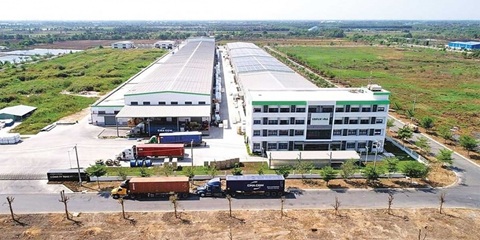
FOREIGN INVESTORS SEEKING A SYNCHRONISED MANUFACTURING ECOSYSTEM
Instead of focusing only on land costs and incentives as usual, foreign investors are seeking a synchronised manufacturing ecosystem, from stable power supply and logistics to shared infrastructure and the convenience of completing residence procedures for experts to serve their long-term investment in the country.

MEMBER CORNER / PROMOTIONS
SENTRYSAFE FHW40200 – PROTECT YOUR VALUABLES, ENJOY PEACE OF MIND!
Looking for a reliable solution to protect your important documents, cash, and valuables from fire and water damage? Genuine SENTRYSAFE - Reliable protection for your valuables and peace of mind! Contact Sen Wai Vietnam for more information and personalized product recommendations.
PROPERTY / INDUSTRIAL ZONE
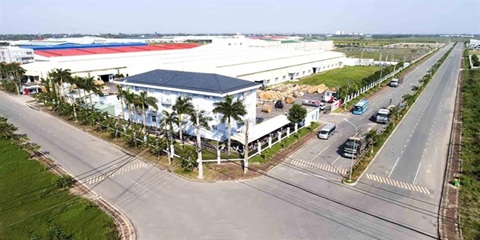
HCM CITY ATTRACTS US$5.7 BILLION INTO EXPORT PROCESSING AND INDUSTRIAL ZONES
HCM City attracted US$5.7 billion in domestic and foreign investment into its export processing and industrial zones during the first nine months of 2026. The figure exceeded the city's full-year target by 31 per cent, highlighting strong momentum in high-quality industrial investment under Resolution No.10-NQ/TW. Total investment reached 131 per cent of the 2026 target of $4.25 billion and represented a 29 per cent increase compared with the same period in 2025, according to the city's Export Processing and Industrial Zones Authority (HEPZA).
INFRASTRUCTURE / CONSTRUCTION / LOGISTIC / PORT
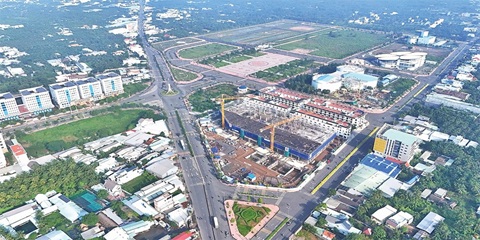
DONG THAP PROVINCE STEPS UP INDUSTRIAL EXPANSION AND INFRASTRUCTURE CONNECTIVITY
Accelerating public investment, strengthening inter-regional connectivity, and expanding industrial land are helping Dong Thap efficiently bolster competitiveness and drive economic growth. Following the 2025 merger of the former Dong Thap and Tien Giang provinces, the expanded Dong Thap province in the Mekong Delta faces mounting pressure to accelerate infrastructure development and strengthen connectivity among local economic zones, urban areas, industrial parks (IPs), and production centres.
Events Sponsors






















