Want to be in the loop?
subscribe to
our notification
Business News
FRESH POLICIES TAKE EFFECT IN APRIL
A string of new policies on trade reconciliation, energy labeling, cash collection and expenditure, financial management mechanism for Viet Nam Electricity Group (EVN) will come into effect in April.
Trade reconciliation
Since April 15, Decree No. 22/2017/ND stipulating the principles, policy, requirements, sequence and procedures for resolving disputes through trade reconciliation shall take effect.
The settlement of disputes via trade reconciliation must ensure the principle of voluntarism and equality in terms of rights and duties between parties to the disputes who participate in reconciliation activities. Information relating to the reconciliation case must be kept secret, except in the case of a written agreement between parties or other regulations of the law.
The contents of the reconciliation agreement must not violate the law, go against social norms, seek to evade obligations and infringe the rights of the third party.
A dispute could be handled via trade reconciliation if relevant parties have a reconciliation agreement. Parties can choose to resolve the dispute via trade reconciliation before, after the dispute occurrence or at any time of the dispute settlement process.
The State encourages parties to disputes to use trade reconciliation to resolve disputes in the field of trade and other disputes legally eligible for trade reconciliation, while favoring the mobilization of resources participating in trade reconciliation and increasing the capacity of trade reconcilers and trade reconciliation organizations.
Regulations on label labeling
Decision No. 04/2017/QD-TTg, dated March 9, 2017 of the PM on promulgating the list of devices and equipment subject to energy labeling and application of the minimum energy efficiency, and the road map for implementation shall come into force since April 25.
Accordingly, the decision added some devices and equipment subject to energy labeling, including LED lights, water heaters with reserve, laptops, passenger cars of more than 7 seats to 9 seats, motorcycles, mopeds (Article 1).
Compulsory energy labeling shall be conducted from 2020 for LED lights, water heaters with reserve, laptops, motorcycles, mopeds (Article 1) and from 2018 for passenger cars of more than 7 seats to 9 seats (Article 2).
Road map for application of the minimum energy efficiency to LED lights, water heaters with reserve, laptops shall be prescribed later by the Prime Minister (Clause 4 Article 3).
Cash collection and expenditure
Circular 13/2017/TT-BTC regulating the management for cash collection and expenditure through the State Treasury system came into force since April 1, 2017.
This Circular applies to all units under the State Treasury system and the units using the State budget, and transaction units.
The units using the State budget, which want to withdraw cash in excess of the regulations must be registered with the State Treasury including: From VND 200 million or more for the units using the State budget, which transact with Provincial State Treasury; from VND 100 million or more for units using the State budget, which transact with the State Treasury at district level.
If the units using the State budget when transacting with the district level State Treasury which wants to pay in cash from VND1 billion or more for each payment, they must withdraw cash at the commercial banks where the district level State Treasury opened the account.
Raise capital from domestic and foreign organizations and individuals
Under Decree 10/2017/ND-CP on a financial management mechanism for EVN, the group was permitted to raise capital from domestic and foreign organizations and individuals to fund its business plans and take responsibility for the use and repayment of loans, if any.
EVN is allowed to use State capital and other financing sources for its operations in accordance with the prevalent rules. The enterprise must use capital efficiently and inform the State and the Ministry of Finance of its capital use, losses, solvency issues and other financial matters.
The company must ensure that liabilities do not exceed its equity by over three times as mentioned in its quarterly and annual financial reports.
EVN’s capital mobilization channels include bond sales and loans from credit institutions, financial organizations, individuals, non-corporate entities and employees.
Source: VGP
Related News
BANKING / FINANCE / INSURANCE / TAX
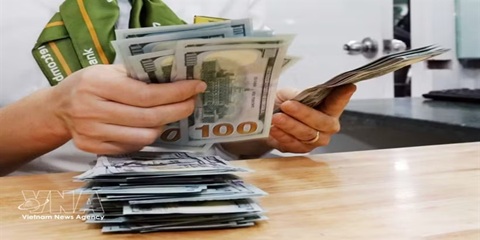
REMITTANCES TO HCM CITY RISE NEARLY 40% IN Q3
Remittances to HCM City reached more than US$2.83 billion in the third quarter of this year, up 39.5 per cent from the previous quarter and 3.6 per cent year-on-year. This was the first quarter showing positive annual growth this year, helping narrow the decline in remittance inflows over the first nine months. According to the State Bank of Vietnam (SBV)’s Regional Branch 2, remittances transferred to HCM City through credit institutions and economic organisations totalled $2.835 billion in Q3, an increase of more than $802 million from the previous quarter.

TECHNOLOGY
TECH SECTOR GROWTH OPENS UP OPPORTUNITIES FOR VIỆT NAM TO GO GLOBAL
The growth of the electronics, semiconductor and high-tech sectors worldwide is opening up a variety of opportunities for Vietnamese enterprises to integrate more deeply into the global supply chain. However, to become suppliers for these corporations, domestic enterprises must meet rigorous standards regarding quality, technology, productivity and order fulfilment capabilities.
VIETNAM ECONOMY INVESTMENT
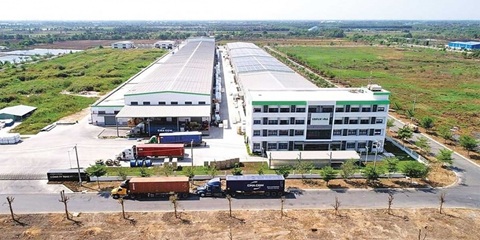
FOREIGN INVESTORS SEEKING A SYNCHRONISED MANUFACTURING ECOSYSTEM
Instead of focusing only on land costs and incentives as usual, foreign investors are seeking a synchronised manufacturing ecosystem, from stable power supply and logistics to shared infrastructure and the convenience of completing residence procedures for experts to serve their long-term investment in the country.
MEMBER CORNER / PROMOTIONS
SENTRYSAFE FHW40200 – PROTECT YOUR VALUABLES, ENJOY PEACE OF MIND!
Looking for a reliable solution to protect your important documents, cash, and valuables from fire and water damage? Genuine SENTRYSAFE - Reliable protection for your valuables and peace of mind! Contact Sen Wai Vietnam for more information and personalized product recommendations.
PROPERTY / INDUSTRIAL ZONE
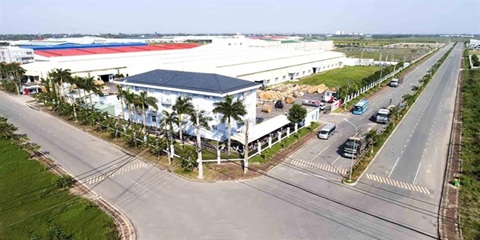
HCM CITY ATTRACTS US$5.7 BILLION INTO EXPORT PROCESSING AND INDUSTRIAL ZONES
HCM City attracted US$5.7 billion in domestic and foreign investment into its export processing and industrial zones during the first nine months of 2026. The figure exceeded the city's full-year target by 31 per cent, highlighting strong momentum in high-quality industrial investment under Resolution No.10-NQ/TW. Total investment reached 131 per cent of the 2026 target of $4.25 billion and represented a 29 per cent increase compared with the same period in 2025, according to the city's Export Processing and Industrial Zones Authority (HEPZA).
INFRASTRUCTURE / CONSTRUCTION / LOGISTIC / PORT
DONG THAP PROVINCE STEPS UP INDUSTRIAL EXPANSION AND INFRASTRUCTURE CONNECTIVITY
Accelerating public investment, strengthening inter-regional connectivity, and expanding industrial land are helping Dong Thap efficiently bolster competitiveness and drive economic growth. Following the 2025 merger of the former Dong Thap and Tien Giang provinces, the expanded Dong Thap province in the Mekong Delta faces mounting pressure to accelerate infrastructure development and strengthen connectivity among local economic zones, urban areas, industrial parks (IPs), and production centres.
Events Sponsors






















