Want to be in the loop?
subscribe to
our notification
Business News
FURTHER SCRUTINY REQUIRED BEFORE INTRODUCING PROPERTY TAX OVERHAUL
Last month the Ho Chi Minh Real Estate Association (HoREA) proposed ideas of higher land and house taxation which could reduce land speculation and encourage business production, as well as yield higher revenues for the government.
The association suggested imposing higher income tax on the sale or transfer of houses and land rights after establishment to combat land speculation. Furthermore, setting a high tax rate for selling or transferring houses and land in the first year and keeping a high tax rate in the second and third years onwards was also consideration.
Moreover, the association noted that owners of property used for living are subject to the lowest tax rate, while people who own more underutilised houses and land that are not used for living or for businesses will be subject to progressive tax rates.
HoREA also suggested that the State Bank of Vietnam and other commercial banks implement stricter tightening of real estate-related credit.
However, the Ministry of Finance (MoF) believed that tax policies for the real estate sector must be more carefully studied and only introduced at an appropriate time to ensure feasibility.
“In order to contribute to improving the efficiency of state management on real estate, the study and completion of related tax policies is necessary. However, the sector makes up for the majority part of the whole economy, and its massive impact requires a wide range and collaboration of various relevant parties, ministries, and localities,” the MoF noted in a response to the proposals.
“The MoF is continuing to study and synthesise international experiences, as well as identify problems and shortcomings in the implementation of tax laws related to real estate for better implementation of the National Tax system reform for the period of 2021-2030,” the ministry added.
Tax policy can be an appropriate tool to monitor and control efficient transactions in the economy, for instance, high tax collection on transactions can lead to higher market sales or rent price, but limit transactions of real estate. The impact of such policies would therefore be significant to the real estate market, and affect buyers and sellers.
Nguyen Tan Tai, tax and corporate services manager at Grant Thornton Vietnam said, “Vietnam has regulations on personal income tax (PIT) on investment gain, specifically for real estate. The local authorities can consider appropriate tax rates periodically.”
Tai noted that some countries have specific rules on tax on real estate, such as fixed rate on second homes in China and Canada; and progressive rate on house value and additional tax on second homes in the United Kingdom.
Last month, the New Zealand government also announced they would remove tax incentives for investors to make speculation less attractive. The moves come as surging house prices keep first-time buyers and people on lower incomes out of the market, raising concerns about growing societal inequality.
Tai explained, “Fixed tax rates on purchase of the second or the third house has been applied by many countries. This is an easy solution to apply and has been proposed in Vietnam the past. The increase in tax rate on property would be a major source of income and would come mainly from the rich, with little impact on those who do not own a house.”
On the other hand, Tai added, instead of a progressive tax based on the number of owned houses starting with the second home, a progressive tax rate can be applied based on the value of following ones. This would not depend too much on the time of real estate ownership, Tai said, but would depend on the value of those following houses.
In the UK, anyone buying a second property would pay an additional 3 per cent on top of the relevant standard rate band.
“Regarding PIT from the transfer of the second property, the current PIT from real estate transfer is 2 per cent. We are of the view that the current Vietnamese tax policy is correctly and appropriately applied,” Tai said.
Source: VIR
Related News

INFRASTRUCTURE / CONSTRUCTION / LOGISTIC / PORT
VIỆT NAM-CAMBODIA TRADE GATHERS PACE TOWARDS $20 BILLION TARGET
Trade between Việt Nam and Cambodia continues to grow, remaining a bright spot and a key pillar of bilateral cooperation as the two countries aim to raise two-way trade to US$20 billion in the coming years. After setting a record of more than $11.3 billion last year, bilateral trade reached about $8.7 billion in the first eight months of this year, up 8.3 per cent year on year.
TECHNOLOGY
AI BEGINNING TO RESHAPE RECRUITMENT CRITERIA
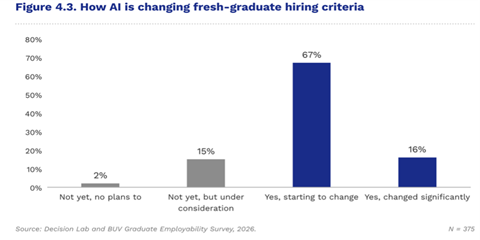
Digital literacy is the only capability area in which fresh graduates meet employers’ expectations, according to a new report. Yet, it is also the standard rising fastest, as businesses increasingly expect new hires to use AI effectively in the workplace. Some 83 per cent of employers say AI has changed, or is beginning to change, their hiring criteria, while 94 per cent report higher expectations for digital and AI capabilities than they had two to three years ago.

INFRASTRUCTURE / CONSTRUCTION / LOGISTIC / PORT
ĐÀ NẴNG GREEN-LIGHTS US$105 MILLION THAI DEVELOPMENT DEAL
The central city has approved an investment proposal by Thailand’s WHA Group to develop infrastructure for the 400ha WHA Đà Nẵng Industrial Park project on two communes of Thăng Bình and Đồng Dương, with an investment of more than VNĐ2.7 trillion (US$105 million). The city said it approved WHA Industrial Development International's status as an investor in the project, which is expected to take place between 2027 and 2034.

VIETNAM ECONOMY INVESTMENT
MOBILE PHONE EXPORTS RISE 20% TO $51.8 BILLION IN FIRST NINE MONTHS
Exports of mobile phones and components rose 20 per cent year-on-year to nearly US$51.8 billion in the first nine months of 2026, with China, the US and Republic of Korea accounting for more than half of the total. Shipments to the three markets reached a combined $26.18 billion, or 50.6 per cent of total exports of the product group during the period, according to data from the Vietnam Department of Customs under the Ministry of Finance.

VIETNAM ECONOMY INVESTMENT
FRUIT AND VEGETABLE EXPORTS POISED TO HIT $10 BILLION IN 2026
Fruit and vegetable exports are on track to reach nearly US$10 billion in 2026, after rising 19.9 per cent year on year to nearly US$7.4 billion in the first nine months, driven by strong seasonal demand and abundant tropical fruit supplies. The Ministry of Agriculture and Environment said the growth reflected stronger international demand for fresh produce and processed agricultural products.
GARMENT / TEXTILE
TEXTILE EXPORTS FACE DUAL CHALLENGES OF SUSTAINING ORDERS AND BOOSTING EFFICIENCY AMID GROWING COMPETITION
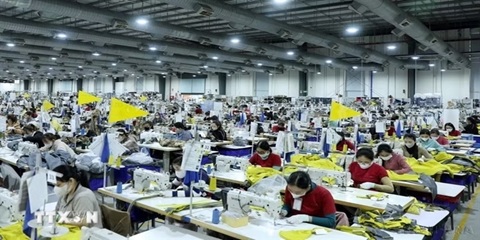
Data shows that the textile and garment sector maintained its growth momentum in the first nine months of this year. The industry's total export turnover reached an estimated US$35.721 billion in the first nine months of this year, up 3.3 per cent year-on-year. Despite posting encouraging export figures, Vietnamese textile and garment enterprises continue to navigate unpredictable market variables.
Events Sponsors






















