Want to be in the loop?
subscribe to
our notification
Business News
GOV'T URGED TO INSTALL TECHNICAL BARRIERS TO FILTER FDI PROJECTS
First, oil refineries. The projects licensed so far in the field have total capacity of up to 50-60 million tons. It is estimated that petrochemistry and oil refineries can only bring profit of 10 percent. An oil refinery with the capacity of 6-10 million tons needs an area of thousands of hectares, but employs only 8,000-10,000 workers.
Samsung's project has investment capital of $3 billion, but only needs 100 hectares of land and employs 43,500 workers with average pay of VND11 million a month.
Second, cement production. The licensed cement projects have total capacity of 65-70 million a year, which is much higher than domestic demand.
However, the bigger problem is that in order to churn out 65-70 million tons of cement, plants would need 100 million tons of limestone.
Consultants and experts have recommended that Vietnam take measures to prevent foreign-invested projects from using outdated technologies, causing pollution and consuming national resources.
With the current consumption level, Vietnam would consume 1 billion tons of limestone for every 10 years. In addition, cement production causes pollution.
“If counting the costs on the environment, cement production won’t bring profits,” Mai said.
Third, steel projects, which are huge electricity consumers. Vietnam’s current electricity output is still not high enough to satisfy demand. The Electricity of Vietnam has to make heavy investments every year to increase output by 12-13 percent per annum because the investment rate in the field is high.
And fourth, textile and dyeing projects. According to the Foreign Investment Agency (FIA), the projects in the field by 2020 have had total investment capital of $2.5 billion.
Technical barriers
According to Dang Xuan Quang, deputy head of FIA, a solution which Vietnam can apply is setting up technical barriers, which allows the most suitable projects while it does not break international commitments.
Quang said the criteria Vietnam to set up technical barriers include national sovereignty and security and environmental protection.
If Vietnam wants high-technology projects, it needs to set up high environmental requirements. For example, it can set up requirements on the maximum amount of materials and waste for the production of one ton of steel.
The third criterion could be development planning. The land in the areas which can be used more effectively for clean projects will not be opened for polluting projects.
Source: VIR
Related News
VIETNAM ECONOMY INVESTMENT
FOREIGN INVESTORS SEEKING A SYNCHRONISED MANUFACTURING ECOSYSTEM
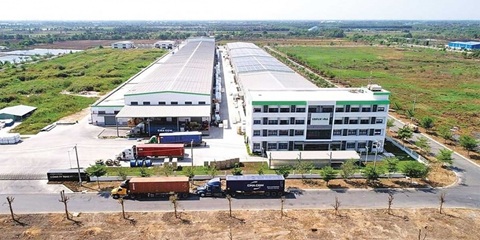
Instead of focusing only on land costs and incentives as usual, foreign investors are seeking a synchronised manufacturing ecosystem, from stable power supply and logistics to shared infrastructure and the convenience of completing residence procedures for experts to serve their long-term investment in the country.
INFRASTRUCTURE / CONSTRUCTION / LOGISTIC / PORT
DONG THAP PROVINCE STEPS UP INDUSTRIAL EXPANSION AND INFRASTRUCTURE CONNECTIVITY
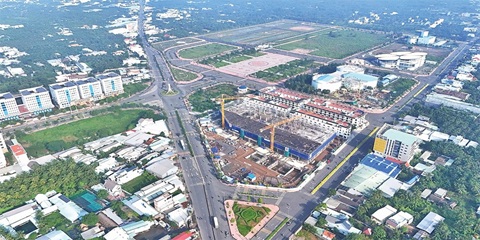
Accelerating public investment, strengthening inter-regional connectivity, and expanding industrial land are helping Dong Thap efficiently bolster competitiveness and drive economic growth. Following the 2025 merger of the former Dong Thap and Tien Giang provinces, the expanded Dong Thap province in the Mekong Delta faces mounting pressure to accelerate infrastructure development and strengthen connectivity among local economic zones, urban areas, industrial parks (IPs), and production centres.
PROPERTY / INDUSTRIAL ZONE
HCM CITY ATTRACTS US$5.7 BILLION INTO EXPORT PROCESSING AND INDUSTRIAL ZONES
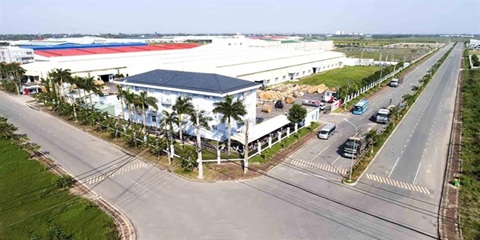
HCM City attracted US$5.7 billion in domestic and foreign investment into its export processing and industrial zones during the first nine months of 2026. The figure exceeded the city's full-year target by 31 per cent, highlighting strong momentum in high-quality industrial investment under Resolution No.10-NQ/TW. Total investment reached 131 per cent of the 2026 target of $4.25 billion and represented a 29 per cent increase compared with the same period in 2025, according to the city's Export Processing and Industrial Zones Authority (HEPZA).
BANKING / FINANCE / INSURANCE / TAX
REMITTANCES TO HCM CITY RISE NEARLY 40% IN Q3
Remittances to HCM City reached more than US$2.83 billion in the third quarter of this year, up 39.5 per cent from the previous quarter and 3.6 per cent year-on-year. This was the first quarter showing positive annual growth this year, helping narrow the decline in remittance inflows over the first nine months. According to the State Bank of Vietnam (SBV)’s Regional Branch 2, remittances transferred to HCM City through credit institutions and economic organisations totalled $2.835 billion in Q3, an increase of more than $802 million from the previous quarter.
VIETNAM ECONOMY INVESTMENT
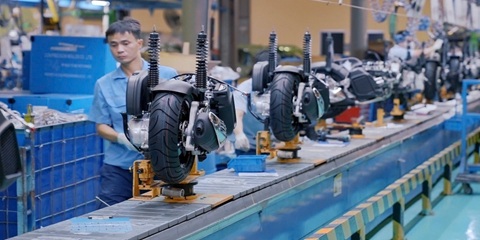
LOCALITIES REPORT BREAKTHROUGH RESULTS IN FDI IN FIRST NINE MONTHS
In Ho Chi Minh City, total registered capital reached $17.2 billion in the first nine months, up 4.2 times from the same period last year. The figure included more than $9.35 billion in newly registered capital and over $4.9 billion in additional capital for existing projects. Foreign investors also registered more than $2.9 billion through capital contributions and share purchases.
TECHNOLOGY
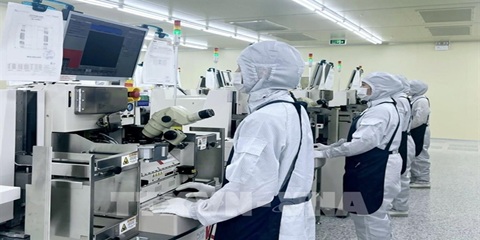
TECH SECTOR GROWTH OPENS UP OPPORTUNITIES FOR VIỆT NAM TO GO GLOBAL
The growth of the electronics, semiconductor and high-tech sectors worldwide is opening up a variety of opportunities for Vietnamese enterprises to integrate more deeply into the global supply chain. However, to become suppliers for these corporations, domestic enterprises must meet rigorous standards regarding quality, technology, productivity and order fulfilment capabilities.
Events Sponsors






















