Want to be in the loop?
subscribe to
our notification
Business News
GOVERNMENT COMMITS TO WIDE SUPPORT TOWARDS 2025
The government will continue to expand the fiscal policy in a bid to assist those struggling and to achieve the desired economic growth target for the year. Deputy Prime Minister Le Minh Khai last week reported to the National Assembly (NA) that the government will provide more practical support for the public and businesses as part of its agenda.
“The government will continue carrying out the policy of exempting and reducing lending rates from bank loans. It will also postpone and restructure debts, and exempt, reduce, and extend the payment of assorted taxes, fees, charges, and land rental for businesses and individuals so that they can soon escape from difficulties,” Khai stated.
He announced that the government will apply this fiscal policy in the latter half of 2024, with a total value of about $4.08 billion. VAT will continue at 8 per cent, and the State Bank of Vietnam has decided to increase the preferential credit package’s value for the forestry and fishery sector to $1.18 billion, and it is also formulating a similar package for the rice sector.
The Ministry of Finance reported that in 2023, the total values of all policies on exempting, reducing, and extending payment of assorted taxes, fees, and charges, as well as rental for land and water surface reached about $8.33 billion, including exemption and reduction of $3.3 billion and extension of just over $5 billion.
Last year, extending payment of VAT, corporate income tax, and personal income tax, as well as land rental led to a reduction in the state budget revenue of an estimated sum of $4.58 billion.
It is expected that a continued reduction of 2 per cent VAT for the second half of this year for most services will be discussed and adopted at the NA next month. It is also estimated that the total value of money from exempting and reducing assorted taxes and fees in the first three months of this year reached $858.3 million.
“The government will continue removing difficulties in access to bank loans for enterprises and individuals so that bigger credit flows can run into production and business activities,” DPM Khai stressed. “It is expected that credits will grow 15 per cent and the lending rates from bank loans will be reduced by 1-2 per cent this year.”
In addition, the government pledged that it will also continue cutting and reducing administrative procedures, and effectively renewing the one-door mechanism in addition to digitalisation of data and documents which will help truncate costs for the public and businesses.
Feasible answers required
The government told the NA that despite some positive signals, production and business activities have been facing great difficulties, with so many enterprises having left the market, meaning a decrease in employment and state budget revenues.
Figures from the General Statistics Office showed that last year, 89,100 businesses halted operations in Vietnam – up 20.7 per cent as compared to the previous year; 65,500 enterprises stopped operations and waited for dissolution procedures – up 28.9 per cent; and 14,400 enterprises completed such procedures.
“In the first four months of this year, nearly 86,400 enterprises were kicked out of the market, up 12.2 per cent as compared to the same period last year. On average, 21,600 enterprises faced such a plight every month,” stated a governmental report submitted to the NA.
Notably, in April, more than 7,600 enterprises halted operations – up 84.1 per cent on-month and 6.4 per cent on-year; 4,660 businesses stopped operations and awaited dissolution procedures; and over 1,340 enterprises completed such procedures.
The National Assembly Economic Committee has warned that if no more feasible solutions are applied soon, the number of such enterprises will continue increasing in the next months.
“We see that production and business activities remain bogged down in big difficulties. The number of enterprises leaving the market (86,400) has been greater than the number of businesses newly entering and re-entering the market (81,300),” said the committee at the NA.
“Low demands at the domestic and international markets, besides the low competitiveness of domestically produced products are among the main reasons behind the poor performance of enterprises operating in the manufacturing and processing sector,” the committee pointed out. “In addition, there has been high rises in transportation costs, especially by seas, coupled with the strong fluctuation in exchange rates since early this year; while enterprises are still struggling to meet many complicated administrative regulations such as anti-fire.”
Lack of guidelines
According to the Vietnam Association of Small- and Medium-sized Enterprises, hundreds of thousands of businesses have been facing many difficulties in meeting anti-fire regulations.
“Standards stipulated in 2020 on detailing a number of articles of the Law on Fire Prevention and Fighting are too high and improper, pushing up enterprises’ costs,” the association said.
At present, all factories and production workshops are required to use anti-fire materials. However, it is almost impossible for them to bring this into operation as these materials cannot be tested due to a lack of specific guidelines from authorised agencies.
“Under the regulations, all structures of the factories and workshops have to be painted with anti-fire paints. But the exact names of the paint and where the paint is sold or the thick of paint on the structures have failed to be specified,” said Nguyen Van Son, a lawyer at a law firm in Hanoi.
The government has pledged that it will strive to reach the economic growth target of 6-6.5 per cent this year via the boost of fiscal policy, including a preferential initiative worth $5 billion as low lending rates from bank loans for purchasing social houses and worker-oriented houses.
“Besides that, we will continue boosting the disbursement of public investment which will act as a primer for attracting private investment and increasing public-private partnership funding,” the governmental report read. “Efforts are to be made to reach a 95 per cent disbursement rate in public investment this year.”
Source: VIR
Related News

CHARITY / EXHIBITION / OTHER EVENTS
INVESTMENT OPPORTUNITIES IN CA MAU PROVINCE: 96 PROJECTS AND 20 STRATEGIC PROJECTS
We are pleased to share with you information on investment projects currently seeking investors in Ca Mau Province. Should your esteemed company or association be interested, we kindly invite you to review the project information and complete the registration form via the links provided. The Ho Chi Minh City Investment and Trade Promotion Centre (ITPC) will consolidate the expressions of interest and facilitate connections with the leadership of Ca Mau Province at a meeting tentatively scheduled for 13 November 2026 in Ho Chi Minh City.

MEMBER CORNER / PROMOTIONS
BẰNG KIỀU LIVESHOW - A SYMPHONY OF LOVE UNDER THE GOLDEN GLOW
A masterclass in live music that takes the audience on a soulful journey through immortal love songs, guided by the peerless artistry and emotive storytelling of renowned singer Bằng Kiều. The highlight of the night is his seamless musical chemistry with special guest Triệu Hồng Ngọc, promising passionate and deeply resonant duets inside the magnificent Grand Ballroom.
INFRASTRUCTURE / CONSTRUCTION / LOGISTIC / PORT
ĐÀ NẴNG GREEN-LIGHTS US$105 MILLION THAI DEVELOPMENT DEAL
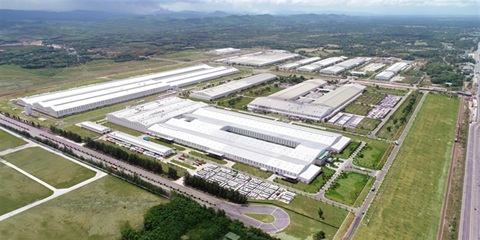
The central city has approved an investment proposal by Thailand’s WHA Group to develop infrastructure for the 400ha WHA Đà Nẵng Industrial Park project on two communes of Thăng Bình and Đồng Dương, with an investment of more than VNĐ2.7 trillion (US$105 million). The city said it approved WHA Industrial Development International's status as an investor in the project, which is expected to take place between 2027 and 2034.

VIETNAM ECONOMY INVESTMENT
MOBILE PHONE EXPORTS RISE 20% TO $51.8 BILLION IN FIRST NINE MONTHS
Exports of mobile phones and components rose 20 per cent year-on-year to nearly US$51.8 billion in the first nine months of 2026, with China, the US and Republic of Korea accounting for more than half of the total. Shipments to the three markets reached a combined $26.18 billion, or 50.6 per cent of total exports of the product group during the period, according to data from the Vietnam Department of Customs under the Ministry of Finance.

INFRASTRUCTURE / CONSTRUCTION / LOGISTIC / PORT
VIỆT NAM-CAMBODIA TRADE GATHERS PACE TOWARDS $20 BILLION TARGET
Trade between Việt Nam and Cambodia continues to grow, remaining a bright spot and a key pillar of bilateral cooperation as the two countries aim to raise two-way trade to US$20 billion in the coming years. After setting a record of more than $11.3 billion last year, bilateral trade reached about $8.7 billion in the first eight months of this year, up 8.3 per cent year on year.
VIETNAM ECONOMY INVESTMENT
FRUIT AND VEGETABLE EXPORTS POISED TO HIT $10 BILLION IN 2026
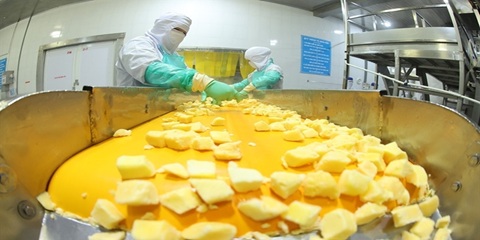
Fruit and vegetable exports are on track to reach nearly US$10 billion in 2026, after rising 19.9 per cent year on year to nearly US$7.4 billion in the first nine months, driven by strong seasonal demand and abundant tropical fruit supplies. The Ministry of Agriculture and Environment said the growth reflected stronger international demand for fresh produce and processed agricultural products.
Events Sponsors






















